Home
Department Of Physics text logo
  • Research
    • Our research
    • Our research groups
    • Our research in action
    • Research funding support
    • Summer internships for undergraduates
  • Study
    • Undergraduates
    • Postgraduates
  • Engage
    • For young people
    • For teachers
    • For the public
    • For alumni
    • For business
  • Support
Menu
CMP
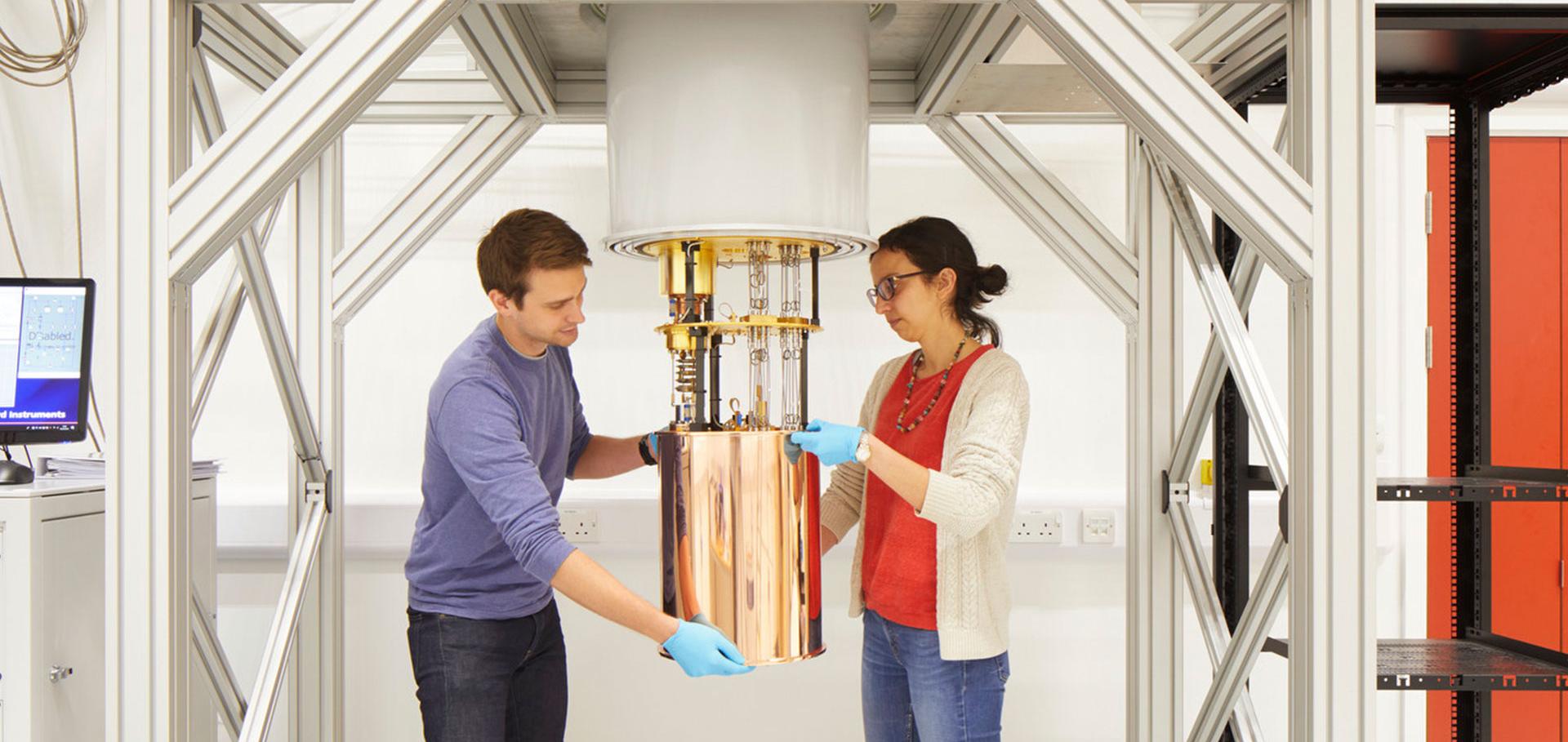
Credit: Jack Hobhouse

Prof Henry Snaith FRS

Professor of Physics

Sub department

  • Condensed Matter Physics

Research groups

  • Photovoltaic & Optoelectronic Device Group
Henry.Snaith@physics.ox.ac.uk
Clarendon Laboratory, room 045,045,044,071.6,071.5,071.4,071.3,G21 (office)
  • About
  • Publications

Carbon nanotubes in perovskite solar cells

Advanced Energy Materials Wiley 7:10 (2016) 601839

Authors:

Severin N Habisreutinger, Robin J Nicholas, Henry J Snaith

Abstract:

The remarkable optoelectronic properties of metal halide perovskite absorbers have, in the past years, made the perovskite solar cell one of the most promising emerging photovoltaic technologies. The charge collecting layers are essential parts of this type of solar cell. Carbon nanotubes have emerged as a potential candidate to take on this role. Equipped with a range of highly beneficial properties including excellent charge transport characteristics, chemical inertness, as well as mechanical robustness, carbon nanotubes are able to both efficiently extract photogenerated charges, and improve the resilience and stability of a perovskite solar cell. In this Research News article we give a concise overview of the current state-of-the-art of perovskite solar cells in which carbon nanotubes are incorporated as a charge conduction layer.
More details from the publisher
Details from ORA
More details

Perovskite Solar Cells

Chapter in Photovoltaic Solar Energy, Wiley (2016) 277-291

Authors:

Samuel D Stranks, Henry J Snaith
More details from the publisher

Reproducible planar heterojunction solar cells based on one-step solution-processed methylammonium lead halide perovskites

Chemistry of Materials American Chemical Society 29:1 (2016) 462-473

Authors:

Sai Bai, Nobuya Sakai, Wei Zhang, Zhiping Wang, Jacob T-W Wang, Feng Gao, Henry J Snaith

Abstract:

Metal halide perovskites have been demonstrated as one of the most promising materials for low-cost and high-performance photovoltaic applications. However, due to the susceptible crystallization process of perovskite films on planar substrates and the high sensitivity of the physical and optoelectronic nature of the internal interfaces within the devices, researchers in different laboratories still experience poor reproducibility in fabricating efficient perovskite solar cells with planar heterojunction device structures. In this methods paper, we present detailed information on the reagents, equipment, and procedures for the fabrication of planar perovskite solar cells in both “regular” n-i-p and “inverted” p-i-n architectures based on one-step solution-processed methylammonium lead triiodide (MAPbI3) perovskite films. We discuss key parameters affecting the crystallization of perovskite and the device interfaces. This methods paper will provide a guideline for the reproducible fabrication of planar heterojunction solar cells based on MAPbI3perovskite films. We believe that the shared experience on MA-based perovskite films and planar solar cells will be also useful for the optimization process of perovskites with varied compositions and other emerging perovskite-based optoelectronic devices.
More details from the publisher
Details from ORA
More details

Room-temperature atomic layer deposition of Al2 O3 : Impact on efficiency, stability and surface properties in perovskite solar cells

ChemSusChem Wiley 9:24 (2016) 3401-3406

Authors:

M Kot, C Das, Zhiping Wang, K Henkel, Z Rouissi, K Wojciechowski, Henry J Snaith, D Schmeisser

Abstract:

In this work, solar cells with a freshly made CH3 NH3 PbI3 perovskite film showed a power conversion efficiency (PCE) of 15.4 % whereas the one with 50 days aged perovskite film only 6.1 %. However, when the aged perovskite was covered with a layer of Al2 O3 deposited by atomic layer deposition (ALD) at room temperature (RT), the PCE value was clearly enhanced. X-ray photoelectron spectroscopy study showed that the ALD precursors are chemically active only at the perovskite surface and passivate it. Moreover, the RT-ALD-Al2 O3 -covered perovskite films showed enhanced ambient air stability.
More details from the publisher
Details from ORA
More details
More details

Tailoring metal halide perovskites through metal substitution: influence on photovoltaic and material properties

Energy & Environmental Science Royal Society of Chemistry 10 (2016) 236-246

Authors:

Matthew T Klug, Anna Osherov, Amir-Abbas Haghighirad, Samuel D Stranks, Patrick R Brown, Sai Bai, Jacob TW Wang, Xiangnan Dang, Vladimir Bulovic, Henry J Snaith, Angela M Belcher

Abstract:

We present herein an experimental screening study that assesses how partially replacing Pb in methylammonium lead triiodide perovskite films with nine different alternative, divalent metal species, B = {Co, Cu, Fe, Mg, Mn, Ni, Sn, Sr, and Zn}, influences photovoltaic performance and optical properties. Our findings indicate the perovskite film is tolerant to most of the considered homovalent metal species with lead-cobalt compositions yielding the highest power conversion efficiencies when less than 6% of the Pb2+ ions are replaced. Through subsequent materials characterisation, we demonstrate for the first time that partially substituting Pb2+ at the B-sites of the perovskite lattice is not restricted to Group IV elements but is also possible with at least Co2+. Moreover, adjusting the molar ratio of Pb:Co in the mixed-metal perovskite affords new opportunities to tailor the material properties while maintaining stabilised device efficiencies above 16% in optimised solar cells. Specifically, crystallographic analysis reveals that Co2+ incorporates into the perovskite lattice and increasing its concentration can mediate a crystal structure transition from the cubic to tetragonal phase at room-temperature. Likewise, Co2+ substitution continually modifies the perovskite work function and band edge energies without either changing the band gap or electronically doping the intrinsic material. By leveraging this orthogonal dimension of electronic tunability, we achieve remarkably high open-circuit voltages up to 1.08 V with an inverted device architecture by shifting the perovskite into a more favourable energetic alignment with the PEDOT:PSS hole transport material.
More details from the publisher
Details from ORA
More details

Pagination

  • First page First
  • Previous page Prev
  • …
  • Page 80
  • Page 81
  • Page 82
  • Page 83
  • Current page 84
  • Page 85
  • Page 86
  • Page 87
  • Page 88
  • …
  • Next page Next
  • Last page Last

Footer Menu

  • Contact us
  • Giving to the Dept of Physics
  • Work with us
  • Media

User account menu

  • Log in

Follow us

FIND US

Clarendon Laboratory,

Parks Road,

Oxford,

OX1 3PU

CONTACT US

Tel: +44(0)1865272200

University of Oxfrod logo Department Of Physics text logo
IOP Juno Champion logo Athena Swan Silver Award logo

© University of Oxford - Department of Physics

Cookies | Privacy policy | Accessibility statement

Built by: Versantus

  • Home
  • Research
  • Study
  • Engage
  • Our people
  • News & Comment
  • Events
  • Our facilities & services
  • About us
  • Giving to Physics
  • Current students
  • Staff intranet