

A topological perspective on weather regimes
Abstract:
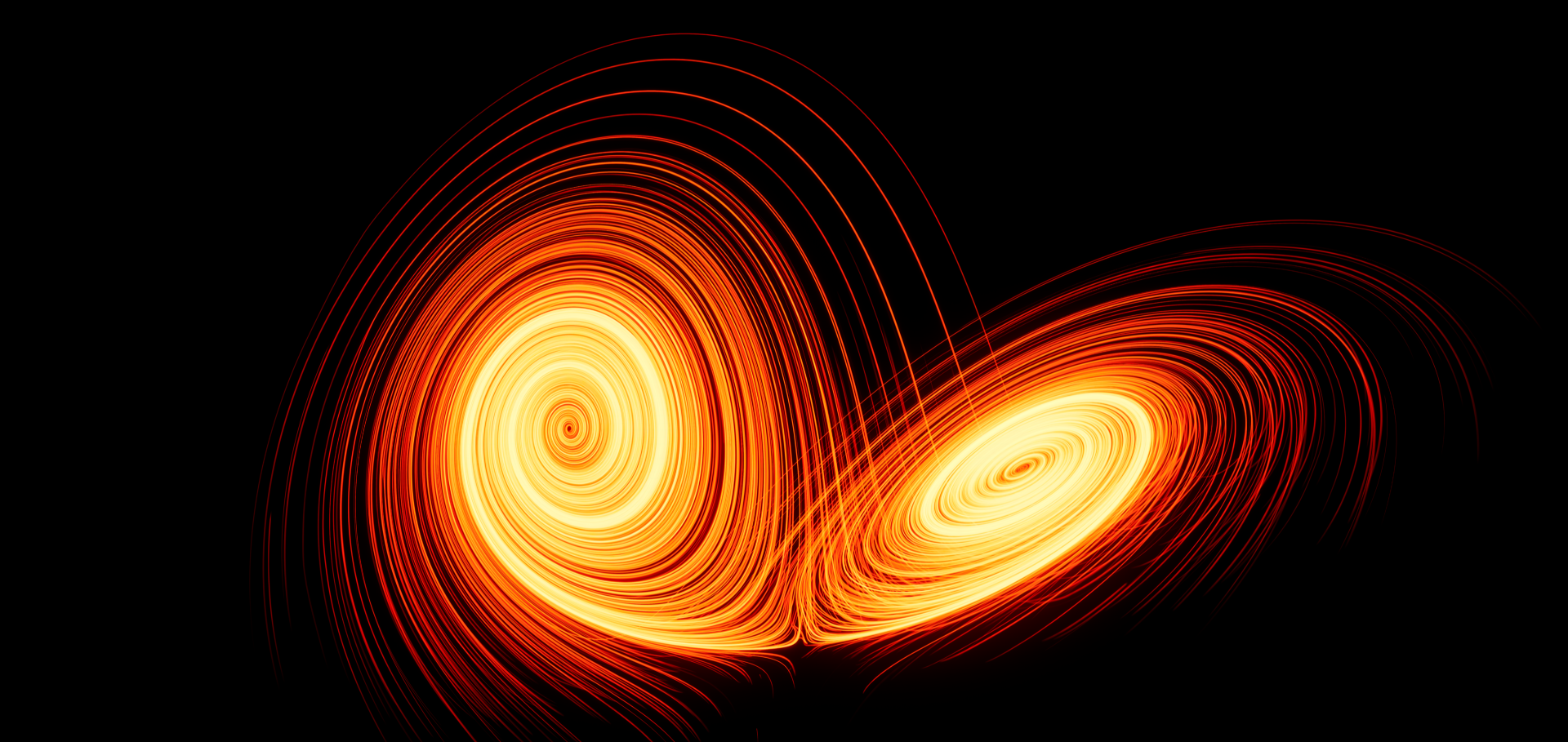
It has long been suggested that the mid-latitude atmospheric circulation possesses what has come to be known as ‘weather regimes’, loosely categorised as regions of phase space with above-average density and/or extended persistence. Their existence and behaviour has been extensively studied in meteorology and climate science, due to their potential for drastically simplifying the complex and chaotic mid-latitude dynamics. Several well-known, simple non-linear dynamical systems have been used as toy-models of the atmosphere in order to understand and exemplify such regime behaviour. Nevertheless, no agreed-upon and clear-cut definition of a ‘regime’ exists in the literature, and unambiguously detecting their existence in the atmospheric circulation is stymied by the high dimensionality of the system. We argue here for an approach which equates the existence of regimes in a dynamical system with the existence of non-trivial topological structure of the system’s attractor. We show using persistent homology, an algorithmic tool in topological data analysis, that this approach is computationally tractable, practically informative, and identifies the relevant regime structure across a range of examples.Surface-to-space atmospheric waves from Hunga Tonga-Hunga Ha’apai eruption
Abstract:
The January 2022 Hunga Tonga–Hunga Haʻapai eruption was one of the most explosive volcanic events of the modern era1,2, producing a vertical plume which peaked > 50km above the Earth3. The initial explosion and subsequent plume triggered atmospheric waves which propagated around the world multiple times4. A global-scale wave response of this magnitude from a single source has not previously been observed. Here we show the details of this response, using a comprehensive set of satellite and ground-based observations to quantify it from surface to ionosphere. A broad spectrum of waves was triggered by the initial explosion, including Lamb waves5,6 propagating at phase speeds of 318.2±6 ms-1 at surface level and between 308±5 to 319±4 ms-1 in the stratosphere, and gravity waves7 propagating at 238±3 to 269±3 ms-1 in the stratosphere. Gravity waves at sub-ionospheric heights have not previously been observed propagating at this speed or over the whole Earth from a single source8,9. Latent heat release from the plume remained the most significant individual gravity wave source worldwide for >12 hours, producing circular wavefronts visible across the Pacific basin in satellite observations. A single source dominating such a large region is also unique in the observational record. The Hunga Tonga eruption represents a key natural experiment in how the atmosphere responds to a sudden point-source-driven state change, which will be of use for improving weather and climate models.