

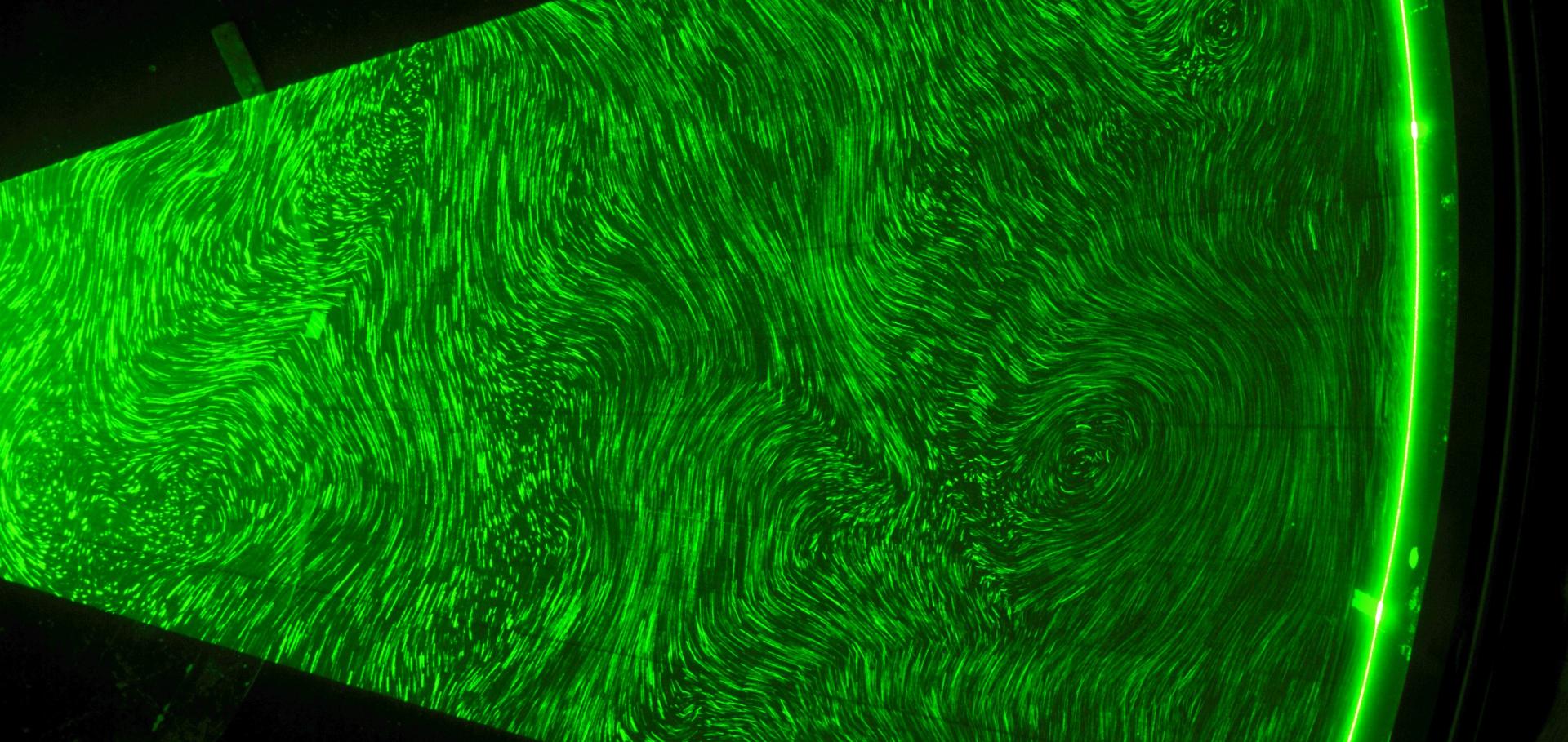
Inverse centrifugal effect induced by collective motion of vortices in rotating turbulent convection
ArXiv 2010.15384 (2020)
Tidally induced stellar oscillations: converting modelled oscillations excited by hot Jupiters into observables
(2020)
Continuous structural parameterization: a proposed method for representing different model parameterizations within one structure demonstrated for atmospheric convection
Journal of Advances in Modeling Earth Systems American Geophysical Union 12:8 (2020) e2020MS002085
Abstract:
Continuous structural parameterization (CSP) is a proposed method for approximating different numerical model parameterizations of the same process as functions of the same grid‐scale variables. This allows systematic comparison of parameterizations with each other and observations or resolved simulations of the same process. Using the example of two convection schemes running in the Met Office Unified Model (UM), we show that a CSP is able to capture concisely the broad behavior of the two schemes, and differences between the parameterizations and resolved convection simulated by a high resolution simulation. When the original convection schemes are replaced with their CSP emulators within the UM, basic features of the original model climate and some features of climate change are reproduced, demonstrating that CSP can capture much of the important behavior of the schemes. Our results open the possibility that future work will estimate uncertainty in model projections of climate change from estimates of uncertainty in simulation of the relevant physical processes.Vortices as Brownian particles in turbulent flows.
Science advances 6:34 (2020) eaaz1110