Home
Department Of Physics text logo
  • Research
    • Our research
    • Our research groups
    • Our research in action
    • Research funding support
    • Summer internships for undergraduates
  • Study
    • Undergraduates
    • Postgraduates
  • Engage
    • For alumni
    • For business
    • For schools
    • For the public
  • Support
Menu
CMP
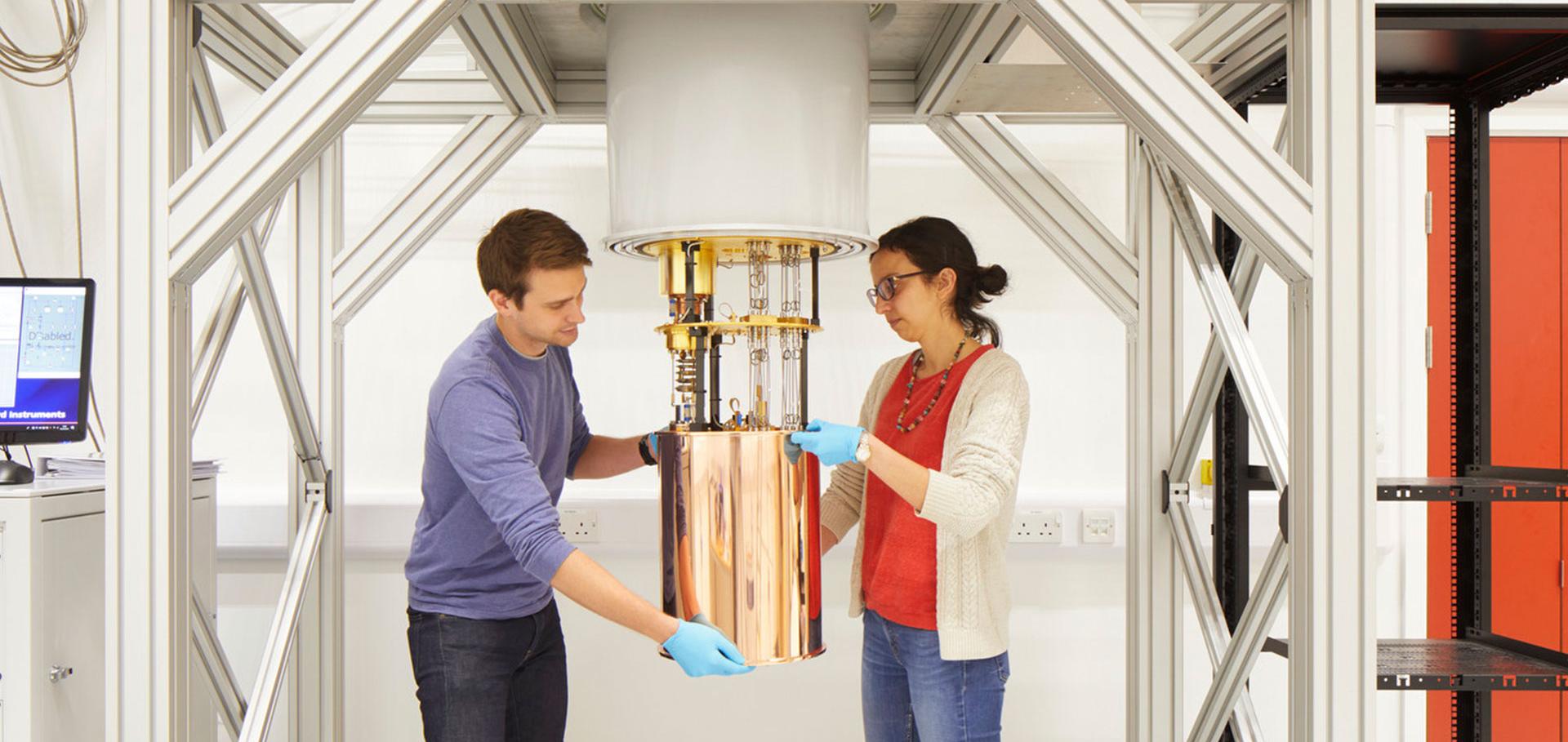
Credit: Jack Hobhouse

Dr Joseph Prentice

Long Term Visitor

Research theme

  • Quantum materials

Sub department

  • Condensed Matter Physics

Research groups

  • Quantum matter in high magnetic fields
joseph.prentice@physics.ox.ac.uk
Clarendon Laboratory, room 265,105
Department of Materials profile
St Edmund Hall profile
  • About
  • Publications

Supramolecular Self‐Assembly as a Tool To Preserve the Electronic Purity of Perylene Diimide Chromophores**

Angewandte Chemie Wiley 135:12 (2023)

Authors:

Ina Heckelmann, Zifei Lu, Joseph CA Prentice, Florian Auras, Tanya K Ronson, Richard H Friend, Jonathan R Nitschke, Sascha Feldmann
More details from the publisher

Titelbild: Supramolecular Self‐Assembly as a Tool To Preserve the Electronic Purity of Perylene Diimide Chromophores (Angew. Chem. 12/2023)

Angewandte Chemie Wiley 135:12 (2023)

Authors:

Ina Heckelmann, Zifei Lu, Joseph CA Prentice, Florian Auras, Tanya K Ronson, Richard H Friend, Jonathan R Nitschke, Sascha Feldmann
More details from the publisher

Supramolecular self-assembly as a tool to preserve the electronic purity of perylene diimide chromophores

Angewandte Chemie International Edition Wiley 62:12 (2023) e202216729

Authors:

Ina Heckelmann, Zifei Lu, Joseph CA Prentice, Florian Auras, Tanya K Ronson, Richard H Friend, Jonathan R Nitschke, Sascha Feldmann

Abstract:

Organic semiconductors are promising for efficient, printable optoelectronics. However, strong excited-state quenching due to uncontrolled aggregation limits their use in devices. We report on the self-assembly of a supramolecular pseudo-cube formed from six perylene diimides (PDIs). The rigid, shape-persistent cage sets the distance and orientation of the PDIs and suppresses intramolecular rotations and vibrations, leading to non-aggregated, monomer-like properties in solution and the solid state, in contrast to the fast fluorescence quenching in the free ligand. The stabilized excited state and electronic purity in the cage enables the observation of delayed fluorescence due to a bright excited multimer, acting as excited-state reservoir in a rare case of benign inter-chromophore interactions in the cage. We show that self-assembly provides a powerful tool for retaining and controlling the electronic properties of chromophores, and to bring molecular electronics devices within reach.
More details from the publisher
Details from ORA
More details
More details

Efficiently computing excitations of complex systems: linear-scaling time-dependent embedded mean-field theory in implicit solvent

ArXiv 2203.0471 (2022)
Details from ArXiV

Efficiently computing excitations of complex systems: linear-scaling time-dependent embedded mean-field theory in implicit solvent

Journal of Chemical Theory and Computation ACS Publications 18:3 (2022) 1542-1554

Abstract:

Quantum embedding schemes have the potential to significantly reduce the computational cost of first principles calculations, whilst maintaining accuracy, particularly for calculations of electronic excitations in complex systems. In this work, I combine time-dependent embedded mean field theory (TD-EMFT) with linear-scaling density functional theory and implicit solvation models, extending previous work within the ONETEP code. This provides a way to perform multi-level calculations of electronic excitations on very large Systems, where long-range environmental effects, both quantum and classical in nature, are important. I demonstrate the power of this method by performing simulations on a variety of systems, including a molecular dimer, a chromophore in solution, and a doped molecular crystal. This work paves the way for high accuracy calculations to be performed on large-scale systems that were previously beyond the reach of quantum embedding schemes.
More details from the publisher
Details from ORA
More details
More details

Pagination

  • First page First
  • Previous page Prev
  • Page 1
  • Page 2
  • Current page 3
  • Page 4
  • Page 5
  • Page 6
  • Next page Next
  • Last page Last

Footer Menu

  • Contact us
  • Giving to the Dept of Physics
  • Work with us
  • Media

User account menu

  • Log in

Follow us

FIND US

Clarendon Laboratory,

Parks Road,

Oxford,

OX1 3PU

CONTACT US

Tel: +44(0)1865272200

University of Oxfrod logo Department Of Physics text logo
IOP Juno Champion logo Athena Swan Silver Award logo

© University of Oxford - Department of Physics

Cookies | Privacy policy | Accessibility statement

Built by: Versantus

  • Home
  • Research
  • Study
  • Engage
  • Our people
  • News & Comment
  • Events
  • Our facilities & services
  • About us
  • Giving to Physics
  • Current students
  • Staff intranet