THEZA: TeraHertz Exploration and Zooming-in for Astrophysics
Experimental Astronomy Springer 51:3 (2021) 559-594
Authors:
Leonid I Gurvits, Zsolt Paragi, Viviana Casasola, John Conway, Jordy Davelaar, Heino Falcke, Rob Fender, Sándor Frey, Christian M Fromm, Cristina García Miró, Michael A Garrett, Marcello Giroletti, Ciriaco Goddi, José-Luis Gómez, Jeffrey van der Gucht, José Carlos Guirado, Zoltán Haiman, Frank Helmich, Elizabeth Humphreys, Violette Impellizzeri, Michael Kramer, Michael Lindqvist, Hendrik Linz, Elisabetta Liuzzo, Andrei P Lobanov
Abstract:
This paper presents the ESA Voyage 2050 White Paper for a concept of
TeraHertz Exploration and Zooming-in for Astrophysics (THEZA). It addresses the
science case and some implementation issues of a space-borne radio
interferometric system for ultra-sharp imaging of celestial radio sources at
the level of angular resolution down to (sub-) microarcseconds. THEZA focuses
at millimetre and sub-millimetre wavelengths (frequencies above $\sim$300~GHz),
but allows for science operations at longer wavelengths too. The THEZA concept
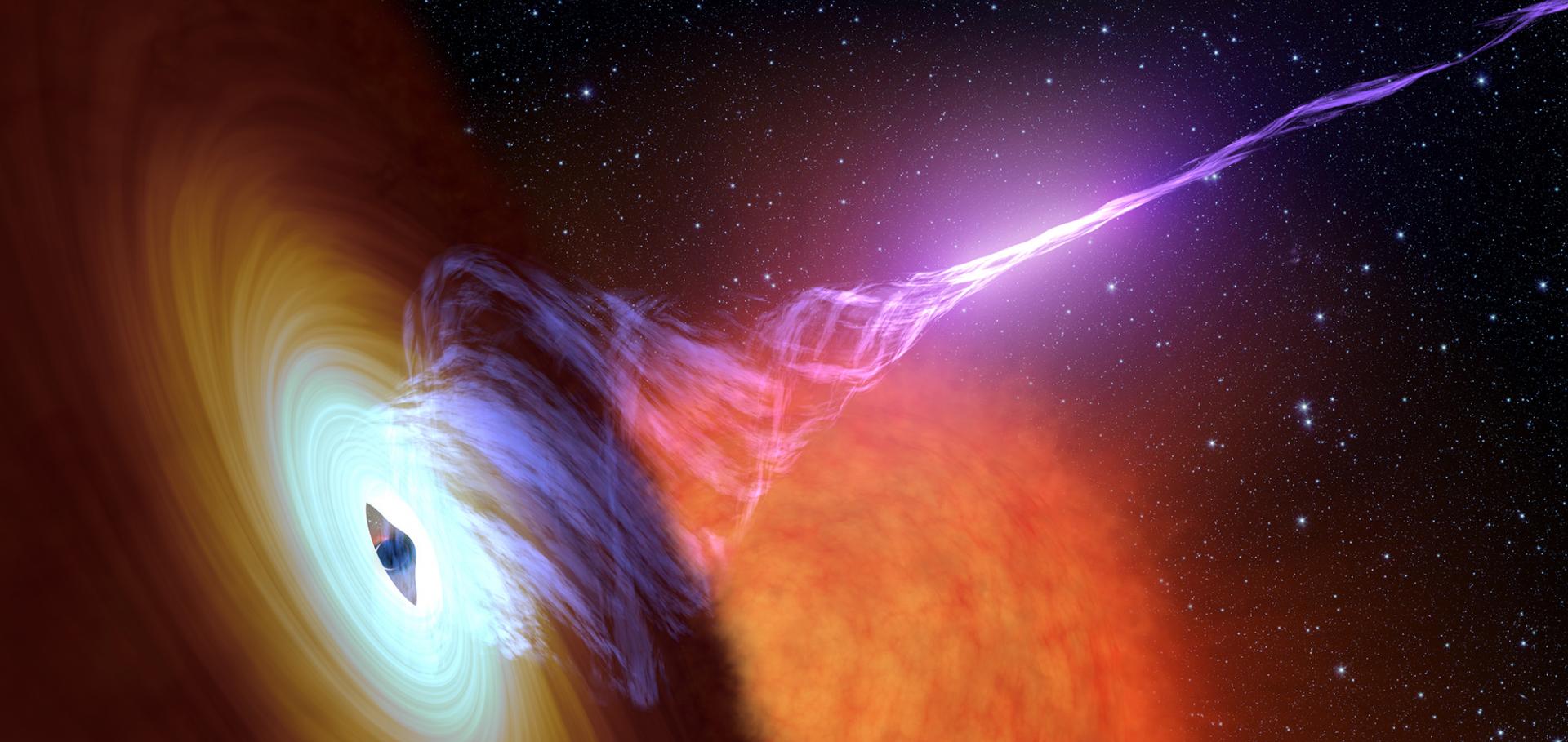
science rationale is focused on the physics of spacetime in the vicinity of
supermassive black holes as the leading science driver. The main aim of the
concept is to facilitate a major leap by providing researchers with orders of
magnitude improvements in the resolution and dynamic range in direct imaging
studies of the most exotic objects in the Universe, black holes. The concept
will open up a sizeable range of hitherto unreachable parameters of
observational astrophysics. It unifies two major lines of development of
space-borne radio astronomy of the past decades: Space VLBI (Very Long Baseline
Interferometry) and mm- and sub-mm astrophysical studies with "single dish"
instruments. It also builds upon the recent success of the Earth-based Event
Horizon Telescope (EHT) -- the first-ever direct image of a shadow of the
super-massive black hole in the centre of the galaxy M87. As an amalgam of
these three major areas of modern observational astrophysics, THEZA aims at
facilitating a breakthrough in high-resolution high image quality studies in
the millimetre and sub-millimetre domain of the electromagnetic spectrum.Comment: White Paper submitted in response to the ESA Call Voyage 205