Home
Department Of Physics text logo
  • Research
    • Our research
    • Our research groups
    • Our research in action
    • Research funding support
    • Summer internships for undergraduates
  • Study
    • Undergraduates
    • Postgraduates
  • Engage
    • For young people
    • For teachers
    • For the public
    • For alumni
    • For business
  • Support
Menu
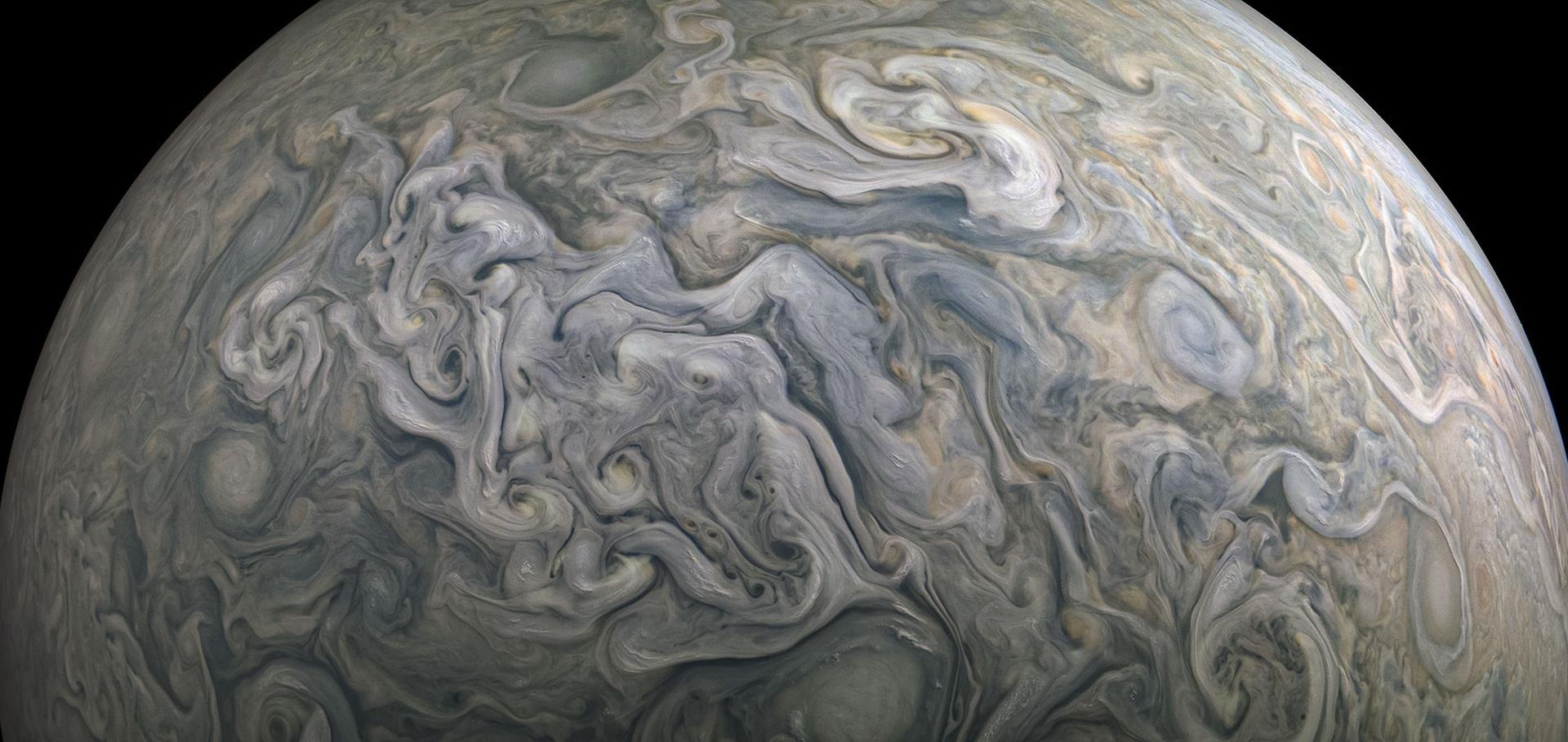
Juno Jupiter image

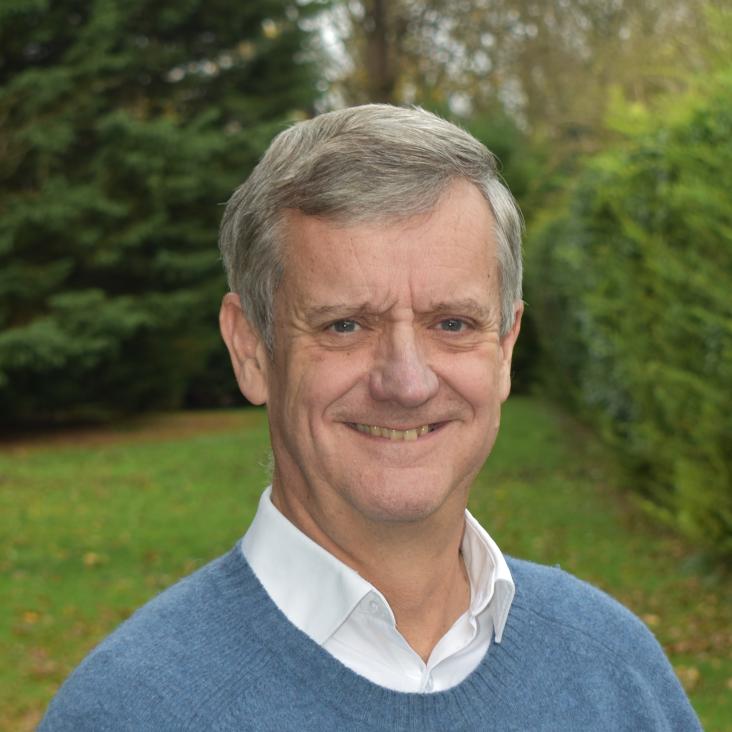
Prof. Patrick Irwin

Professor of Planetary Physics

Research theme

  • Exoplanets and planetary physics

Sub department

  • Atmospheric, Oceanic and Planetary Physics

Research groups

  • Exoplanet atmospheres
  • Planetary atmosphere observation analysis
  • Solar system
patrick.irwin@physics.ox.ac.uk
Telephone: 01865 (2)72083
Atmospheric Physics Clarendon Laboratory, room 306
Personal research page
NEMESIS
Github data sharing website
  • About
  • Publications

The formation and evolution of Titan's winter polar vortex.

Nature communications 8:1 (2017) 1586-1586

Authors:

NA Teanby, B Bézard, S Vinatier, M Sylvestre, CA Nixon, PGJ Irwin, RJ de Kok, SB Calcutt, FM Flasar

Abstract:

Saturn's largest moon Titan has a substantial nitrogen-methane atmosphere, with strong seasonal effects, including formation of winter polar vortices. Following Titan's 2009 northern spring equinox, peak solar heating moved to the northern hemisphere, initiating south-polar subsidence and winter polar vortex formation. Throughout 2010-2011, strengthening subsidence produced a mesospheric hot-spot and caused extreme enrichment of photochemically produced trace gases. However, in 2012 unexpected and rapid mesospheric cooling was observed. Here we show extreme trace gas enrichment within the polar vortex dramatically increases mesospheric long-wave radiative cooling efficiency, causing unusually cold temperatures 2-6 years post-equinox. The long time-frame to reach a stable vortex configuration results from the high infrared opacity of Titan's trace gases and the relatively long atmospheric radiative time constant. Winter polar hot-spots have been observed on other planets, but detection of post-equinox cooling is so far unique to Titan.
More details from the publisher
Details from ORA
More details
More details

Ammonia in Jupiter's Troposphere From High-Resolution 5 mu m Spectroscopy

GEOPHYSICAL RESEARCH LETTERS 44:21 (2017) 10838-10844

Authors:

RS Giles, LN Fletcher, PGJ Irwin, GS Orton, JA Sinclair
More details from the publisher
Details from ORA
More details

D/H Ratios on Saturn and Jupiter from Cassini CIRS

ASTRONOMICAL JOURNAL 154:5 (2017) ARTN 178

Authors:

JDR Pierel, CA Nixon, E Lellouch, LN Fletcher, GL Bjoraker, RK Achterberg, B Bezard, BE Hesman, PGJ Irwin, FM Flasar
More details from the publisher
Details from ORA
More details
More details

Disruption of Saturn's quasi-periodic equatorial oscillation by the great northern storm

NATURE ASTRONOMY 1:11 (2017) 765-770

Authors:

LN Fletcher, S Guerlet, GS Orton, RG Cosentino, T Fouchet, PGJ Irwin, L Li, FM Flasar, N Gorius, R Morales-Juberias
More details from the publisher
Details from ORA
More details

Mapping Vinyl Cyanide and Other Nitriles in Titan's Atmosphere Using ALMA

ASTRONOMICAL JOURNAL 154:5 (2017) ARTN 206

Authors:

JC-Y Lai, MA Cordiner, CA Nixon, RK Achterberg, EM Molter, NA Teanby, MY Palmer, SB Chamley, JE Lindberg, Z Kisiel, MJ Mumma, PGJ Irwin
More details from the publisher
Details from ORA
More details

Pagination

  • First page First
  • Previous page Prev
  • …
  • Page 42
  • Page 43
  • Page 44
  • Page 45
  • Current page 46
  • Page 47
  • Page 48
  • Page 49
  • Page 50
  • …
  • Next page Next
  • Last page Last

Footer Menu

  • Contact us
  • Giving to the Dept of Physics
  • Work with us
  • Media

User account menu

  • Log in

Follow us

FIND US

Clarendon Laboratory,

Parks Road,

Oxford,

OX1 3PU

CONTACT US

Tel: +44(0)1865272200

University of Oxfrod logo Department Of Physics text logo
IOP Juno Champion logo Athena Swan Silver Award logo

© University of Oxford - Department of Physics

Cookies | Privacy policy | Accessibility statement

Built by: Versantus

  • Home
  • Research
  • Study
  • Engage
  • Our people
  • News & Comment
  • Events
  • Our facilities & services
  • About us
  • Giving to Physics
  • Current students
  • Staff intranet