

Origins space telescope: from first light to life
Experimental Astronomy Springer 51:3 (2021) 595-624
Abstract:
Abstract The Origins Space Telescope (Origins) is one of four science and technology definition studies selected by the National Aeronautics and Space Administration (NASA) in preparation of the 2020 Astronomy and Astrophysics Decadal survey in the US. Origins will trace the history of our origins from the time dust and heavy elements permanently altered the cosmic landscape to present-day life. It is designed to answer three major science questions: How do galaxies form stars, make metals, and grow their central supermassive black holes from reionization? How do the conditions for habitability develop during the process of planet formation? Do planets orbiting M-dwarf stars support life? Origins operates at mid- to far-infrared wavelengths from ~ 2.8 μm to 588 μm, and is more than 1000 times more sensitive than prior far-IR missions due to its cold (~ 4.5 K) aperture and state-of-the-art instruments.HST PanCET Program: A Complete Near-UV to Infrared Transmission Spectrum for the Hot Jupiter WASP-79b
The Astronomical Journal IOP Publishing 162:4 (2021) 138-138
Abstract:
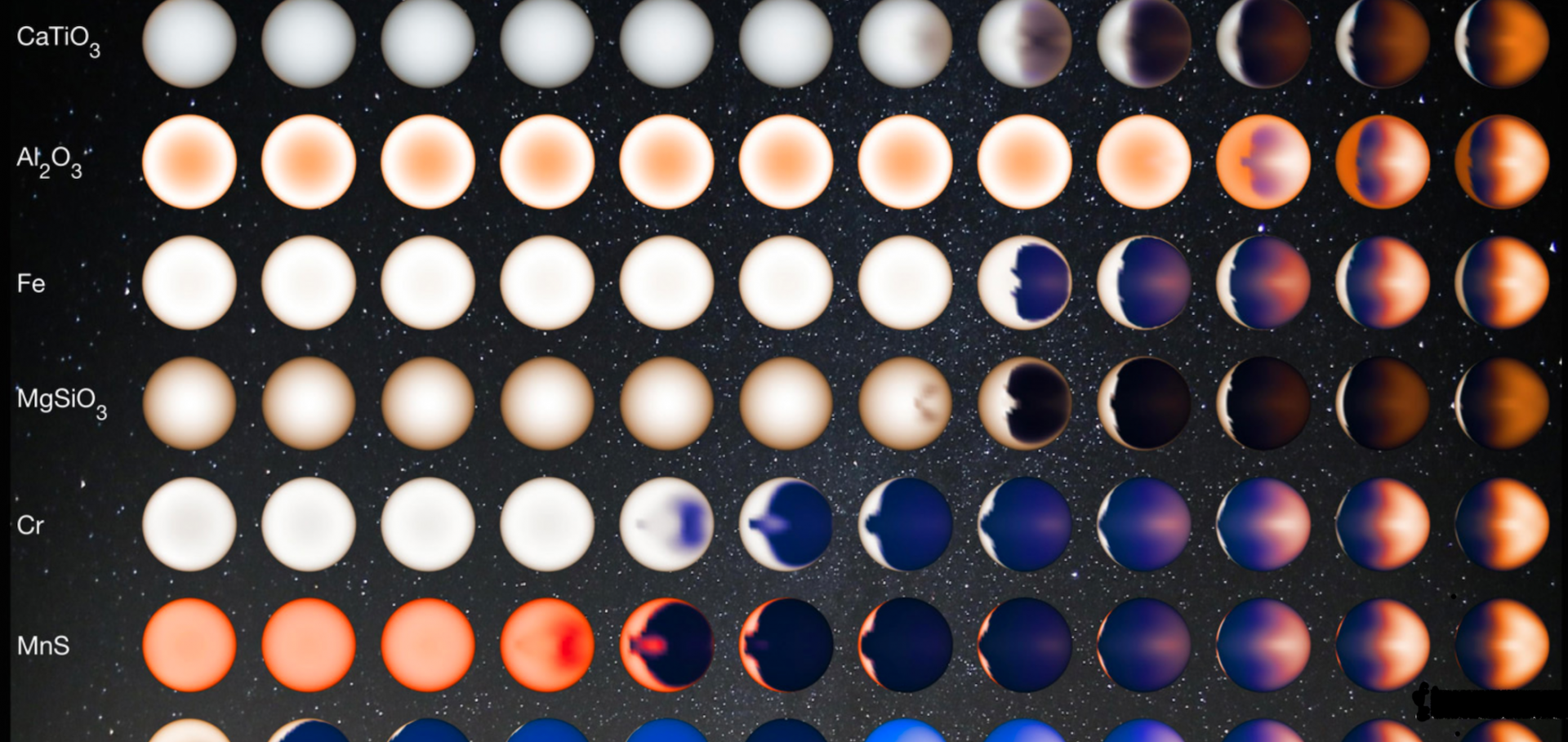
The ExoMol database (www.exomol.com) provides molecular data for spectroscopic studies of hot atmospheres. These data are widely used to model atmospheres of exoplanets, cool stars and other astronomical objects, as well as a variety of terrestrial applications. The 2024 data release reports the current status of the database which contains recommended line lists for 91 molecules and 224 isotopologues giving a total of almost 10$^{12}$ individual transitions. New features of the database include extensive "MARVELization" of line lists to allow them to be used for high resolutions studies, extension of several line lists to ultraviolet wavelengths, provision of photodissociation cross sections and extended provision of broadening parameters. Some of the in-house data specifications have been rewritten in JSON and moved to conformity with other international standards. Data products, including specific heats, a database of lifetimes for plasma studies, and the ExoMolHR web app which allows exclusively high resolution data to be extracted, are discussedNo umbrella needed: Confronting the hypothesis of iron rain on WASP-76b with post-processed general circulation models
(2021)
INFUSE: assembly and alignment of a rocket-borne FUV integral field spectrograph
Proceedings of SPIE--the International Society for Optical Engineering SPIE, the international society for optics and photonics 11821 (2021) 118210f-118210f-12
Meridional variations on C2H2 in Jupiter's stratosphere from Juno UVS observations
Journal of Geophysical Research: Planets American Geophysical Union 126:8 (2021) e2021JE006928