
Home
Department Of Physics text logo
  • Research
    • Our research
    • Our research groups
    • Our research in action
    • Research funding support
    • Summer internships for undergraduates
  • Study
    • Undergraduates
    • Postgraduates
  • Engage
    • For alumni
    • For business
    • For schools
    • For the public
  • Support
Menu
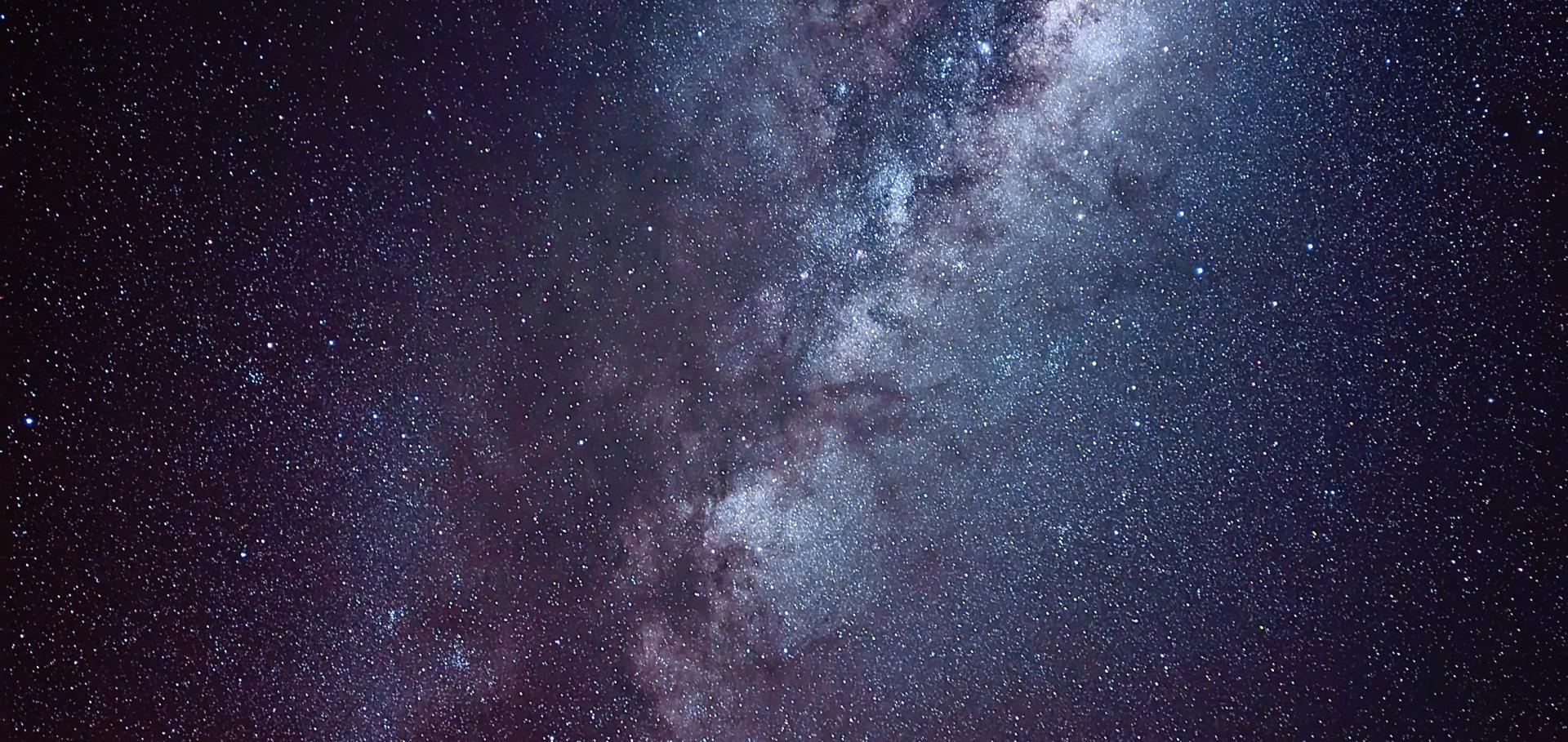
Milky Way Galaxy
Credit: H F Stevance

Dr Heloise Stevance

Schmidt AI in Science Fellow

Research theme

  • Astronomy and astrophysics

Sub department

  • Astrophysics
heloise.stevance@physics.ox.ac.uk
Denys Wilkinson Building, room Tower
hfstevance.com
  • About
  • Research
  • Selected invited lectures
  • Prizes, awards and recognition
  • Publications

JWST detection of heavy neutron capture elements in a compact object merger

(2023)

Authors:

A Levan, BP Gompertz, OS Salafia, M Bulla, E Burns, K Hotokezaka, L Izzo, GP Lamb, DB Malesani, SR Oates, ME Ravasio, A Rouco Escorial, B Schneider, N Sarin, S Schulze, NR Tanvir, K Ackley, G Anderson, GB Brammer, L Christensen, VS Dhillon, PA Evans, M Fausnaugh, W-F Fong, AS Fruchter, C Fryer, JPU Fynbo, N Gaspari, KE Heintz, J Hjorth, JA Kennea, MR Kennedy, T Laskar, G Leloudas, I Mandel, A Martin-Carrillo, BD Metzger, M Nicholl, A Nugent, JT Palmerio, G Pugliese, J Rastinejad, L Rhodes, A Rossi, SJ Smartt, HF Stevance, A Tohuvavohu, A van der Horst, SD Vergani, D Watson, T Barclay, K Bhirombhakdi, E Breedt, AA Breeveld, AJ Brown, S Campana, AA Chrimes, P D'Avanzo, V D'Elia, M De Pasquale, MJ Dyer, DK Galloway, JA Garbutt, MJ Green, DH Hartmann, P Jakobsson, P Kerry, D Langeroodi, JK Leung, SP Littlefair, J Munday, P O'Brien, SG Parsons, I Pelisoli, A Saccardi, DI Sahman, R Salvaterra, B Sbarufatti, D Steeghs, G Tagliaferri, CC Thöne, A de Ugarte Postigo, DA Kann
More details from the publisher

Panning for gold, but finding helium: Discovery of the ultra-stripped supernova SN 2019wxt from gravitational-wave follow-up observations

Astronomy & Astrophysics EDP Sciences 675 (2023) A201-A201

Authors:

I Agudo, L Amati, T An, FE Bauer, S Benetti, MG Bernardini, R Beswick, K Bhirombhakdi, T de Boer, M Branchesi, SJ Brennan, E Brocato, MD Caballero-García, E Cappellaro, N Castro Rodríguez, AJ Castro-Tirado, KC Chambers, E Chassande-Mottin, S Chaty, T-W Chen, A Coleiro, S Covino, F D’Ammando, P D’Avanzo, V D’Elia, A Fiore, A Flörs, M Fraser, S Frey, C Frohmaier, M Fulton, L Galbany, C Gall, H Gao, J García-Rojas, G Ghirlanda, S Giarratana, JH Gillanders, M Giroletti, BP Gompertz, M Gromadzki, KE Heintz, J Hjorth, Y-D Hu, ME Huber, A Inkenhaag, L Izzo, ZP Jin, PG Jonker, DA Kann

Abstract:

Most stripped envelope supernova progenitors are formed through binary interaction, losing hydrogen and/or helium from their outer layers. An emerging class of supernovae with the highest degree of envelope-stripping are thought to be the product of stripping by a NS companion. However, relatively few examples are known and the outcomes of such systems can be diverse and are poorly understood at present. Here, we present spectroscopic observations and high cadence multi-band photometry of SN 2023zaw, a low ejecta mass and rapidly evolving supernova. SN 2023zaw was discovered in a nearby spiral galaxy at D = 39.7 Mpc, with significant Milky Way extinction, $E(B-V) = 0.21$, and significant (but uncertain) host extinction. Bayesian evidence comparison reveals that nickel is not the only power source and an additional energy source is required to explain our observations. Our models suggest an ejecta mass of $M_{\rm ej} \sim 0.07\,\rm M_\odot$ and a synthesised nickel mass of $M_{\rm ej} \sim 0.007\,\rm M_\odot$ is required to explain the explosion. However an additional heating from a magnetar or interaction with circumstellar material is required to power the early light curve
More details from the publisher
Details from ORA
More details

New constraints on the Bray conservation-of-momentum natal kick model from multiple distinct observations

Monthly Notices of the Royal Astronomical Society Oxford University Press (OUP) 522:3 (2023) 3972-3985

Authors:

SM Richards, JJ Eldridge, MM Briel, HF Stevance, R Willcox
More details from the publisher
More details

End-to-end study of the host galaxy and genealogy of the first binary neutron star merger

Nature Astronomy Springer Nature 7:4 (2023) 444-450

Authors:

Heloise F Stevance, Jan J Eldridge, Elizabeth R Stanway, Joe Lyman, Anna F McLeod, Andrew J Levan
More details from the publisher
More details

Understanding the high-mass binary black hole population from stable mass transfer and super-Eddington accretion in bpass

Monthly Notices of the Royal Astronomical Society Oxford University Press (OUP) 520:4 (2023) 5724-5745

Authors:

MM Briel, HF Stevance, JJ Eldridge
More details from the publisher
More details

Pagination

  • First page First
  • Previous page Prev
  • …
  • Page 3
  • Page 4
  • Page 5
  • Page 6
  • Current page 7
  • Page 8
  • Page 9
  • Page 10
  • Page 11
  • …
  • Next page Next
  • Last page Last

Footer Menu

  • Contact us
  • Giving to the Dept of Physics
  • Work with us
  • Media

User account menu

  • Log in

Follow us

FIND US

Clarendon Laboratory,

Parks Road,

Oxford,

OX1 3PU

CONTACT US

Tel: +44(0)1865272200

University of Oxfrod logo Department Of Physics text logo
IOP Juno Champion logo Athena Swan Silver Award logo

© University of Oxford - Department of Physics

Cookies | Privacy policy | Accessibility statement

Built by: Versantus

  • Home
  • Research
  • Study
  • Engage
  • Our people
  • News & Comment
  • Events
  • Our facilities & services
  • About us
  • Giving to Physics
  • Current students
  • Staff intranet