Home
Department Of Physics text logo
  • Research
    • Our research
    • Our research groups
    • Our research in action
    • Research funding support
    • Summer internships for undergraduates
  • Study
    • Undergraduates
    • Postgraduates
  • Engage
    • For alumni
    • For business
    • For schools
    • For the public
  • Support
Menu
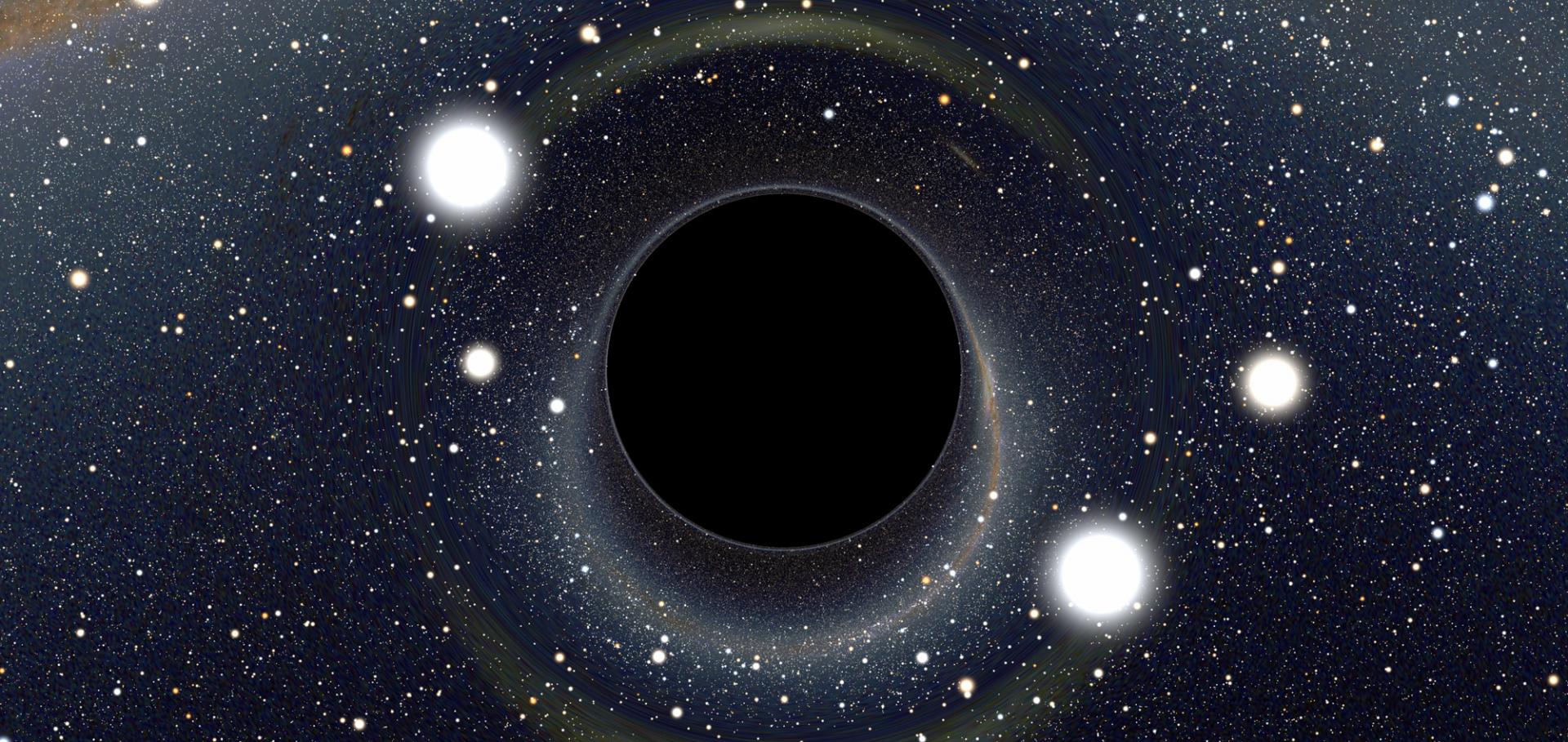
Black Hole

Lensing of space time around a black hole. At Oxford we study black holes observationally and theoretically on all size and time scales - it is some of our core work.

Credit: ALAIN RIAZUELO, IAP/UPMC/CNRS. CLICK HERE TO VIEW MORE IMAGES.

Professor Andrew Bunker

Professor of Astrophysics

Research theme

  • Astronomy and astrophysics

Sub department

  • Astrophysics

Research groups

  • Galaxy formation and evolution
Andy.Bunker@physics.ox.ac.uk
Telephone: 01865 (2)83126
Denys Wilkinson Building, room 702
  • About
  • Publications

BlackTHUNDER – A non-stellar Balmer break in a black hole-dominated little red dot at z = 7.04

Monthly Notices of the Royal Astronomical Society Oxford University Press 544:4 (2025) 3900-3935

Authors:

Xihan Ji, Roberto Maiolino, Hannah Übler, Jan Scholtz, Francesco D’Eugenio, Fengwu Sun, Michele Perna, Hannah Turner, Stefano Carniani, Santiago Arribas, Jake S Bennett, Andrew Bunker, Stéphane Charlot, Giovanni Cresci, Mirko Curti, Eiichi Egami, Andy Fabian, Kohei Inayoshi, Yuki Isobe, Gareth Jones, Ignas Juodžbalis, Nimisha Kumari, Jianwei Lyu, Giovanni Mazzolari, Eleonora Parlanti, Giacomo Venturi

Abstract:

Recent observations from James Webb Space Telescope (JWST) have revealed an abundant population of active galactic nuclei (AGNs) and the so-called ‘Little Red Dots’ (LRDs) at , many of which are characterized by V-shaped UV-to-optical continua with turnovers around the Balmer limit. The physical nature of these LRDs is unclear, and it remains debated whether the peculiar spectral shape originates from AGN, compact galaxies, or both. We present the analysis of new NIRSpec-IFU data from the BlackTHUNDER JWST Large Programme and archival NIRSpec-MSA data of a lensed LRD at . The spectra confirm the presence of a smooth Balmer break and a broad H tracing the Broad Line Region (BLR) of an AGN. The small velocity dispersion of the H narrow component indicates a small dynamical mass of the host galaxy of , which implies that the stellar population cannot contribute more than 10 per cent to the optical continuum. We show that the Balmer break can be well described by an AGN continuum absorbed by very dense () and nearly dust-free gas along our line of sight (possibly gas in the BLR or its surrounding). The same gas is expected to produce H absorption, at a level consistent with a tentative detection () in the high-resolution spectrum. Such a non-stellar origin of the Balmer break may apply to other LRDs, and would alleviate the issue of extremely high stellar mass surface densities inferred in the case of a stellar interpretation of the Balmer break. We note that this is a rare case of a black hole that is overmassive relative to both the host galaxy stellar and dynamical masses. We finally report indications of variability and the first attempt of AGN reverberation mapping at such an early epoch.
More details from the publisher
Details from ORA
More details

Parallel Application of Slitless Spectroscopy to Analyze Galaxy Evolution (PASSAGE): Survey Overview

The Astrophysical Journal American Astronomical Society 993:1 (2025) 152

Authors:

Matthew A Malkan, Vihang Mehta, Ayan Acharyya, Hollis B Akins, Anahita Alavi, Hakim Atek, Ivano Baronchelli, Andrew J Battisti, Kit Boyett, Marusa Bradac, Sean Tyler Bruton, Andrew J Bunker, Adam J Burgasser, Caitlin M Casey, Nuo Chen, James Colbert, Y Sophia Dai, Maximilien Franco, Clea Hannahs, Santosh Harish, Farhanul Hasan, Matthew J Hayes, Alaina L Henry, Mason Huberty

Abstract:

During the second half of Cycle 1 of the James Webb Space Telescope (JWST), we conducted the Parallel Application of Slitless Spectroscopy to Analyze Galaxy Evolution (PASSAGE) program. PASSAGE received the largest allocation of JWST observing time in Cycle 1, 591 hr of NIRISS observations to obtain direct near-IR imaging and slitless spectroscopy. About two-thirds of this was ultimately executed, to observe 63 high-latitude fields in pure-parallel mode. These have provided more than 10,000 near-infrared grism spectrograms of faint galaxies. PASSAGE brings unique advantages in studying galaxy evolution: (a) Unbiased spectroscopic search, without prior photometric preselection. By including the typical galaxies which have low masses and strong emission lines, slitless spectroscopy is the indispensable complement to any pretargeted spectroscopy. (b) The combination of several dozen independent fields to overcome cosmic variance. (c) Near-infrared spectral coverage, spanning a wide wavelength range of up to 1.0 to 2.3 μm, with minimal wavelength gaps, to measure multiple diagnostic rest-frame optical lines, minimizing sensitivity to dust reddening. (d) JWST’s unprecedented spatial resolution, in some cases using two orthogonal grism orientations, to overcome contamination due to blending of overlapping spectra. (e) Discovery of rare bright objects especially for detailed JWST follow-up. PASSAGE data are public immediately, and our team plans to deliver fully processed high-level data products. In this PASSAGE overview, we describe the survey and data quality, and present examples of these accomplishments in several areas of current interest in the evolution of emission-line galaxy properties, particularly at low masses.
More details from the publisher
Details from ORA
More details

Tentative rotation in a galaxy at z∼14 with ALMA

Monthly Notices of the Royal Astronomical Society: Letters Oxford University Press (OUP) (2025) slaf109

Authors:

J Scholtz, E Parlanti, S Carniani, M Kohandel, F Sun, AL Danhaive, R Maiolino, S Arribas, R Bhatawdekar, AJ Bunker, S Charlot, F D’Eugenio, A Ferrara, Z Ji, Gareth C Jones, P Rinaldi, B Robertson, A Pallottini, I Shivaei, Y Sun, S Tacchella, H Übler, G Venturi

Abstract:

Abstract We re-analysed ALMA observations of the [O iii] λ88μm emission line in JADES-GS-z14-0, so one of the most distant spectroscopically confirmed galaxy at z=14.18. Our analysis shows a tentative detection of a velocity gradient of [O iii] λ88μm using three independent tests: (1) construction of moment maps; (2) extraction of integrated spectra from a grid of apertures; and (3) spectro-astrometry in both the image and uv planes, confirming the presence of the velocity gradient at 3σ significance. We performed kinematical fitting using the KinMS code and estimated a dynamical mass of log10(Mdyn/$\rm M_\odot$)= 9.4$^{+0.8}_{-0.4}$, with the bulk of the uncertainties due to the degeneracy between dynamical mass and inclination. We measure an upper limit on the velocity dispersion (σv) of <40 km s−1 which results in an estimate of Vrot/σ > 2.5. This result, if confirmed with higher-resolution observations, would imply that kinematically cold discs are already in place at z ∼ 14. Comparison with mock observations from the SERRA cosmological simulations confirms that even low-resolution observations are capable of detecting a velocity gradient in z > 10 galaxies as compact as JADES-GS-z14-0. This work shows that deeper ALMA or JWST/NIRSpec IFS observations with high spatial resolution will be able to estimate an accurate dynamical mass for JADES-GS-z14-0, providing an upper limit to the stellar mass of this over-luminous galaxy.
More details from the publisher
More details

The dawn of discs: unveiling the turbulent ionized gas kinematics of the galaxy population at z ∼ 4–6 with JWST /NIRCam grism spectroscopy

Monthly Notices of the Royal Astronomical Society Oxford University Press 543:4 (2025) 3249-3302

Authors:

A Lola Danhaive, Sandro Tacchella, Hannah Übler, Anna de Graaff, Eiichi Egami, Benjamin D Johnson, Fengwu Sun, Santiago Arribas, Andrew J Bunker, Stefano Carniani, Gareth C Jones, Roberto Maiolino, William McClymont, Eleonora Parlanti, Charlotte Simmonds, Natalia C Villanueva, William M Baker, Daniel T Jaffe, Daniel Eisenstein, Kevin Hainline, Jakob M Helton, Zhiyuan Ji, Xiaojing Lin, Yichen Liu

Abstract:

Recent studies of gas kinematics at high redshift have reported discy systems that appear to challenge models of galaxy formation, but it is unclear whether they are representative of the underlying galaxy population. We present the first statistical sample of spatially resolved ionized gas kinematics at high redshift, comprised of 213 H emitters in GOODS-S and GOODS-N at redshifts , observed with James Webb Space Telescope/NIRCam slitless spectroscopy and imaging from JADES, FRESCO, and CONGRESS. The sample probes two orders of magnitude in stellar mass () and star formation rate (), and is representative down to . Using a novel inference tool, geko, we model the grism data to measure morphological and kinematic properties of the ionized gas, as probed by H . Our results are consistent with a decrease of the rotational support and increase of the velocity dispersion with redshift, when compared to , with km s and at . We study the relations between and , and different star formation tracers and find a large scatter and diversity, with the most significant correlation between and SFR. We find no evolution of the fraction of rotationally supported systems () from to , measured at in both redshift bins, for galaxies with masses . Overall, discs do not dominate the turbulent high-redshift galaxy population in the mass range probed by this work, but they remain a sizeable population. When placed in the context of studies up to cosmic noon, our results are consistent with a needed increase of disc-like systems with cosmic time.
More details from the publisher
Details from ORA
More details

Galaxy Activity, Torus and Outflow Survey (GATOS) X: Molecular gas clumpiness under the influence of AGN

(2025)

Authors:

Federico Esposito, Almudena Alonso-Herrero, Santiago García-Burillo, Ismael García-Bernete, Franà oise Combes, Richard Davies, Enrique Lopez-Rodriguez, Omaira González-Martín, Cristina Ramos Almeida, Anelise Audibert, Erin KS Hicks, Miguel Querejeta, Claudio Ricci, Enrica Bellocchi, Peter Boorman, Andrew J Bunker, Steph Campbell, Daniel E Delaney, Tanio Díaz-Santos, Donaji Esparza-Arredondo, Sebastian Hönig, à lvaro Labiano Ortega, Nancy A Levenson, Chris Packham, Miguel Pereira-Santaella, Rogemar A Riffel, Dimitra Rigopoulou, David J Rosario, Antonio Usero, Lulu Zhang
More details from the publisher

Pagination

  • First page First
  • Previous page Prev
  • …
  • Page 10
  • Page 11
  • Page 12
  • Page 13
  • Current page 14
  • Page 15
  • Page 16
  • Page 17
  • Page 18
  • …
  • Next page Next
  • Last page Last

Footer Menu

  • Contact us
  • Giving to the Dept of Physics
  • Work with us
  • Media

User account menu

  • Log in

Follow us

FIND US

Clarendon Laboratory,

Parks Road,

Oxford,

OX1 3PU

CONTACT US

Tel: +44(0)1865272200

University of Oxfrod logo Department Of Physics text logo
IOP Juno Champion logo Athena Swan Silver Award logo

© University of Oxford - Department of Physics

Cookies | Privacy policy | Accessibility statement

Built by: Versantus

  • Home
  • Research
  • Study
  • Engage
  • Our people
  • News & Comment
  • Events
  • Our facilities & services
  • About us
  • Giving to Physics
  • Current students
  • Staff intranet