Home
Department Of Physics text logo
  • Research
    • Our research
    • Our research groups
    • Our research in action
    • Research funding support
    • Summer internships for undergraduates
  • Study
    • Undergraduates
    • Postgraduates
  • Engage
    • For young people
    • For teachers
    • For the public
    • For alumni
    • For business
  • Support
Menu
CMP
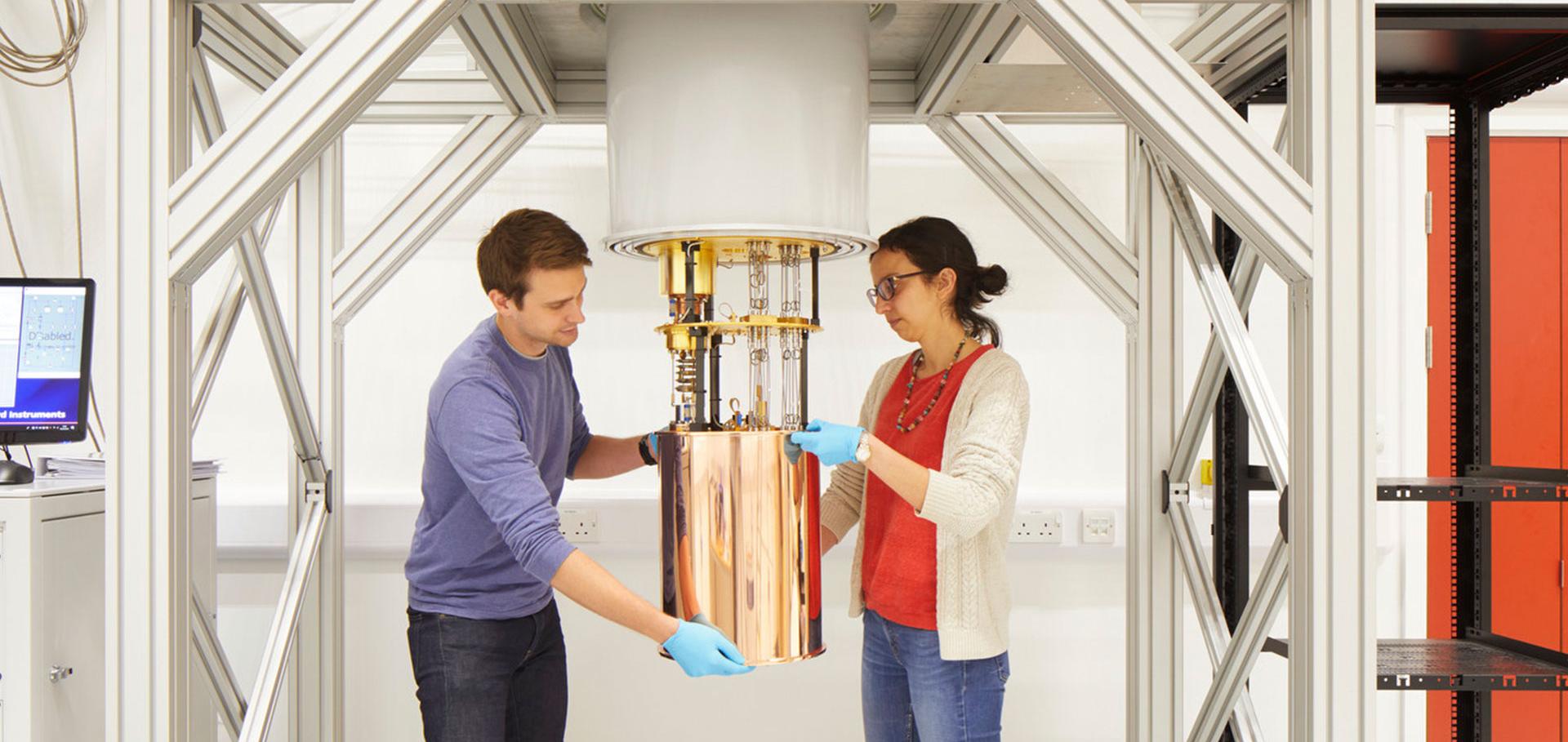
Credit: Jack Hobhouse

Simon Cassidy

Visitor - Long Term

Sub department

  • Condensed Matter Physics
simon.cassidy@chem.ox.ac.uk
  • About
  • Publications

In Situ Observation of Topotactic Linker Reorganization in the Aperiodic Metal–Organic Framework TRUMOF‑1

Journal of the American Chemical Society American Chemical Society 146:40 (2024) 27262-27266

Authors:

Guy Greenbaum, Patrick W Doheny, Robert AI Paraoan, Yevheniia Kholina, Stefan Michalik, Simon J Cassidy, Hamish H-M Yeung, Andrew L Goodwin

Abstract:

We use in situ synchrotron X-ray diffraction measurements to monitor the solvothermal crystallization mechanism of the aperiodic metal–organic framework TRUMOF-1. Following an initial incubation period, TRUMOF-1 forms as a metastable intermediate that subsequently transforms into an ordered product with triclinic crystal symmetry. We determine the structure of this ordered phase, which we call msw-TRUMOF-1, and show that it is related to TRUMOF-1 through topotactic reorganization of linker occupancies. Our results imply that the connectivity of TRUMOF-1 can be reorganized, as required for data storage and manipulation applications.
More details from the publisher
Details from ORA
More details
More details

Percolation-induced ferrimagnetism from vacancy order in [Gua]Mn1–xFe2x/3(HCOO)3 hybrid perovskites

Journal of the American Chemical Society American Chemical Society 146:20 (2024) 13714-13718

Authors:

Johnathan Bulled, Alexandra Willis, Zoe Faure Beaulieu, Simon J Cassidy, Jonas Bruckmoser, Hanna LB Boström, Andrew L Goodwin

Abstract:

We report the magnetic behavior of the hybrid perovskites [Gua]Mn1–xFe2x/3□x/3(HCOO)3 (0 ≤ x ≤ 0.88), showing that vacancy ordering drives bulk ferrimagnetism for x > 0.6. The behavior is rationalized in terms of a simple microscopic model of percolation-induced ferrimagnetism. Monte Carlo simulations driven by this model reproduce the experimental dependence of magnetic susceptibility on x and show that, at intermediate compositions, domains of short-range vacancy order lead to the emergence of local magnetization. Our results open up a new avenue for the design of multiferroic hybrid perovskites.
More details from the publisher
Details from ORA
More details
More details

Solid-State Chemistry Shuffling of Alkali Ions toward New Layered Oxide Materials

Chemistry of Materials American Chemical Society (ACS) 36:2 (2024) 892-900

Authors:

Eunice Mumba Mpanga, Romain Wernert, François Fauth, Emmanuelle Suard, Maxim Avdeev, Bernard Fraisse, Paula Sanz Camacho, Dany Carlier, Oleg Lebedev, Simon J Cassidy, Gwenaëlle Rousse, Romain Berthelot
More details from the publisher
More details

K-ion slides in Prussian blue analogues

Journal of the American Chemical Society American Chemical Society 145:44 (2023) 24249-24259

Authors:

John Cattermull, Nikolaj Roth, Simon J Cassidy, Mario Pasta, Andrew Goodwin

Abstract:

We study the phenomenology of cooperative off-centering of K+ ions in potassiated Prussian blue analogues (PBAs). The principal distortion mechanism by which this off-centering occurs is termed a “K-ion slide”, and its origin is shown to lie in the interaction between local electrostatic dipoles that couple through a combination of electrostatics and elastic strain. Using synchrotron powder X-ray diffraction measurements, we determine the crystal structures of a range of low-vacancy K2M[Fe(CN)6] PBAs (M = Ni, Co, Fe, Mn, Cd) and establish an empirical link between composition, temperature, and slide-distortion magnitude. Our results reflect the common underlying physics responsible for K-ion slides and their evolution with temperature and composition. Monte Carlo simulations driven by a simple model of dipolar interactions and strain coupling reproduce the general features of the experimental phase behavior. We discuss the implications of our study for optimizing the performance of PBA K-ion battery cathode materials and also its relevance to distortions in other, conceptually related, hybrid perovskites.
More details from the publisher
Details from ORA
More details
More details

Polytypism of layered MX2 materials

Physical Review Materials American Physical Society 7:9 (2023) 093605

Authors:

Emma H Wolpert, Simon Cassidy, Andrew L Goodwin

Abstract:

We revisit the problem of polytypism in layered MX2 materials, with a view to reinterpreting the phase space accessible to this family. Our starting point is to develop a simple, constructive, and compact label for the most commonly observed stacking arrangements, similar to the Glazer notation used to label tilt systems in perovskites. The key advantage of this label in the context of MX2 systems is that it contains sufficient information to generate the corresponding stacking sequences uniquely. Using a related approach, we generate a Cartesian representation of the phase space containing all possible MX2 polytypes, with the most common structures appearing as limiting cases. We argue that variation in, e.g., composition, temperature, or pressure may allow navigation of this phase space along continuous paths. This interpretation is shown to be consistent with the structural evolution of stacking-faulted MX2 systems as a function in temperature and pressure. In this way, our study highlights the potential for controlling composition/structure/property relationships among layered MX2 materials in ways that might not previously have been obvious.
More details from the publisher
Details from ORA
More details

Pagination

  • First page First
  • Previous page Prev
  • Page 1
  • Current page 2
  • Page 3
  • Page 4
  • Page 5
  • Page 6
  • Page 7
  • Page 8
  • Page 9
  • …
  • Next page Next
  • Last page Last

Footer Menu

  • Contact us
  • Giving to the Dept of Physics
  • Work with us
  • Media

User account menu

  • Log in

Follow us

FIND US

Clarendon Laboratory,

Parks Road,

Oxford,

OX1 3PU

CONTACT US

Tel: +44(0)1865272200

University of Oxfrod logo Department Of Physics text logo
IOP Juno Champion logo Athena Swan Silver Award logo

© University of Oxford - Department of Physics

Cookies | Privacy policy | Accessibility statement

Built by: Versantus

  • Home
  • Research
  • Study
  • Engage
  • Our people
  • News & Comment
  • Events
  • Our facilities & services
  • About us
  • Giving to Physics
  • Current students
  • Staff intranet