Home
Department Of Physics text logo
  • Research
    • Our research
    • Our research groups
    • Our research in action
    • Research funding support
    • Summer internships for undergraduates
  • Study
    • Undergraduates
    • Postgraduates
  • Engage
    • For alumni
    • For business
    • For schools
    • For the public
  • Support
Menu
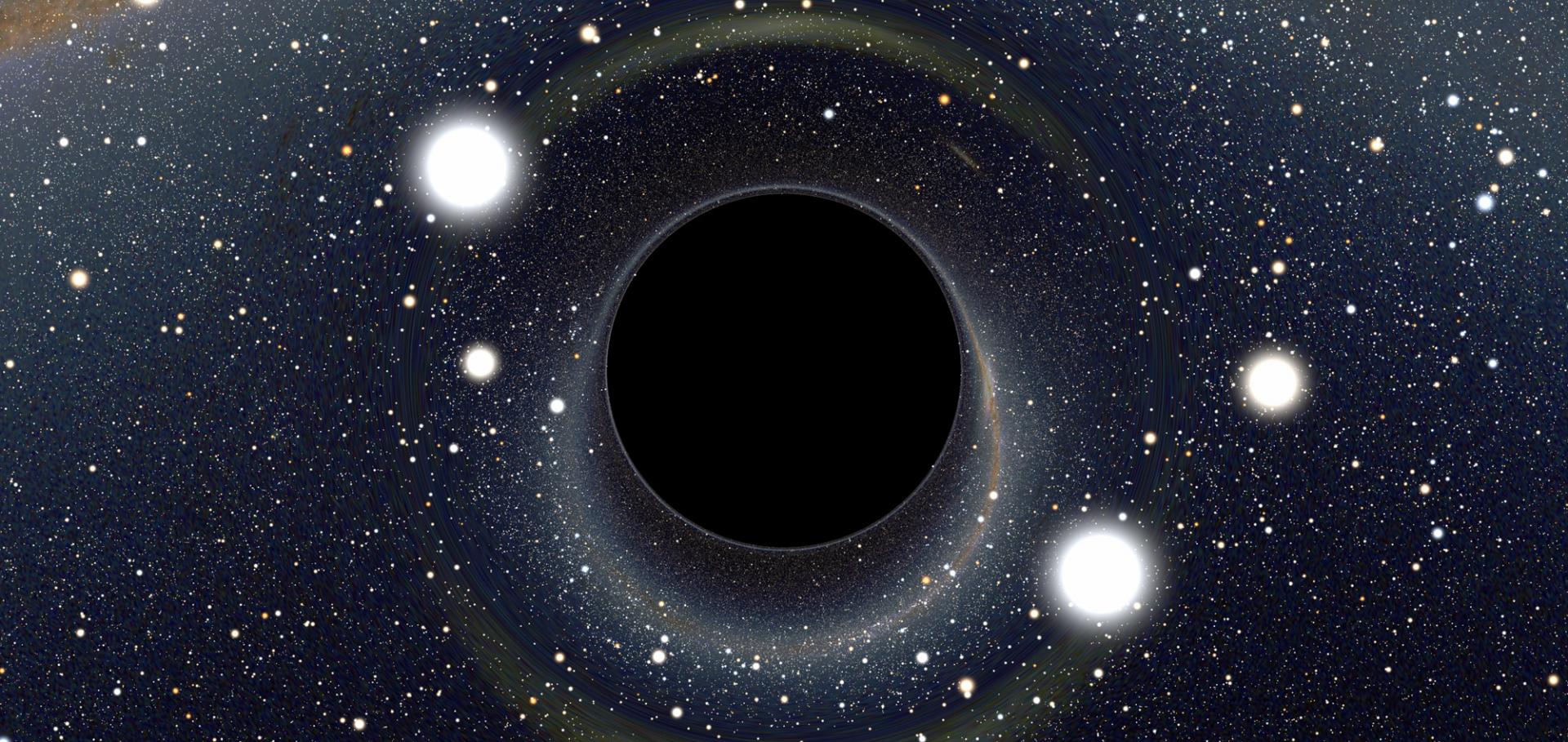
Black Hole

Lensing of space time around a black hole. At Oxford we study black holes observationally and theoretically on all size and time scales - it is some of our core work.

Credit: ALAIN RIAZUELO, IAP/UPMC/CNRS. CLICK HERE TO VIEW MORE IMAGES.

Carlos Garcia-Garcia

Visitor

Research theme

  • Particle astrophysics & cosmology

Sub department

  • Astrophysics

Research groups

  • Beecroft Institute for Particle Astrophysics and Cosmology
  • Rubin-LSST
carlos.garcia-garcia@physics.ox.ac.uk
Telephone: 01865 283015
Denys Wilkinson Building, room 555E
GitLab
GitHub
Publications (InspireHEP)
  • About
  • Publications

Cosmic shear with small scales: DES-Y3, KiDS-1000 and HSC-DR1

Journal of Cosmology and Astroparticle Physics IOP Publishing 2024:08 (2024) 024

Authors:

Carlos García-García, Matteo Zennaro, Giovanni Aricò, David Alonso, Raul E Angulo

Abstract:

We present a cosmological analysis of the combination of the DES-Y3, KiDS-1000 and HSC-DR1 weak lensing samples under a joint harmonic-space pipeline making use of angular scales down to ℓmax=4500, corresponding to significantly smaller scales (δθ ~ 2.4') than those commonly used in cosmological weak lensing studies. We are able to do so by accurately modelling non-linearities and the impact of baryonic effects using Baccoemu. We find S 8 ≡ σ 8√(Ωm/0.3) = 0.795+0.015 -0.017, in relatively good agreement with CMB constraints from Planck (less than ~1.8σ tension), although we obtain a low value of Ωm =0.212+0.017 -0.032, in tension with Planck at the ~3σ level. We show that this can be recast as an H0 tension if one parametrises the amplitude of fluctuations and matter abundance in terms of variables without hidden dependence on H0. Furthermore, we find that this tension reduces significantly after including a prior on the distance-redshift relationship from BAO data, without worsening the fit. In terms of baryonic effects, we show that failing to model and marginalise over them on scales ℓ ≲ 2000 does not significantly affect the posterior constraints for DES-Y3 and KiDS-1000, but has a mild effect on deeper samples, such as HSC-DR1. This is in agreement with our ability to only mildly constrain the parameters of the Baryon Correction Model with these data.
More details from the publisher
Details from ORA
More details

X-ray-cosmic-shear cross-correlations: first detection and constraints on baryonic effects

Physical Review Letters American Physical Society 133:5 (2024) 51001

Authors:

Tassia Ferreira, David Alonso, Carlos Garcia-Garcia, Nora Elisa Chisari

Abstract:

We report the first detection, at very high significance (23⁢𝜎), of the cross-correlation between cosmic shear and the diffuse x-ray background, using data from the Dark Energy Survey and the ROSAT satellite. The x-ray cross-correlation signal is sensitive to the distribution of the surrounding gas in dark matter halos. This allows us to use our measurements to place constraints on key physical parameters that determine the impact of baryonic effects in the matter power spectrum. In particular, we determine the mass of halos in which feedback has expelled half of their gas content on average to be log10⁡(Mc/M⊙)=13.64⁢3+0.081−0.12 and the polytropic index of the gas to be Γ =1.23⁢1+0.015−0.011. This represents a first step in the direct use of x-ray cross-correlations to obtain improved constraints on cosmology and the physics of the intergalactic gas.

More details from the publisher
Details from ORA
More details
More details

Assessment of Gradient-Based Samplers in Standard Cosmological Likelihoods

(2024)

Authors:

Arrykrishna Mootoovaloo, Jaime Ruiz-Zapatero, Carlos García-García, David Alonso
More details from the publisher
Details from ArXiV

Cosmic shear with small scales: DES-Y3, KiDS-1000 and HSC-DR1

(2024)

Authors:

Carlos García-García, Matteo Zennaro, Giovanni Aricò, David Alonso, Raul E Angulo
More details from the publisher
Details from ArXiV

LimberJack.jl: auto-differentiable methods for angular power spectra analyses

The Open Journal of Astrophysics Maynooth Academic Publishing 7 (2024)

Authors:

Jaime Ruiz-Zapatero, David Alonso, Carlos Garcia-Garcia, Andrina Nicola, Arrykrishna Mootoovaloo, Jamie M Sullivan, Marco Bonici, Pedro Ferreira

Abstract:

We present LimberJack.jl, a fully auto-differentiable code for cosmological analyses of 2 point auto- and cross-correlation measurements from galaxy clustering, CMB lensing and weak lensing data written in Julia. Using Julia’s auto-differentiation ecosystem, LimberJack.jl can obtain gradients for its outputs an order of magnitude faster than traditional finite difference methods. This makes LimberJack.jl greatly synergistic with gradient-based sampling methods, such as Hamiltonian Monte Carlo, capable of efficiently exploring parameter spaces with hundreds of dimensions. We first prove LimberJack.jl’s reliability by reanalysing the DES Y1 3×2-point data. We then showcase its capabilities by using a O(100) parameters Gaussian Process to reconstruct the cosmic growth from a combination of DES Y1 galaxy clustering and weak lensing data, eBOSS QSO’s, CMB lensing and redshift-space distortions. Our Gaussian process reconstruction of the growth factor is statistically consistent with the ΛCDM Planck 2018 prediction at all redshifts. Moreover, we show that the addition of RSD data is extremely beneficial to this type of analysis, reducing the uncertainty in the reconstructed growth factor by 20% on average across redshift. LimberJack.jl is a fully open-source project available on Julia’s general repository of packages and GitHub.
More details from the publisher
Details from ORA

Pagination

  • First page First
  • Previous page Prev
  • Page 1
  • Current page 2
  • Page 3
  • Page 4
  • Page 5
  • Page 6
  • Page 7
  • Next page Next
  • Last page Last

Footer Menu

  • Contact us
  • Giving to the Dept of Physics
  • Work with us
  • Media

User account menu

  • Log in

Follow us

FIND US

Clarendon Laboratory,

Parks Road,

Oxford,

OX1 3PU

CONTACT US

Tel: +44(0)1865272200

University of Oxfrod logo Department Of Physics text logo
IOP Juno Champion logo Athena Swan Silver Award logo

© University of Oxford - Department of Physics

Cookies | Privacy policy | Accessibility statement

Built by: Versantus

  • Home
  • Research
  • Study
  • Engage
  • Our people
  • News & Comment
  • Events
  • Our facilities & services
  • About us
  • Giving to Physics
  • Current students
  • Staff intranet