Home
Department Of Physics text logo
  • Research
    • Our research
    • Our research groups
    • Our research in action
    • Research funding support
    • Summer internships for undergraduates
  • Study
    • Undergraduates
    • Postgraduates
  • Engage
    • For young people
    • For teachers
    • For the public
    • For alumni
    • For business
  • Support
Menu
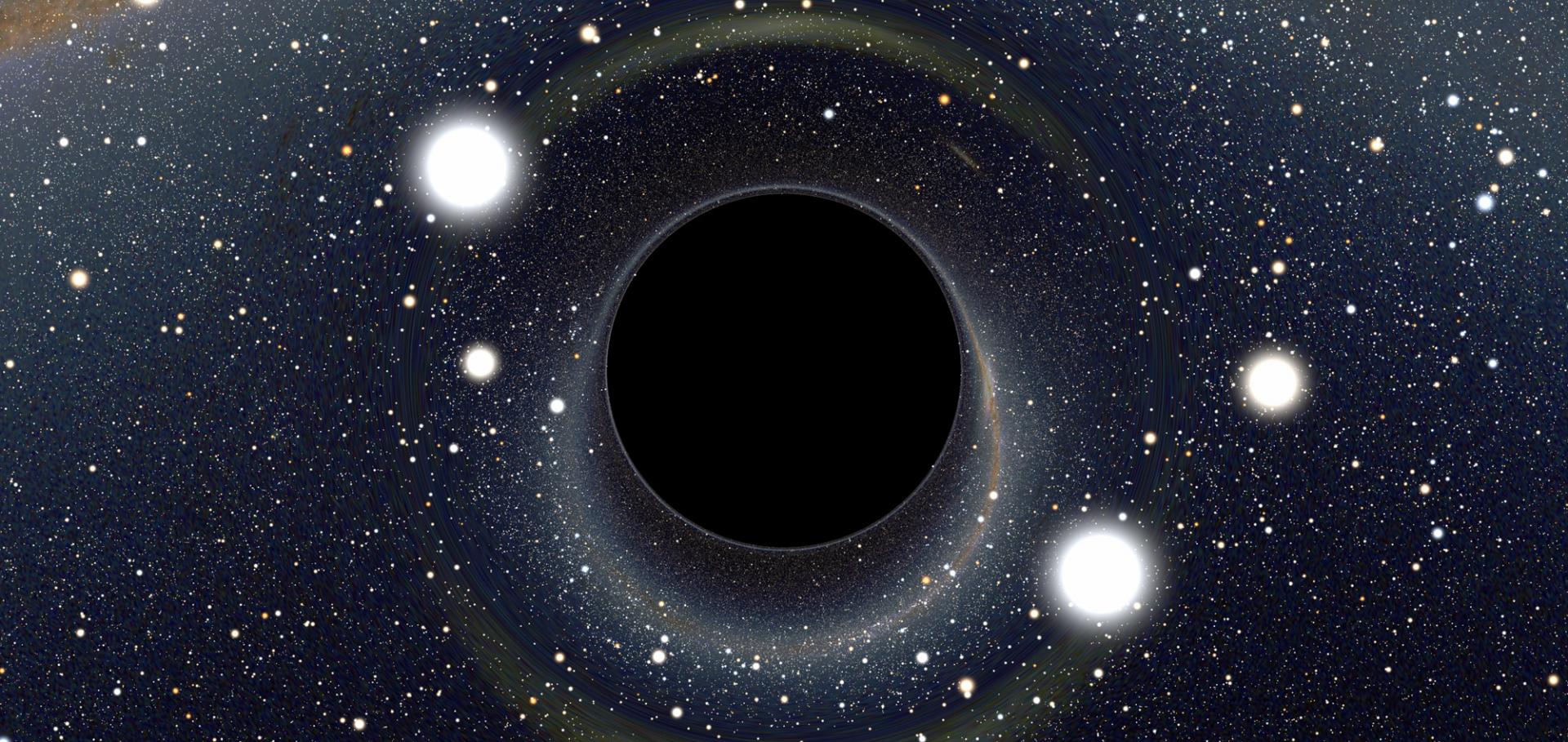
Black Hole

Lensing of space time around a black hole. At Oxford we study black holes observationally and theoretically on all size and time scales - it is some of our core work.

Credit: ALAIN RIAZUELO, IAP/UPMC/CNRS. CLICK HERE TO VIEW MORE IMAGES.

Prof. Matt Jarvis

Professor of Astrophysics

Research theme

  • Astronomy and astrophysics

Sub department

  • Astrophysics

Research groups

  • Cosmology
  • Galaxy formation and evolution
  • Hintze Centre for Astrophysical Surveys
  • MeerKAT
  • Rubin-LSST
  • The Square Kilometre Array (SKA)
Matt.Jarvis@physics.ox.ac.uk
Telephone: 01865 (2)83654
Denys Wilkinson Building, room 703
  • About
  • Publications

A search for debris disks in the Herschel -ATLAS

Astronomy and Astrophysics 518:8 (2010)

Authors:

MA Thompson, DJB Smith, JA Stevens, MJ Jarvis, E Vidal Perez, J Marshall, L Dunne, S Eales, GJ White, L Leeuw, B Sibthorpe, M Baes, E González-Solares, D Scott, J Vieiria, A Amblard, R Auld, DG Bonfield, D Burgarella, S Buttiglione, A Cava, DL Clements, A Cooray, A Dariush, G De Zotti, S Dye, D Frayer, J Fritz, J Gonzalez-Nuevo, D Herranz, E Ibar, RJ Ivison, G Lagache, M Lopez-Caniego, S Maddox, M Negrello, E Pascale, M Pohlen, E Rigby, G Rodighiero, S Samui, S Serjeant, P Temi, I Valtchanov, A Verma

Abstract:

Aims. We aim to demonstrate that the Herschel-ATLAS (H-ATLAS) is suitable for a blind and unbiased survey for debris disks by identifying candidate debris disks associated with main sequence stars in the initial science demonstration field of the survey. We show that H-ATLAS reveals a population of far-infrared/sub-mm sources that are associated with stars or star-like objects on the SDSS main-sequence locus. We validate our approach by comparing the properties of the most likely candidate disks to those of the known population. Methods. We use a photometric selection technique to identify main sequence stars in the SDSS DR7 catalogue and a Bayesian Likelihood Ratio method to identify H-ATLAS catalogue sources associated with these main sequence stars. Following this photometric selection we apply distance cuts to identify the most likely candidate debris disks and rule out the presence of contaminating galaxies using UKIDSS LAS K-band images. Results. We identify 78 H-ATLAS sources associated with SDSS point sources on the main-sequence locus, of which two are the most likely debris disk candidates: H-ATLAS J090315.8 and H-ATLAS J090240.2. We show that they are plausible candidates by comparing their properties to the known population of debris disks. Our initial results indicate that bright debris disks are rare, with only 2 candidates identified in a search sample of 851 stars. We also show that H-ATLAS can derive useful upper limits for debris disks associated with Hipparcos stars in the field and outline the future prospects for our debris disk search programme. © 2010 ESO.
More details from the publisher

Constraints on star-forming galaxies at z ≥ 6.5 from HAWK-I Y-band imaging of GOODS-South

Monthly Notices of the Royal Astronomical Society 404:1 (2010) 212-223

Authors:

S Hickey, A Bunker, MJ Jarvis, K Chiu, D Bonfield

Abstract:

We present the results of our search for high-redshift Lyman-break galaxies over the GOODS-South field. We use Hubble Space Telescope (HST)-ACS data in B, V, i′ & z′, Very Large Telescope (VLT)-ISAAC J and Ks, Spitzer-Infrared Array Camera (IRAC) 3.6, 4.5, 5.8 and 8.0 μm data in conjunction with the new HAWK-I Y-band science verification data to search for dropout galaxies in the redshift range 6 < z < 9. We survey ≈119 arcmin2 to YAB = 25.7 (5σ), of which 37.5 arcmin2 reaches YAB = 25.9. Candidate z′ and Y dropouts were selected on the basis of a colour cut of (Y - J)AB > 0.75 mag and (z′ - Y)AB > 1.0 mag, respectively. We find no robust Y-drops (z ≈ 9) brighter than JAB < 25.4. In our search for z′-band dropouts (z ≈ 6.5-7.5), we identify four possible candidates, two with z′-drop colours and clear Spitzer-IRAC detections and two less likely candidates. We also identify two previously known Galactic T-dwarf stellar contaminants with these colours, and two likely transient objects seen in the Y-band data. The implications if all or none of our candidates is real on the ultraviolet galaxy luminosity functions at z > 6.5 are explored. We find our number of z′-drop candidates to be insufficient based on the expected number of z′ drops in a simple no-evolution scenario from the z = 3 Lyman-break galaxy luminosity function but we are consistent with the observed luminosity function at z ≈ 6 (if all our candidates are real). However, if one or both of our best z′-drop candidates are not z > 6.5 galaxies, this would demand evolution of the luminosity function at early epochs, in the sense that the number density of ultraviolet luminous star- forming galaxies at z > 7 is less than at z ~ 6. We show that the future surveys to be conducted with the European Southern Observatory VISTA telescope over the next 5 yr will be able to measure the bulk of the luminosity function for both z′ and Y dropouts and thus provide the strongest constraints on the level of star-formation within the epoch of reionization. © 2010 The Authors. Journal compilation. © 2010 RAS.
More details from the publisher
More details
Details from ArXiV

H-ATLAS: PACS imaging for the Science Demonstration Phase

Monthly Notices of the Royal Astronomical Society 409:1 (2010) 38-47

Authors:

E Ibar, RJ Ivison, A Cava, G Rodighiero, S Buttiglione, P Temi, D Frayer, J Fritz, L Leeuw, M Baes, E Rigby, A Verma, S Serjeant, T Müller, R Auld, A Dariush, L Dunne, S Eales, S Maddox, P Panuzzo, E Pascale, M Pohlen, D Smith, GD Zotti, M Vaccari, R Hopwood, A Cooray, D Burgarella, M Jarvis

Abstract:

We describe the reduction of data taken with the PACS instrument on board the Herschel Space Observatory in the Science Demonstration Phase of the Herschel-ATLAS (H-ATLAS) survey, specifically data obtained for a 4 × 4 deg2 region using Herschel's fast-scan (60 arcsec s-1) parallel mode. We describe in detail a pipeline for data reduction using customized procedures within hipe from data retrieval to the production of science-quality images. We found that the standard procedure for removing cosmic ray glitches also removed parts of bright sources and so implemented an effective two-stage process to minimize these problems. The pronounced 1/f noise is removed from the timelines using 3.4- and 2.5-arcmin boxcar high-pass filters at 100 and 160 μm. Empirical measurements of the point spread function (PSF) are used to determine the encircled energy fraction as a function of aperture size. For the 100- and 160-μm bands, the effective PSFs are ~9 and ~13 arcsec (FWHM), and the 90-per cent encircled energy radii are 13 and 18 arcsec. Astrometric accuracy is good to ≤2 arcsec. The noise in the final maps is correlated between neighbouring pixels and rather higher than advertised prior to launch. For a pair of cross-scans, the 5σ point-source sensitivities are 125-165 mJy for 9-13 arcsec radius apertures at 100 μm and 150-240 mJy for 13-18 arcsec radius apertures at 160 μm. © 2010 The Authors. Journal compilation © 2010 RAS.
More details from the publisher
More details
Details from ArXiV

Herschel-ATLAS: Far-infrared properties of radio-selected galaxies

Monthly Notices of the Royal Astronomical Society 409:1 (2010) 122-131

Authors:

MJ Hardcastle, JS Virdee, MJ Jarvis, DG Bonfield, L Dunne, S Rawlings, JA Stevens, NM Christopher, I Heywood, T Mauch, D Rigopoulou, A Verma, IK Baldry, SP Bamford, S Buttiglione, A Cava, DL Clements, A Cooray, SM Croom, A Dariush, G De Zotti, S Eales, J Fritz, DT Hill, D Hughes, R Hopwood, E Ibar, RJ Ivison, DH Jones, J Loveday, SJ Maddox, MJ Michałowski, M Negrello, P Norberg, M Pohlen, M Prescott, EE Rigby, ASG Robotham, G Rodighiero, D Scott, R Sharp, DJB Smith, P Temi, E Van Kampen

Abstract:

We use the Herschel-Astrophysical Terahertz Large Area Survey (ATLAS) science demonstration data to investigate the star formation properties of radio-selected galaxies in the GAMA-9h field as a function of radio luminosity and redshift. Radio selection at the lowest radio luminosities, as expected, selects mostly starburst galaxies. At higher radio luminosities, where the population is dominated by active galactic nuclei (AGN), we find that some individual objects are associated with high far-infrared luminosities. However, the far-infrared properties of the radio-loud population are statistically indistinguishable from those of a comparison population of radio-quiet galaxies matched in redshift and K-band absolute magnitude. There is thus no evidence that the host galaxies of these largely low-luminosity (Fanaroff-Riley class I), and presumably low-excitation, AGN, as a population, have particularly unusual star formation histories. Models in which the AGN activity in higher luminosity, high-excitation radio galaxies is triggered by major mergers would predict a luminosity-dependent effect that is not seen in our data (which only span a limited range in radio luminosity) but which may well be detectable with the full Herschel-ATLAS data set. © 2010 The Authors. Journal compilation © 2010 RAS.
More details from the publisher
More details
Details from ArXiV

LOFAR and the low frequency universe. Probing the formation and evolution of massive galaxies, AGN and clusters

Proceedings of Science 112 (2010)

Authors:

H Röttgering, RJ Van Weeren, G Miley, I Snellen, D Rafferty, S Van Der Tol, L Birzan, A Shulevski, M Haverkorn, G Heald, J McKean, R Morganti, R Pizzo, G Van Diepen, M Wise, JE Van Zwieten, P Best, L Ker, M Jarvis, M Brüggen, E Orrù, F De Gasperin, A Bonafede, G Brunetti, G Macario, C Ferrari, P Barthel, K Chyży, J Conway, M Lehnert, C Tasse, N Jackson, D Bacon, G White

Abstract:

One of the most fundamental problems in modern astrophysics concerns the formation of galaxies and clusters of galaxies. The Dutch-European radio telescope LOFAR will open up the last unexplored window of the electromagnetic spectrum for astrophysical studies and make important contributions to our knowledge of the structure formation in the universe. LOFAR's world-class observational capabilities will be used to survey the entire Northern low-frequency sky at a number of key frequencies. Studies of the most distant radio galaxies, clusters of galaxies and the cosmic star formation history and the exploration of new parameter space for serendipitous discovery were the four key topics that drove the areas, depths and frequency coverage of the proposed surveys. In addition to the key topics, the LOFAR surveys will provide a wealth of unique data for a huge number of additional important topics, including: detailed studies of AGN, and AGN physics, AGN evolution and black hole accretion history, nearby galaxies, strong gravitational lenses, cosmological parameters and large-scale structure formation, and Galactic radio sources. In this contribution we will first briefly discuss the scientific topics that have driven the design of the surveys. Subsequently we will present the design of the surveys. We will then briefly report on commissioning work carried out to prepare the instrument and the software pipelines for carrying out these surveys. At the end we will elaborate on LOFAR studies on clusters and show some first LOFAR results related to the nearby rich cluster Abell 2256. With at the time of writing only 15 out of the planned 36 Dutch stations working and several aspects of the calibration pipleline not fully functional, the obtained 135 MHz image already is among the deepest ever produced at low frequencies. The central halo of A2256 is well detected, illustrating the potential of LOFAR to map diffuse steep spectrum radio emission.

Pagination

  • First page First
  • Previous page Prev
  • …
  • Page 81
  • Page 82
  • Page 83
  • Page 84
  • Current page 85
  • Page 86
  • Page 87
  • Page 88
  • Page 89
  • …
  • Next page Next
  • Last page Last

Footer Menu

  • Contact us
  • Giving to the Dept of Physics
  • Work with us
  • Media

User account menu

  • Log in

Follow us

FIND US

Clarendon Laboratory,

Parks Road,

Oxford,

OX1 3PU

CONTACT US

Tel: +44(0)1865272200

University of Oxfrod logo Department Of Physics text logo
IOP Juno Champion logo Athena Swan Silver Award logo

© University of Oxford - Department of Physics

Cookies | Privacy policy | Accessibility statement

Built by: Versantus

  • Home
  • Research
  • Study
  • Engage
  • Our people
  • News & Comment
  • Events
  • Our facilities & services
  • About us
  • Giving to Physics
  • Current students
  • Staff intranet