Home
Department Of Physics text logo
  • Research
    • Our research
    • Our research groups
    • Our research in action
    • Research funding support
    • Summer internships for undergraduates
  • Study
    • Undergraduates
    • Postgraduates
  • Engage
    • For young people
    • For teachers
    • For the public
    • For alumni
    • For business
  • Support
Menu
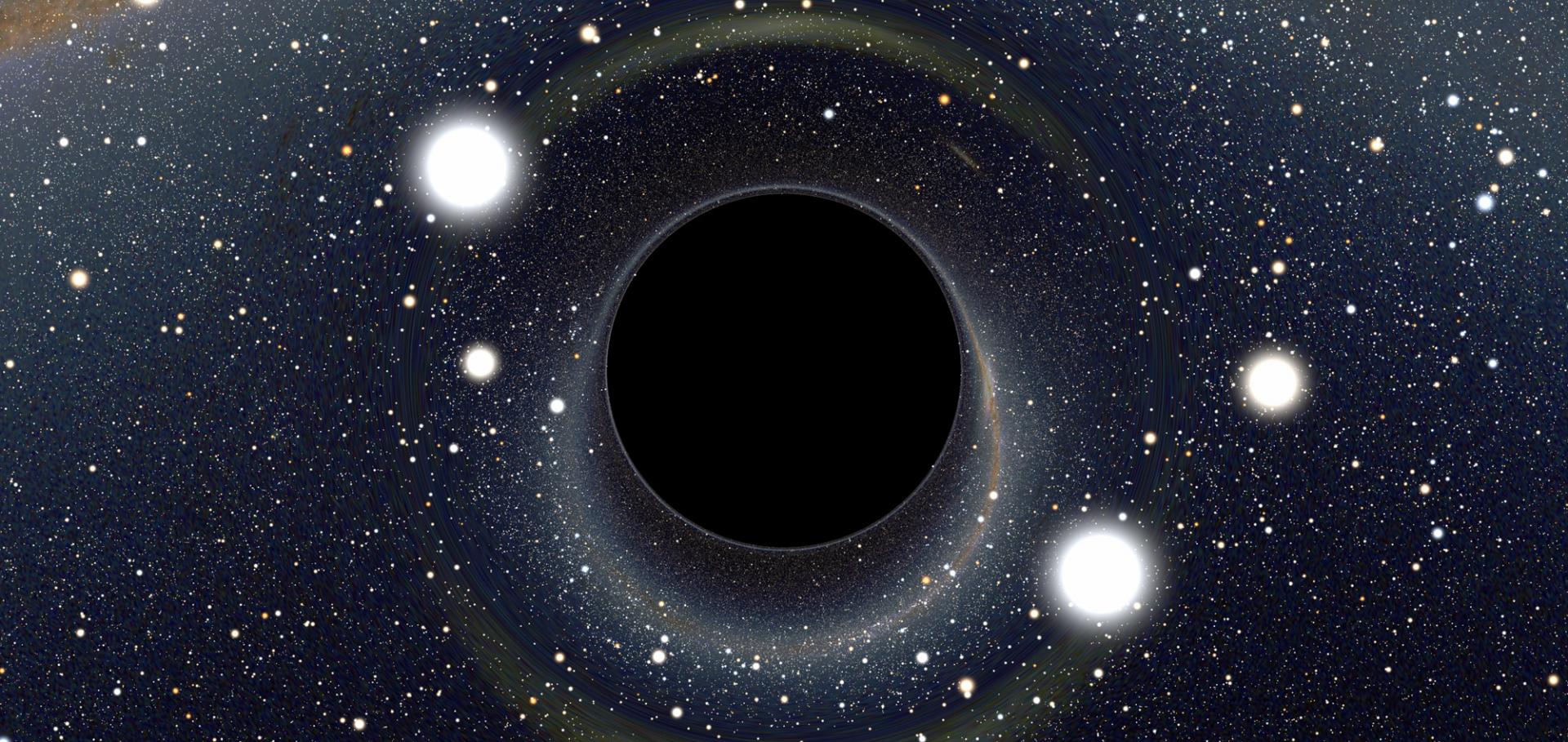
Black Hole

Lensing of space time around a black hole. At Oxford we study black holes observationally and theoretically on all size and time scales - it is some of our core work.

Credit: ALAIN RIAZUELO, IAP/UPMC/CNRS. CLICK HERE TO VIEW MORE IMAGES.

Prof Michael Jones

Professor of Experimental Cosmology

Sub department

  • Astrophysics

Research groups

  • Astronomical instrumentation
  • Cosmology
  • Experimental radio cosmology
  • C-BASS
  • The Square Kilometre Array (SKA)
Mike.Jones@physics.ox.ac.uk
Telephone: 01865 (2)73441
Denys Wilkinson Building, room 758
  • About
  • Publications

The C-Band All-Sky Survey (C-BASS): template fitting of diffuse galactic microwave emission in the northern sky

Monthly Notices of the Royal Astronomical Society Oxford University Press (OUP) 513:4 (2022) 5900-5919

Authors:

SE Harper, C Dickinson, A Barr, R Cepeda-Arroita, RDP Grumitt, HM Heilgendorff, L Jew, JL Jonas, ME Jones, JP Leahy, J Leech, TJ Pearson, MW Peel, ACS Readhead, AC Taylor
More details from the publisher
More details

First Detection of Spectral Variations of Anomalous Microwave Emission with QUIJOTE and C-BASS

Monthly Notices of the Royal Astronomical Society Oxford University Press (OUP) (2021)

Authors:

R Cepeda-Arroita, S Harper, C Dickinson, Ja Rubiño-Martín, Rt Génova-Santos, Angela C Taylor, Tj Pearson, M Ashdown, A Barr, Rb Barreiro, B Casaponsa, Fj Casas, Hc Chiang, R Fernandez-Cobos, Rdp Grumitt, F Guidi, Hm Heilgendorff, D Herranz, Jl Jonas, Michael E Jones, Acs Readhead, R Rebolo, B Ruiz-Granados, J Sievers, F Vansyngel

Abstract:

Anomalous Microwave Emission (AME) is a significant component of Galactic diffuse emission in the frequency range $10$-$60\,$GHz and a new window into the properties of sub-nanometre-sized grains in the interstellar medium. We investigate the morphology of AME in the $\approx10^{\circ}$ diameter $\lambda$ Orionis ring by combining intensity data from the QUIJOTE experiment at $11$, $13$, $17$ and $19\,$GHz and the C-Band All Sky Survey (C-BASS) at $4.76\,$GHz, together with 19 ancillary datasets between $1.42$ and $3000\,$GHz. Maps of physical parameters at $1^{\circ}$ resolution are produced through Markov Chain Monte Carlo (MCMC) fits of spectral energy distributions (SEDs), approximating the AME component with a log-normal distribution. AME is detected in excess of $20\,\sigma$ at degree-scales around the entirety of the ring along photodissociation regions (PDRs), with three primary bright regions containing dark clouds. A radial decrease is observed in the AME peak frequency from $\approx35\,$GHz near the free-free region to $\approx21\,$GHz in the outer regions of the ring, which is the first detection of AME spectral variations across a single region. A strong correlation between AME peak frequency, emission measure and dust temperature is an indication for the dependence of the AME peak frequency on the local radiation field. The AME amplitude normalised by the optical depth is also strongly correlated with the radiation field, giving an overall picture consistent with spinning dust where the local radiation field plays a key role.
More details from the publisher
More details
Details from ArXiV

The C-Band All-Sky Survey (C-BASS): total intensity point source detection over the northern sky

Monthly Notices of the Royal Astronomical Society Oxford University Press (2020) staa1572

Authors:

Rdp Grumitt, Angela Taylor, Luke Jew, Michael E Jones, C Dickinson, A Barr, R Cepeda-Arroita, Hc Chiang, Se Harper, Hm Heilgendorff, JL Jonas, JP Leahy, Jamie Leech, TJ Pearson, MW Peel, ACS Readhead, J Sievers

Abstract:

We present a point source detection algorithm that employs the second order Spherical Mexican Hat Wavelet filter (SMHW2), and use it on C-BASS northern intensity data to produce a catalogue of point sources. The SMHW2 allows us to filter the entire sky at once, avoiding complications from edge effects arising when filtering small sky patches. The algorithm is validated against a set of Monte Carlo simulations, consisting of diffuse emission, instrumental noise, and various point source populations. The simulated source populations are successfully recovered. The SMHW2 detection algorithm is used to produce a $4.76\,\mathrm{GHz}$ northern sky source catalogue in total intensity, containing 1729 sources and covering declinations $\delta\geq-10^{\circ}$. The C-BASS catalogue is matched with the GB6 and PMN catalogues over their common declinations. From this we estimate the $90\%$ completeness level to be approximately $630\,\mathrm{mJy}$, with a corresponding reliability of $95\%$, when applying a Galactic mask covering $20\%$ of the sky. We find the C-BASS and GB6/PMN flux density scales to be consistent with one another to within $3\%$. The absolute positional offsets of C-BASS sources from matched GB6/PMN sources peak at approximately $3.5\,\mathrm{arcmin}$.
More details from the publisher
Details from ORA
More details
Details from ArXiV

Resolved observations at 31 GHz of spinning dust emissivity variations in rho Oph

MONTHLY NOTICES OF THE ROYAL ASTRONOMICAL SOCIETY 495:3 (2020) 3482-3493

Authors:

Carla Arce-Tord, Matias Vidal, Simon Casassus, Miguel Carcamo, Clive Dickinson, Brandon S Hensley, Ricardo Genova-Santos, J Richard Bond, Michael E Jones, Anthony CS Readhead, Angela C Taylor, J Anton Zensus

Abstract:

© 2020 The Author(s) Published by Oxford University Press on behalf of the Royal Astronomical Society. The ρ Oph molecular cloud is one of the best examples of spinning dust emission, first detected by the cosmic background imager (CBI). Here, we present 4.5 arcmin observations with CBI 2 that confirm 31 GHz emission from ρ Oph W, the PDR exposed to B-Type star HD 147889, and highlight the absence of signal from S1, the brightest IR nebula in the complex. In order to quantify an association with dust-related emission mechanisms, we calculated correlations at different angular resolutions between the 31 GHz map and proxies for the column density of IR emitters, dust radiance, and optical depth templates. We found that the 31 GHz emission correlates best with the PAH column density tracers, while the correlation with the dust radiance improves when considering emission that is more extended (from the shorter baselines), suggesting that the angular resolution of the observations affects the correlation results. A proxy for the spinning dust emissivity reveals large variations within the complex, with a dynamic range of 25 at 3σ and a variation by a factor of at least 23, at 3σ, between the peak in ρ Oph W and the location of S1, which means that environmental factors are responsible for boosting spinning dust emissivities locally.
More details from the publisher
More details
Details from ArXiV

Progress Report on the Large-Scale Polarization Explorer

JOURNAL OF LOW TEMPERATURE PHYSICS Springer Science and Business Media LLC 200:5-6 (2020) 374-383

Authors:

L Lamagna, G Addamo, Par Ade, C Baccigalupi, Am Baldini, Pm Battaglia, E Battistelli, A Bau, M Bersanelli, M Biasotti, C Boragno, A Boscaleri, B Caccianiga, S Caprioli, F Cavaliere, F Cei, Ka Cleary, F Columbro, G Coppi, A Coppolecchia, D Corsini, F Cuttaia, G D'Alessandro, P de Bernardis, G De Gasperis, M De Petris, F Del Torto, V Fafone, Z Farooqui, F Farsian, F Fontanelli, C Franceschet, Tc Gaier, F Gatti, R Genova-Santos, M Gervasi, T Ghigna, M Grassi, D Grosso, F Incardona, M Jones, P Kangaslahti, N Krachmalnicoff, R Mainini, D Maino, S Mandelli, M Maris, S Masi, S Matarrese, A May

Abstract:

© 2020, Springer Science+Business Media, LLC, part of Springer Nature. The large-scale polarization explorer (LSPE) is a cosmology program for the measurement of large-scale curl-like features (B-modes) in the polarization of the cosmic microwave background. Its goal is to constrain the background of inflationary gravity waves traveling through the universe at the time of matter-radiation decoupling. The two instruments of LSPE are meant to synergically operate by covering a large portion of the northern microwave sky. LSPE/STRIP is a coherent array of receivers planned to be operated from the Teide Observatory in Tenerife, for the control and characterization of the low-frequency polarized signals of galactic origin; LSPE/SWIPE is a balloon-borne bolometric polarimeter based on 330 large throughput multi-moded detectors, designed to measure the CMB polarization at 150 GHz and to monitor the polarized emission by galactic dust above 200 GHz. The combined performance and the expected level of systematics mitigation will allow LSPE to constrain primordial B-modes down to a tensor/scalar ratio of 10 - 2. We here report the status of the STRIP pre-commissioning phase and the progress in the characterization of the key subsystems of the SWIPE payload (namely the cryogenic polarization modulation unit and the multi-moded TES pixels) prior to receiver integration.
More details from the publisher
More details
Details from ArXiV

Pagination

  • First page First
  • Previous page Prev
  • Page 1
  • Current page 2
  • Page 3
  • Page 4
  • Page 5
  • Page 6
  • Page 7
  • Page 8
  • Page 9
  • …
  • Next page Next
  • Last page Last

Footer Menu

  • Contact us
  • Giving to the Dept of Physics
  • Work with us
  • Media

User account menu

  • Log in

Follow us

FIND US

Clarendon Laboratory,

Parks Road,

Oxford,

OX1 3PU

CONTACT US

Tel: +44(0)1865272200

University of Oxfrod logo Department Of Physics text logo
IOP Juno Champion logo Athena Swan Silver Award logo

© University of Oxford - Department of Physics

Cookies | Privacy policy | Accessibility statement

Built by: Versantus

  • Home
  • Research
  • Study
  • Engage
  • Our people
  • News & Comment
  • Events
  • Our facilities & services
  • About us
  • Giving to Physics
  • Current students
  • Staff intranet