Home
Department Of Physics text logo
  • Research
    • Our research
    • Our research groups
    • Our research in action
    • Research funding support
    • Summer internships for undergraduates
  • Study
    • Undergraduates
    • Postgraduates
  • Engage
    • For young people
    • For teachers
    • For the public
    • For alumni
    • For business
  • Support
Menu
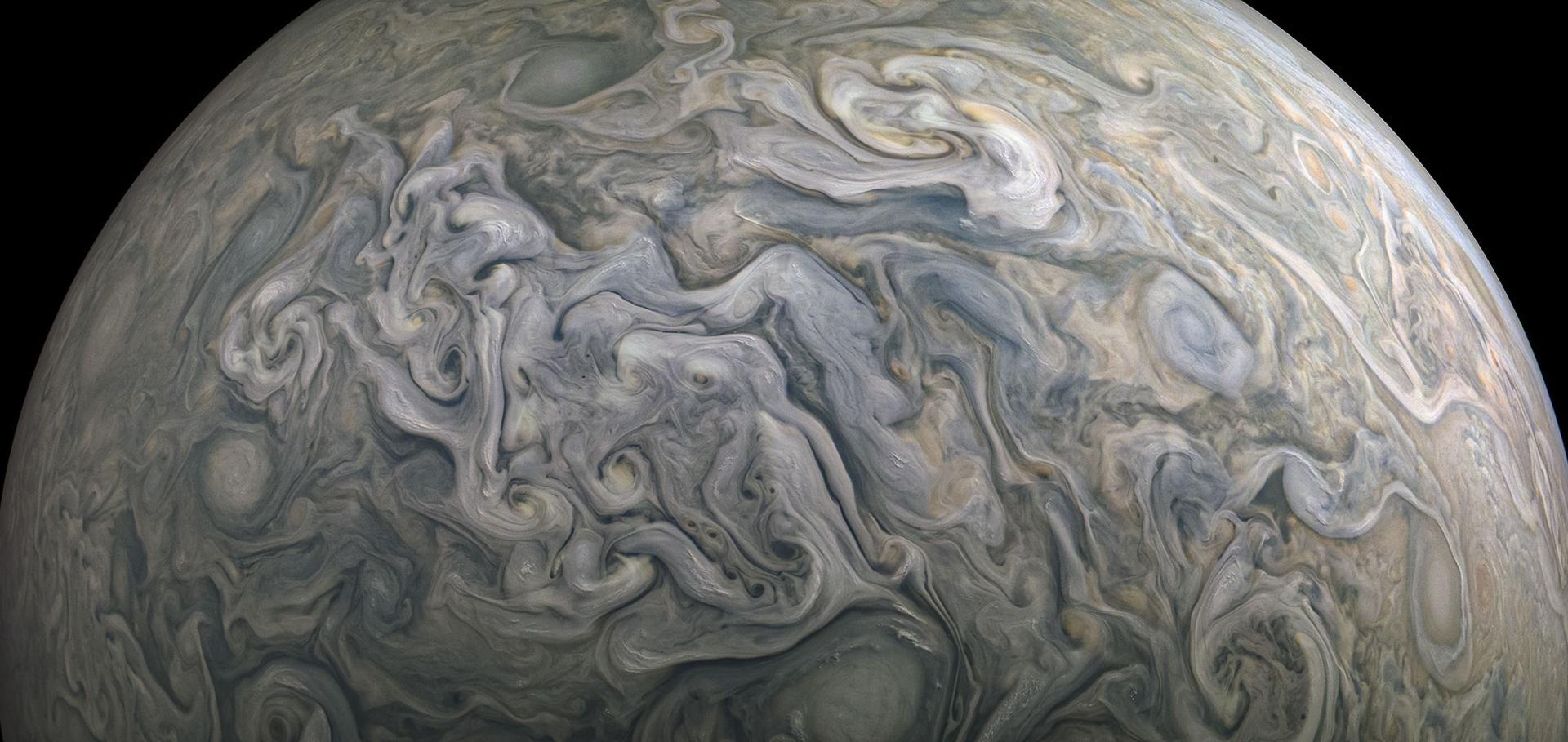
Juno Jupiter image

Dr Scott Osprey FRMetS

Senior NCAS Research Scientist

Research theme

  • Climate physics

Sub department

  • Atmospheric, Oceanic and Planetary Physics

Research groups

  • Climate dynamics
  • Predictability of weather and climate
Scott.Osprey@physics.ox.ac.uk
Telephone: 01865 (2)82434,01865 (2)72923
Robert Hooke Building, room S36
National Centre for Atmospheric Science
SPARC QBOi
Explaining & Predicting Earth System Change
  • About
  • Publications

The Southern Hemisphere sudden stratospheric warming of September 2019

Science Bulletin Elsevier BV (2020)

Authors:

Xiaocen Shen, Lin Wang, Scott Osprey
More details from the publisher
Details from ORA
More details
More details

An evaluation of tropical waves and wave forcing of the QBO in the QBOi models

Quarterly Journal of the Royal Meteorological Society Wiley (2020) qj.3827

Authors:

Laura A Holt, François Lott, Rolando R Garcia, George N Kiladis, Yuan‐Ming Cheng, James A Anstey, Peter Braesicke, Andrew C Bushell, Neal Butchart, Chiara Cagnazzo, Chih‐Chieh Chen, Hye‐Yeong Chun, Yoshio Kawatani, Tobias Kerzenmacher, Young‐Ha Kim, Charles McLandress, Hiroaki Naoe, Scott Osprey, Jadwiga H Richter, Adam A Scaife, John Scinocca, Federico Serva, Stefan Versick, Shingo Watanabe, Seiji Yukimoto
More details from the publisher
Details from ORA
More details

Dynamical-Chemical Feedbacks in General Circulation Models and Their Influence on Sudden Stratospheric Warming Events

(2020)

Authors:

Oscar Dimdore-Miles, Lesley Gray, Scott Osprey

Abstract:

<p>Sudden Stratospheric Warming events (SSWs) are rapid disruptions of the Northern Hemisphere (NH) winter stratospheric polar vortex and represent the largest source of inter-annual variability in the NH winter stratosphere. They have been linked to winter surface climate anomalies such as cold snaps over North America and Eurasia. Representing these events accurately in large scale GCMs as well as developing a greater understanding of them is key to improving predictability of winter surface climate. A key component of a GCM is its representation of atmospheric chemistry. Chemical distributions are either prescribed or calculated interactively by coupling an atmospheric chemistry model to radiation and dynamical components, thus capturing any chemical dynamical feedback mechanisms but incurring significant running cost.</p><p>This work evaluates the impact of interactive chemistry when modelling SSW events and explores the feedback mechanisms between chemical distributions and stratospheric dynamical variability. Pre-industrial control runs from the MetOffice HadGEMGC3.1 model which prescribes chemical fields and UKESM1 which calculates trace gas concentration interactively are utilised. Over the whole season - The Earth System Model appears to suppress warmings while the model with prescribed physics overestimates their occurrence compared to reanalysis. The differing representation of the equatorial stratosphere appears to be partially responsible for this difference. Additionally we find that middle stratosphere equatorial ozone concentration in late NH summer is closely associated with SSW probability in the ensuing winter in UKESM1. Anomalously low ozone is generally associated with an elevated SSW rate. This implies a chemical-dynamical coupling between the equator and the vortex in this model which preliminary results suggest could be driven by chemical feedbacks influencing the state of the early winter Quasi Biennial Oscillation (QBO) and Semi-Annual Oscillation (SAO) in zonal winds which can alter the distribution of planetary wave propagation and breaking (the primary cause of SSWs). Further work will assess whether this phenomenon is observed in other GCMs and further explore the physical mechanisms responsible.</p>
More details from the publisher

Progress in simulating the Quasi-biennial Oscillation in CMIP models

Journal of Geophysical Research: Atmospheres American Geophysical Union (AGU) (2020) e2019JD032362-e2019JD032362

Authors:

Jadwiga H Richter, James A Anstey, Neal Butchart, Yoshio Kawatani, Gerald A Meehl, Scott Osprey, Isla R Simpson
More details from the publisher
Details from ORA
More details

The American Monsoon System in UKESM1 and HadGEM3

Copernicus Publications (2020)

Authors:

Jorge Luis García-Franco, Lesley Gray, Scott Osprey
More details from the publisher

Pagination

  • First page First
  • Previous page Prev
  • …
  • Page 11
  • Page 12
  • Page 13
  • Page 14
  • Current page 15
  • Page 16
  • Page 17
  • Page 18
  • Page 19
  • …
  • Next page Next
  • Last page Last

Footer Menu

  • Contact us
  • Giving to the Dept of Physics
  • Work with us
  • Media

User account menu

  • Log in

Follow us

FIND US

Clarendon Laboratory,

Parks Road,

Oxford,

OX1 3PU

CONTACT US

Tel: +44(0)1865272200

University of Oxfrod logo Department Of Physics text logo
IOP Juno Champion logo Athena Swan Silver Award logo

© University of Oxford - Department of Physics

Cookies | Privacy policy | Accessibility statement

Built by: Versantus

  • Home
  • Research
  • Study
  • Engage
  • Our people
  • News & Comment
  • Events
  • Our facilities & services
  • About us
  • Giving to Physics
  • Current students
  • Staff intranet