Home
Department Of Physics text logo
  • Research
    • Our research
    • Our research groups
    • Our research in action
    • Research funding support
    • Summer internships for undergraduates
  • Study
    • Undergraduates
    • Postgraduates
  • Engage
    • For young people
    • For teachers
    • For the public
    • For alumni
    • For business
  • Support
Menu
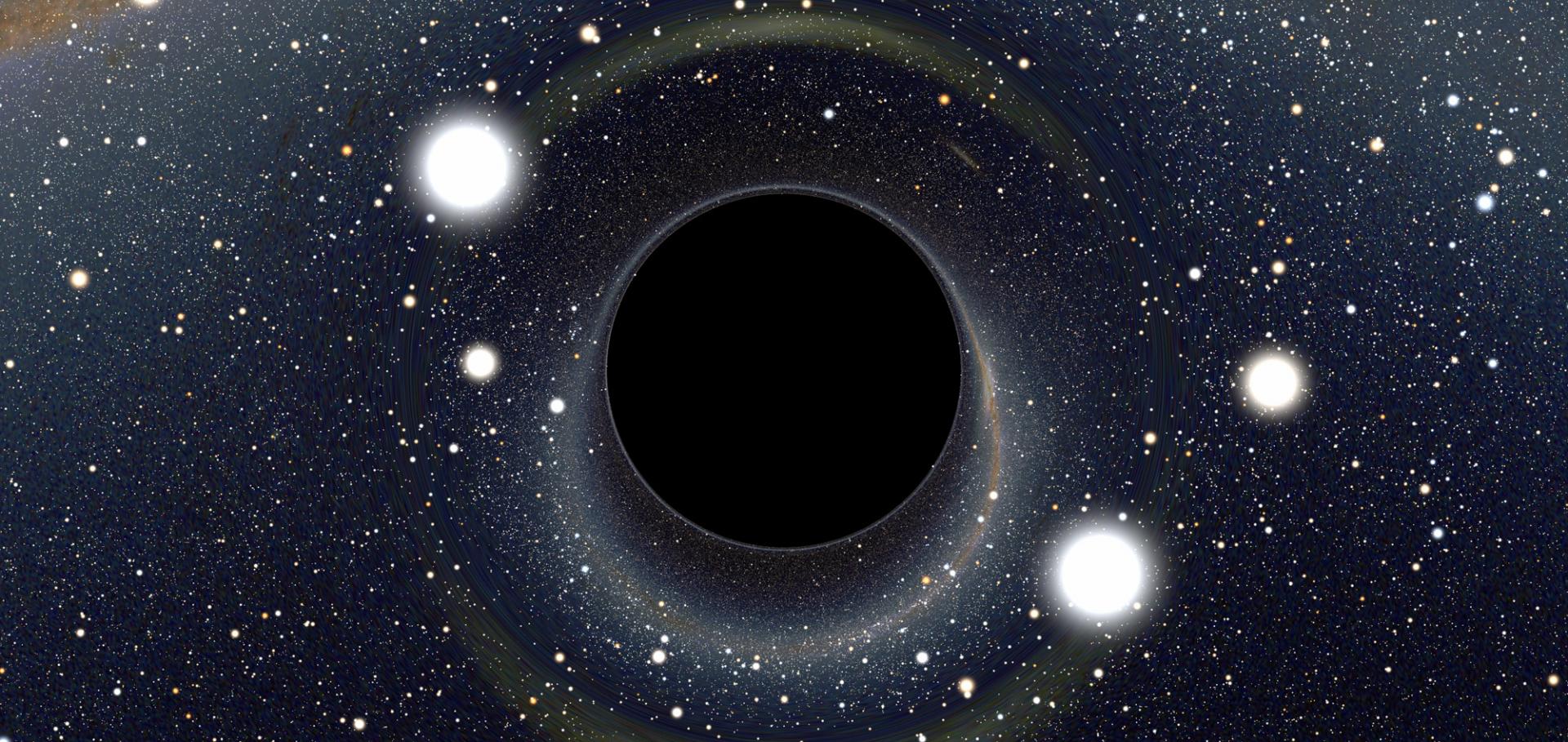
Black Hole

Lensing of space time around a black hole. At Oxford we study black holes observationally and theoretically on all size and time scales - it is some of our core work.

Credit: ALAIN RIAZUELO, IAP/UPMC/CNRS. CLICK HERE TO VIEW MORE IMAGES.

Prof. Dimitra Rigopoulou

Professor of Astrophysics

Research theme

  • Astronomy and astrophysics

Sub department

  • Astrophysics

Research groups

  • Galaxy formation and evolution
Dimitra.Rigopoulou@physics.ox.ac.uk
Telephone: 01865 (2)73296
Denys Wilkinson Building, room 711
  • About
  • Research
  • Publications

Are local ULIRGs powered by AGN? The sub-kpc view of the 220 GHz continuum. PUMA II

(2021)

Authors:

M Pereira-Santaella, L Colina, S García-Burillo, I Lamperti, E González-Alfonso, M Perna, S Arribas, A Alonso-Herrero, S Aalto, F Combes, A Labiano, J Piqueras-López, D Rigopoulou, P van der Werf
More details from the publisher
Details from ArXiV

Integral field spectroscopy of luminous infrared main-sequence galaxies at cosmic noon

Monthly Notices of the Royal Astronomical Society Oxford University Press (OUP) 503:4 (2021) 5329-5350

Authors:

L Hogan, D Rigopoulou, GE Magdis, M Pereira-Santaella, I García-Bernete, N Thatte, K Grisdale, J-S Huang

Abstract:

ABSTRACT We present the results of an integral field spectroscopy survey of a sample of dusty (ultra) luminous infrared galaxies (U/LIRGs) at 2 < z < 2.5 using KMOS on the Very Large Telescope. The sample has been drawn from Herschel deep field surveys and benefits from ancillary multiwavelength data. Our goal is to investigate the physical characteristics, kinematics, and the drivers of star formation in the galaxies whose contribution dominates the peak of the cosmic star formation density. Two-thirds of the sample are main-sequence galaxies in contrast to the starburst nature of local U/LIRGs. Our kinematic study, unique in its focus on z ∼ 2 dusty star-forming galaxies, uses the H α emission line to find that ∼40 per cent appear to be isolated discs based on the ratio of rotational velocity to the velocity dispersion, suggesting steady-state mechanisms are sufficient to power the large star formation rates (SFRs). The ratio of obscured to unobscured star formation indicates the sample of galaxies experiences less dust obscuration compared to intermediate and local counterparts, while also hosting cooler dust than local U/LIRGs. In addition to H α we detect [N ii] 6583 Å in our targets and show the gas-phase metallicities do not exhibit the metal deficiency of local U/LIRGs. These results indicate that, despite their extreme IR luminosity, the underlying mechanisms driving the massive SFRs found at cosmic noon are due to scaled up disc galaxies as opposed to mergers.
More details from the publisher
More details
More details

The properties of polycyclic aromatic hydrocarbons in galaxies: constraints on PAH sizes, charge and radiation fields

Monthly Notices of the Royal Astronomical Society Oxford University Press 504:4 (2021) 5287-5300

Authors:

D Rigopoulou, M Barale, Dc Clary, X Shan, A Alonso-Herrero, I Garcia-Bernete, L Hunt, B Kerkeni, M Pereira-Santaella, Pf Roche

Abstract:

Based on theoretical spectra computed using Density Functional Theory we study the properties of polycyclic aromatic hydrocarbons (PAH). In particular using bin-average spectra of PAH molecules with varying number of carbons we investigate how the intensity of the mid-infrared emission bands, 3.3, 6.2, 7.7, and 11.3 $\mu$m, respond to changes in the number of carbons, charge of the molecule, and the hardness of the radiation field that impinges the molecule. We confirm that the 6.2/7.7 band ratio is a good predictor for the size of the PAH molecule (based on the number of carbons present). We also investigate the efficacy of the 11.3/3.3 ratio to trace the size of PAH molecules and note the dependence of this ratio on the hardness of the radiation field. While the ratio can potentially also be used to trace PAH molecular size, a better understanding of the impact of the underlying radiation field on the 3.3 $\mu$m feature and the effect of the extinction on the ratio should be evaluated. The newly developed diagnostics are compared to band ratios measured in a variety of galaxies observed with the Infrared Spectrograph on board the Spitzer Space Telescope. We demonstrate that the band ratios can be used to probe the conditions of the interstellar medium in galaxies and differentiate between environments encountered in normal star forming galaxies and active galactic nuclei. Our work highlights the immense potential that PAH observations with the James Webb Space Telescope will have on our understanding of the PAH emission itself and of the physical conditions in galaxies near and far.
More details from the publisher
Details from ORA
More details
More details
Details from ArXiV

A Complete 16 micron-Selected Galaxy Sample at $z\sim1$: Mid-infrared Spectral Energy Distributions

(2021)

Authors:

J-S Huang, Y-S Dai, SP Willner, SM Faber, C Cheng, H Xu, S Wu, X Shao, C Hao, X Xia, D Rigopoulou, M Pereira Santaella, G Magdis, I Cortzen, H Yan, G Fazio, P Assmann, N Araneda, L Fan, M Musin, Z Wang, KC Xu, C He, A Esamdin
More details from the publisher
Details from ArXiV

Rise of the Titans: Gas Excitation and Feedback in a Binary Hyperluminous Dusty Starburst Galaxy at z ∼ 6

The Astrophysical Journal American Astronomical Society 907:2 (2021) 62

Authors:

Dominik A Riechers, Hooshang Nayyeri, Denis Burgarella, Bjorn HC Emonts, David L Clements, Asantha Cooray, Rob J Ivison, Seb Oliver, Ismael Pérez-Fournon, Dimitra Rigopoulou, Douglas Scott
More details from the publisher
More details
Details from ArXiV

Pagination

  • First page First
  • Previous page Prev
  • …
  • Page 26
  • Page 27
  • Page 28
  • Page 29
  • Current page 30
  • Page 31
  • Page 32
  • Page 33
  • Page 34
  • …
  • Next page Next
  • Last page Last

Footer Menu

  • Contact us
  • Giving to the Dept of Physics
  • Work with us
  • Media

User account menu

  • Log in

Follow us

FIND US

Clarendon Laboratory,

Parks Road,

Oxford,

OX1 3PU

CONTACT US

Tel: +44(0)1865272200

University of Oxfrod logo Department Of Physics text logo
IOP Juno Champion logo Athena Swan Silver Award logo

© University of Oxford - Department of Physics

Cookies | Privacy policy | Accessibility statement

Built by: Versantus

  • Home
  • Research
  • Study
  • Engage
  • Our people
  • News & Comment
  • Events
  • Our facilities & services
  • About us
  • Giving to Physics
  • Current students
  • Staff intranet