Home
Department Of Physics text logo
  • Research
    • Our research
    • Our research groups
    • Our research in action
    • Research funding support
    • Summer internships for undergraduates
  • Study
    • Undergraduates
    • Postgraduates
  • Engage
    • For alumni
    • For business
    • For schools
    • For the public
  • Support
Menu
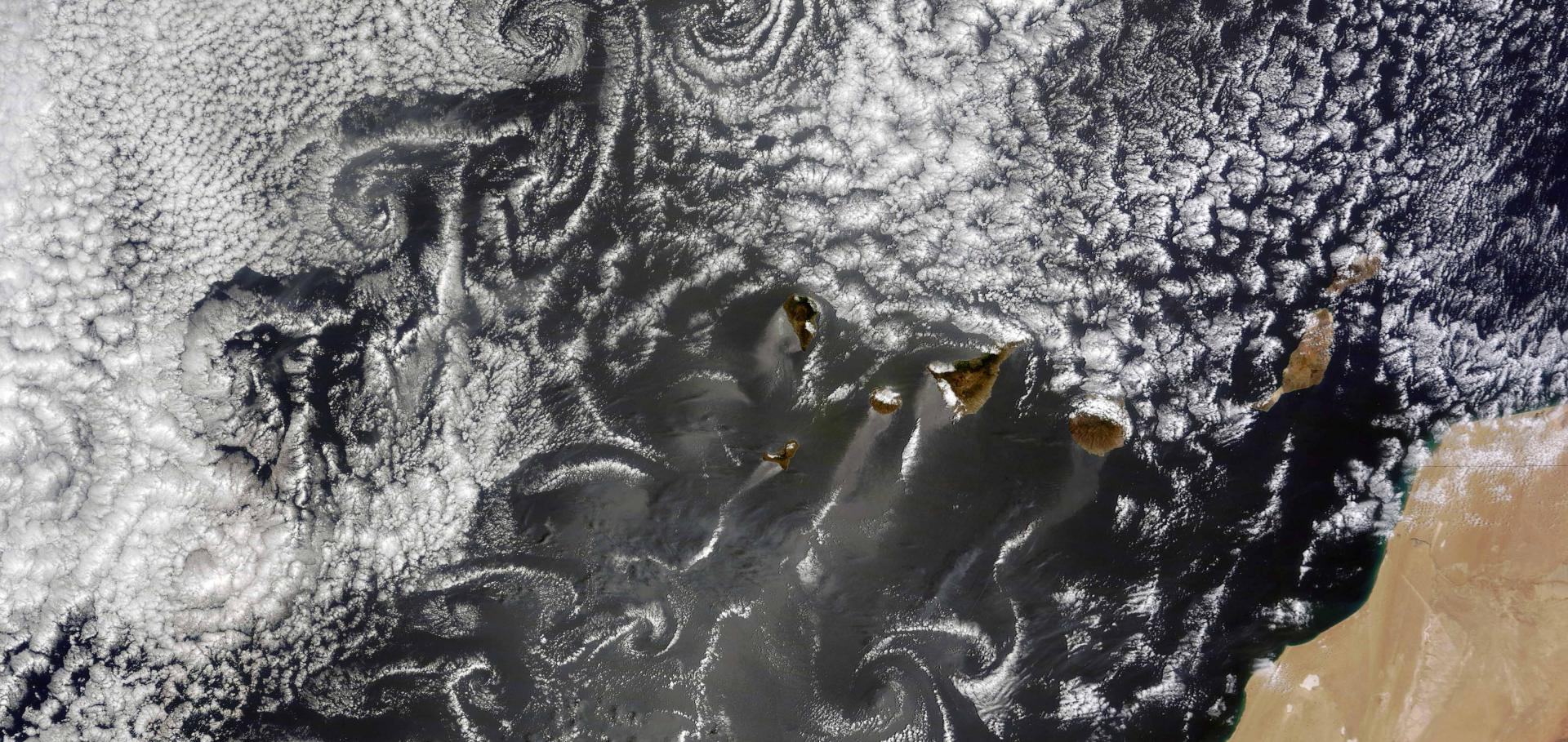
von Kármán vortex street over Canary Islands
Credit: NASA

Philip Stier

Professor of Atmospheric Physics

Research theme

  • Climate physics

Sub department

  • Atmospheric, Oceanic and Planetary Physics

Research groups

  • Climate processes
philip.stier@physics.ox.ac.uk
Telephone: 01865 (2)72887
Atmospheric Physics Clarendon Laboratory, room 103
  • About
  • Research
  • Teaching
  • CV
  • Publications

Ensemble daily simulations for elucidating cloud–aerosol interactions under a large spread of realistic environmental conditions

Copernicus GmbH

Authors:

Guy Dagan, Philip Stier

Abstract:

<jats:p>Abstract. Aerosol effects on cloud properties and the atmospheric energy and radiation budgets are studied through ensemble simulations over two month-long periods during the NARVAL campaigns (December 2013 and August 2016). For each day, two simulations are conducted with low and high cloud droplet number concentrations (CDNC), representing low and high aerosol concentrations, respectively. This large data-set, which is based on a large spread of co-varying realistic initial conditions, enables robust identification of the effect of CDNC changes on cloud properties. We show that increases in CDNC drive a reduction in the top of atmosphere (TOA) net shortwave flux (more reflection) and a decrease in the lower tropospheric stability for all cases examined, while the TOA longwave flux and the liquid and ice water path changes are generally positive. However, changes in cloud fraction or precipitation, that could appear significant for a given day, are not as robustly affected, and, at least for the summer month, are not statistically distinguishable from zero. These results highlight the need for using large statistics of initial conditions for cloud–aerosol studies for identifying the significance of the response. In addition, we demonstrate the dependence of the aerosol effects on the season, as it is shown that the TOA net radiative effect is doubled during the winter month as compared to the summer month. By separating the simulations into different dominant cloud regimes, we show that the difference between the different months emerge due to the compensation of the longwave effect induced by an increase in ice content as compared to the shortwave effect of the liquid clouds. The CDNC effect on the longwave is stronger in the summer as the clouds are deeper and the atmosphere is more unstable. </jats:p>
More details from the publisher

Evaluation of black carbon estimations in global aerosol models

Authors:

D Koch, M Schulz, S Kinne, TC Bond, Y Balkanski, S Bauer, T Berntsen, O Boucher, M Chin, A Clarke, N De Luca, F Dentener, T Diehl, O Dubovik, R Easter, DW Fahey, J Feichter, D Fillmore, S Freitag, S Ghan, P Ginoux, S Gong, L Horowitz, T Iversen, A Kirkev&aring;g, Z Klimont, Y Kondo, M Krol, X Liu, C McNaughton, R Miller, V Montanaro, N Moteki, G Myhre, JE Penner, Ja Perlwitz, G Pitari, S Reddy, L Sahu, H Sakamoto, G Schuster, JP Schwarz, Ø Seland, JR Spackman, P Stier, N Takegawa, T Takemura, C Textor, JA van Aardenne, Y Zhao
More details from the publisher

General circulation models simulate negative liquid water path­–droplet number correlations, but anthropogenic aerosols still increase simulated liquid water path

Authors:

Johannes Mülmenstädt, Edward Gryspeerdt, Sudhakar Dipu, Johannes Quaas, Andrew S Ackerman, Ann M Fridlind, Florian Tornow, Susanne E Bauer, Andrew Gettelman, Yi Ming, Youtong Zheng, Po-Lun Ma, Hailong Wang, Kai Zhang, Matthew W Christensen, Adam C Varble, L Ruby Leung, Xiaohong Liu, David Neubauer, Daniel G Partridge, Philip Stier, Toshihiko Takemura
More details from the publisher

Global chemical weather forecasts for field campaign planning: predictions and observations of large-scale features during MINOS, CONTRACE, and INDOEX

Authors:

MG Lawrence, PJ Rasch, R von Kuhlmann, J Williams, H Fischer, M de Reus, J Lelieveld, PJ Crutzen, M Schultz, P Stier, H Huntrieser, J Heland, A Stohl, C Forster, H Elbern, H Jakobs, RR Dickerson
More details from the publisher

Global dust model intercomparison in AeroCom phase I

Authors:

N Huneeus, M Schulz, Y Balkanski, J Griesfeller, S Kinne, J Prospero, S Bauer, O Boucher, M Chin, F Dentener, T Diehl, R Easter, D Fillmore, S Ghan, P Ginoux, A Grini, L Horowitz, D Koch, MC Krol, W Landing, X Liu, N Mahowald, R Miller, J-J Morcrette, G Myhre, JE Penner, J Perlwitz, P Stier, T Takemura, C Zender
More details from the publisher

Pagination

  • First page First
  • Previous page Prev
  • …
  • Page 73
  • Page 74
  • Page 75
  • Page 76
  • Current page 77
  • Page 78
  • Page 79
  • Page 80
  • Page 81
  • …
  • Next page Next
  • Last page Last

Footer Menu

  • Contact us
  • Giving to the Dept of Physics
  • Work with us
  • Media

User account menu

  • Log in

Follow us

FIND US

Clarendon Laboratory,

Parks Road,

Oxford,

OX1 3PU

CONTACT US

Tel: +44(0)1865272200

University of Oxfrod logo Department Of Physics text logo
IOP Juno Champion logo Athena Swan Silver Award logo

© University of Oxford - Department of Physics

Cookies | Privacy policy | Accessibility statement

Built by: Versantus

  • Home
  • Research
  • Study
  • Engage
  • Our people
  • News & Comment
  • Events
  • Our facilities & services
  • About us
  • Giving to Physics
  • Current students
  • Staff intranet