Home
Department Of Physics text logo
  • Research
    • Our research
    • Our research groups
    • Our research in action
    • Research funding support
    • Summer internships for undergraduates
  • Study
    • Undergraduates
    • Postgraduates
  • Engage
    • For young people
    • For teachers
    • For the public
    • For alumni
    • For business
  • Support
Menu
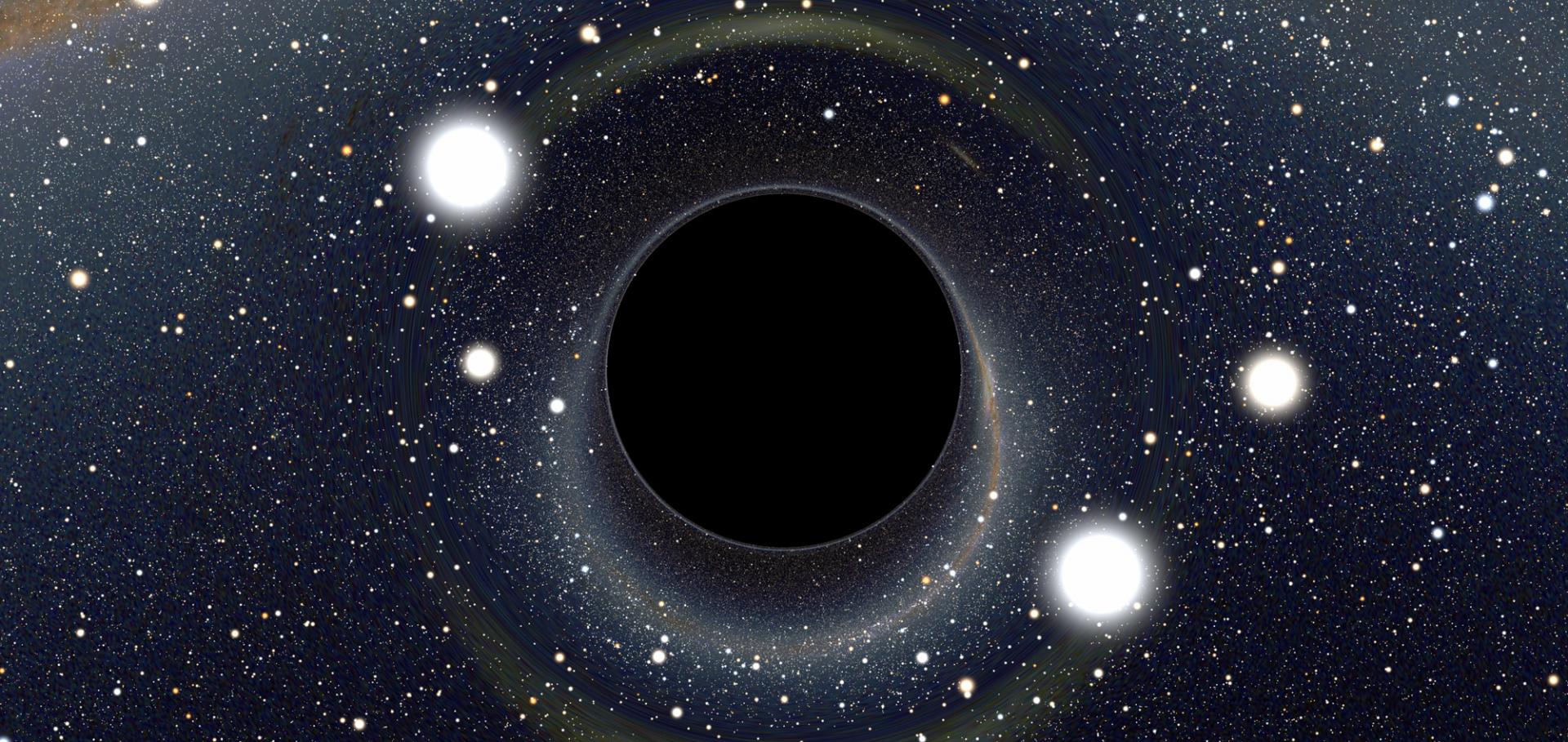
Black Hole

Lensing of space time around a black hole. At Oxford we study black holes observationally and theoretically on all size and time scales - it is some of our core work.

Credit: ALAIN RIAZUELO, IAP/UPMC/CNRS. CLICK HERE TO VIEW MORE IMAGES.

Dr Thomas Williams

Visitor

Research theme

  • Astronomy and astrophysics

Sub department

  • Astrophysics

Research groups

  • Galaxy formation and evolution
thomas.williams@physics.ox.ac.uk
Professional Website
  • About
  • Publications

PAH Feature Ratios around Stellar Clusters and Associations in 19 Nearby Galaxies

Astronomical Journal American Astronomical Society 169:3 (2025) 133

Authors:

Daniel A Dale, Gabrielle B Graham, Ashley T Barnes, Dalya Baron, Frank Bigiel, Médéric Boquien, Rupali Chandar, Jérémy Chastenet, Ryan Chown, Oleg V Egorov, Simon CO Glover, Lindsey Hands, Kiana F Henny, Remy Indebetouw, Ralf S Klessen, Kirsten L Larson, Janice C Lee, Adam K Leroy, Daniel Maschmann, Debosmita Pathak, M Jimena Rodríguez, Erik Rosolowsky, Karin Sandstrom, Eva Schinnerer, Thomas G Williams

Abstract:

We present a comparison of observed polycyclic aromatic hydrocarbon (PAH) feature ratios in 19 nearby galaxies with a grid of theoretical expectations for near- and mid-infrared dust emission. The PAH feature ratios are drawn from Cycle 1 JWST observations and are measured for 7224 stellar clusters and 29,176 stellar associations for which we have robust ages and mass estimates from Hubble Space Telescope five-band photometry. Though there are galaxy-to-galaxy variations, the observed PAH feature ratios largely agree with the theoretical models, particularly those that are skewed toward more ionized and larger PAH size distributions. For each galaxy we also extract PAH feature ratios for 200 pc wide circular regions in the diffuse interstellar medium, which serve as a noncluster/association control sample. Compared to what we find for stellar clusters and associations, the 3.3 μm/7.7 μm and 3.3 μm/11.3 μm ratios from the diffuse interstellar medium are ∼0.10–0.15 dex smaller. When the observed PAH feature ratios are compared to the radiation field hardness as probed by the [O iii]/Hβ ratio, we find anticorrelations for nearly all galaxies in the sample. These results together suggest that the PAH feature ratios are driven by the shape and intensity of the radiation field and that the smallest PAHs—observed via JWST F335M imaging—are increasingly “processed” or destroyed in regions with the most intense and hard radiation fields.
More details from the publisher
Details from ORA
More details

Machine learning the gap between real and simulated nebulae

Astronomy & Astrophysics EDP Sciences 694 (2025) a212

Authors:

Francesco Belfiore, Michele Ginolfi, Guillermo Blanc, Mederic Boquien, Melanie Chevance, Enrico Congiu, Simon CO Glover, Brent Groves, Ralf S Klessen, J Eduardo Méndez-Delgado, Thomas G Williams
More details from the publisher
More details

WISDOM Project – XXII. A 5 per cent precision CO-dynamical supermassive black hole mass measurement in the galaxy NGC 383

Monthly Notices of the Royal Astronomical Society Oxford University Press (OUP) 537:1 (2025) 520-536

Authors:

Hengyue Zhang, Martin Bureau, Ilaria Ruffa, Michele Cappellari, Timothy A Davis, Pandora Dominiak, Jacob S Elford, Satoru Iguchi, Federico Lelli, Marc Sarzi, Thomas G Williams
More details from the publisher
Details from ORA
More details

WISDOM Project -- XXII. A 5% precision CO-dynamical supermassive black hole mass measurement in the galaxy NGC 383

(2025)

Authors:

Hengyue Zhang, Martin Bureau, Ilaria Ruffa, Michele Cappellari, Timothy A Davis, Pandora Dominiak, Jacob S Elford, Satoru Iguchi, Federico Lelli, Marc Sarzi, Thomas G Williams
Details from ArXiV

PHANGS-ML: The Universal Relation between PAH Band and Optical Line Ratios across Nearby Star-forming Galaxies

The Astrophysical Journal American Astronomical Society 978:2 (2025) 135

Authors:

Dalya Baron, Karin M Sandstrom, Jessica Sutter, Hamid Hassani, Brent Groves, Adam K Leroy, Eva Schinnerer, Médéric Boquien, Matilde Brazzini, Jérémy Chastenet, Daniel A Dale, Oleg V Egorov, Simon CO Glover, Ralf S Klessen, Debosmita Pathak, Erik Rosolowsky, Frank Bigiel, Mélanie Chevance, Kathryn Grasha, Annie Hughes, J Eduardo Méndez-Delgado, Jérôme Pety, Thomas G Williams, Stephen Hannon

Abstract:

The structure and chemistry of the dusty interstellar medium (ISM) are shaped by complex processes that depend on the local radiation field, gas composition, and dust grain properties. Of particular importance are polycyclic aromatic hydrocarbons (PAHs), which emit strong vibrational bands in the mid-infrared, and play a key role in the ISM energy balance. We recently identified global correlations between PAH band and optical line ratios across three nearby galaxies, suggesting a connection between PAH heating and gas ionization throughout the ISM. In this work, we perform a census of the PAH heating–gas ionization connection using ∼700,000 independent pixels that probe scales of 40–150 pc in 19 nearby star-forming galaxies from the PHANGS survey. We find a universal relation between log PAH(11.3 μm/7.7 μm) and log ([S ii]/Hα) with a slope of ∼0.2 and a scatter of ∼0.025 dex. The only exception is a group of anomalous pixels that show unusually high (11.3 μm/7.7 μm) PAH ratios in regions with old stellar populations and high starlight-to-dust emission ratios. Their mid-infrared spectra resemble those of elliptical galaxies. Active galactic nucleus hosts show modestly steeper slopes, with a ∼​​​​​​10% increase in PAH(11.3 μm/7.7 μm) in the diffuse gas on kiloparsec scales. This universal relation implies an emerging simplicity in the complex ISM, with a sequence that is driven by a single varying property: the spectral shape of the interstellar radiation field. This suggests that other properties, such as gas-phase abundances, gas ionization parameter, and grain charge distribution, are relatively uniform in all but specific cases.
More details from the publisher
Details from ORA
More details

Pagination

  • First page First
  • Previous page Prev
  • …
  • Page 10
  • Page 11
  • Page 12
  • Page 13
  • Current page 14
  • Page 15
  • Page 16
  • Page 17
  • Page 18
  • …
  • Next page Next
  • Last page Last

Footer Menu

  • Contact us
  • Giving to the Dept of Physics
  • Work with us
  • Media

User account menu

  • Log in

Follow us

FIND US

Clarendon Laboratory,

Parks Road,

Oxford,

OX1 3PU

CONTACT US

Tel: +44(0)1865272200

University of Oxfrod logo Department Of Physics text logo
IOP Juno Champion logo Athena Swan Silver Award logo

© University of Oxford - Department of Physics

Cookies | Privacy policy | Accessibility statement

Built by: Versantus

  • Home
  • Research
  • Study
  • Engage
  • Our people
  • News & Comment
  • Events
  • Our facilities & services
  • About us
  • Giving to Physics
  • Current students
  • Staff intranet