Home
Department Of Physics text logo
  • Research
    • Our research
    • Our research groups
    • Our research in action
    • Research funding support
    • Summer internships for undergraduates
  • Study
    • Undergraduates
    • Postgraduates
  • Engage
    • For young people
    • For teachers
    • For the public
    • For alumni
    • For business
  • Support
Menu
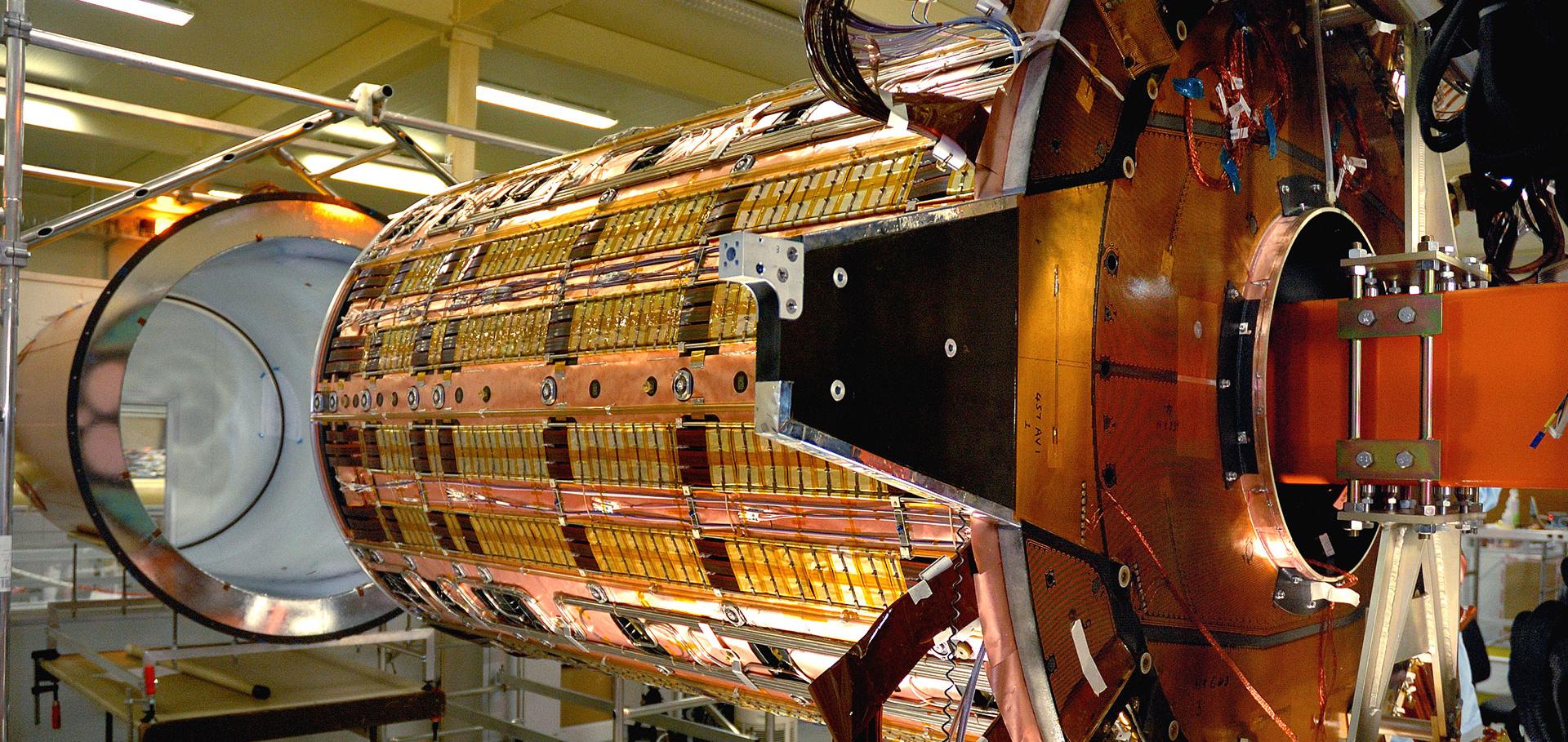
Insertion of STC into TRT at the Department of Physics, Oxford
Credit: CERN

Georg Viehhauser

University Research Lecturer

Sub department

  • Particle Physics

Research groups

  • ePIC
Georg.Viehhauser@physics.ox.ac.uk
Telephone: 01865 (2)73410
Denys Wilkinson Building, room 602
  • About
  • Publications

Study of jet shapes in inclusive jet production in pp collisions at √s=7TeV using the ATLAS detector

Physical Review D - Particles, Fields, Gravitation and Cosmology 83:5 (2011)

Authors:

G Aad, B Abbott, J Abdallah, AA Abdelalim, A Abdesselam, O Abdinov, B Abi, M Abolins, H Abramowicz, H Abreu, E Acerbi, BS Acharya, M Ackers, DL Adams, TN Addy, J Adelman, M Aderholz, S Adomeit, P Adragna, T Adye, S Aefsky, JA Aguilar-Saavedra, M Aharrouche, SP Ahlen, F Ahles, A Ahmad, M Ahsan, G Aielli, T Akdogan, TPA Åkesson, G Akimoto, AV Akimov, MS Alam, MA Alam, S Albrand, M Aleksa, IN Aleksandrov, M Aleppo, F Alessandria, C Alexa, G Alexander, G Alexandre, T Alexopoulos, M Alhroob, M Aliev, G Alimonti, J Alison, M Aliyev, PP Allport, SE Allwood-Spiers, J Almond, A Aloisio, R Alon, A Alonso, J Alonso, MG Alviggi, K Amako, P Amaral, C Amelung, VV Ammosov, A Amorim, G Amorós, N Amram, C Anastopoulos, T Andeen, CF Anders, KJ Anderson, A Andreazza, V Andrei, ML Andrieux, XS Anduaga, A Angerami, F Anghinolfi, N Anjos, A Annovi, A Antonaki, M Antonelli, S Antonelli, J Antos, F Anulli, S Aoun, L Aperio Bella, R Apolle, G Arabidze, I Aracena, Y Arai, ATH Arce, JP Archambault, S Arfaoui, JF Arguin, E Arik, M Arik, AJ Armbruster, KE Arms, SR Armstrong, O Arnaez, C Arnault, A Artamonov, G Artoni, D Arutinov

Abstract:

Jet shapes have been measured in inclusive jet production in proton-proton collisions at √s=7TeV using 3pb-1 of data recorded by the ATLAS experiment at the LHC. Jets are reconstructed using the anti-kt algorithm with transverse momentum 30GeV
More details from the publisher
More details

Evaporative cooling in ATLAS-Present and future

Nuclear Instruments and Methods in Physics Research Section A Accelerators Spectrometers Detectors and Associated Equipment 628:1 (2011) 251-255

Abstract:

The ATLAS Inner Detector cooling system is the largest evaporative cooling system used in High Energy Physics today. During the installation and commissioning of this system many lessons had to be learned, but the system is now operating reliably, although it does not achieve all original design specifications in all its circuits. We have re-evaluated the requirements for the cooling system for the barrel SCT, in particular for the evaporation temperature, over the full ATLAS operational lifetime. We find that the critical requirement is for thermal stability at the end of LHC operation. To predict this we have developed a simple thermal model of the detector modules which yields analytical expressions to evaluate the results of changes in the operating conditions. After a comparison of the revised requirements and the actual present cooling system performance we will discuss various modifications to the system which will be required for future operation. In parallel we are developing a cooling system for the ATLAS phase II upgrade (sLHC) tracker, for which a set of requirements has been specified. Two technologies, based on different coolants, fluorocarbons or CO2, are being pursued. © 2010 Elsevier B.V. All rights reserved.
More details from the publisher
More details

Search for quark contact interactions in dijet angular distributions in pp collisions at s=7 TeV measured with the ATLAS detector

Physics Letters Section B Nuclear Elementary Particle and High Energy Physics 694:4-5 (2011) 327-345

Authors:

G Aad, B Abbott, J Abdallah, AA Abdelalim, A Abdesselam, O Abdinov, B Abi, M Abolins, H Abramowicz, H Abreu, E Acerbi, BS Acharya, M Ackers, DL Adams, TN Addy, J Adelman, M Aderholz, S Adomeit, C Adorisio, P Adragna, T Adye, S Aefsky, JA Aguilar-Saavedra, M Aharrouche, SP Ahlen, F Ahles, A Ahmad, H Ahmed, M Ahsan, G Aielli, T Akdogan, TPA Åkesson, G Akimoto, AV Akimov, A Aktas, MS Alam, MA Alam, S Albrand, M Aleksa, IN Aleksandrov, M Aleppo, F Alessandria, C Alexa, G Alexander, G Alexandre, T Alexopoulos, M Alhroob, M Aliev, G Alimonti, J Alison, M Aliyev, PP Allport, SE Allwood-Spiers, J Almond, A Aloisio, R Alon, A Alonso, J Alonso, MG Alviggi, K Amako, P Amaral, G Ambrosio, C Amelung, VV Ammosov, A Amorim, G Amorós, N Amram, C Anastopoulos, T Andeen, CF Anders, KJ Anderson, A Andreazza, V Andrei, ML Andrieux, XS Anduaga, A Angerami, F Anghinolfi, N Anjos, A Annovi, A Antonaki, M Antonelli, S Antonelli, J Antos, B Antunovic, F Anulli, S Aoun, R Apolle, G Arabidze, I Aracena, Y Arai, ATH Arce, JP Archambault, S Arfaoui, JF Arguin, T Argyropoulos, E Arik, M Arik, AJ Armbruster, KE Arms, SR Armstrong

Abstract:

Dijet angular distributions from the first LHC pp collisions at center-of-mass energy s=7 TeV have been measured with the ATLAS detector. The dataset used for this analysis represents an integrated luminosity of 3.1 pb-1. Dijet Χ distributions and centrality ratios have been measured up to dijet masses of 2.8 TeV, and found to be in good agreement with Standard Model predictions. Analysis of the λ distributions excludes quark contact interactions with a compositeness scale Χ below 3.4 TeV, at 95% confidence level, significantly exceeding previous limits. © 2010 CERN.
More details from the publisher
More details

A search for new physics in dijet mass and angular distributions in ppcollisions at √s=7 TeV measured with the ATLAS detector

New Journal of Physics 13 (2011)

Authors:

G Aad, B Abbott, J Abdallah, AA Abdelalim, A Abdesselam, O Abdinov, B Abi, M Abolins, H Abramowicz, H Abreu, E Acerbi, BS Acharya, DL Adams, TN Addy, J Adelman, M Aderholz, S Adomeit, P Adragna, T Adye, S Aefsky, JA Aguilar-Saavedra, M Aharrouche, SP Ahlen, F Ahles, A Ahmad, M Ahsan, G Aielli, T Akdogan, TPA Åkesson, G Akimoto, AV Akimov, A Akiyama, MS Alam, MA Alam, S Albrand, M Aleksa, IN Aleksandrov, M Aleppo, F Alessandria, C Alexa, G Alexander, G Alexandre, T Alexopoulos, M Alhroob, M Aliev, G Alimonti, J Alison, M Aliyev, PP Allport, SE Allwood-Spiers, J Almond, A Aloisio, R Alon, A Alonso, MG Alviggi, K Amako, P Amaral, C Amelung, VV Ammosov, A Amorim, G Amorós, N Amram, C Anastopoulos, T Andeen, CF Anders, KJ Anderson, A Andreazza, V Andrei, ML Andrieux, XS Anduaga, A Angerami, F Anghinolfi, N Anjos, A Annovi, A Antonaki, M Antonelli, S Antonelli, A Antonov, J Antos, F Anulli, S Aoun, LA Bella, R Apolle, G Arabidze, I Aracena, Y Arai, ATH Arce, JP Archambault, S Arfaoui, JF Arguin, E Arik, M Arik, AJ Armbruster, O Arnaez, C Arnault, A Artamonov, G Artoni, D Arutinov, S Asai, R Asfandiyarov

Abstract:

A search for new interactions and resonances produced in LHC proton-proton (pp) collisions at a centre-of-mass energy √s = 7 TeV was performed with the ATLAS detector. Using a dataset with an integrated luminosity of 36 pb -1, dijet mass and angular distributions were measured up to dijet masses of ∼3.5TeV and were found to be in good agreement with Standard Model predictions. This analysis sets limits at 95% CL on various models for new physics: an excited quark is excluded for mass between 0.60 and 2.64 TeV, an axigluon hypothesis is excluded for axigluon masses between 0.60 and 2.10 TeV and quantum black holes are excluded in models with six extra space-time dimensions for quantum gravity scales between 0.75 and 3.67 TeV. Production cross section limits as a function of dijet mass are set using a simplified Gaussian signal model to facilitate comparisons with other hypotheses. Analysis of the dijet angular distribution using a novel technique simultaneously employing the dijet mass excludes quark contact interactions with a compositeness scale A below 9.5 TeV. © 2011 CERN for the benefit of the ATLAS Collaboration.
More details from the publisher
Details from ORA
More details

Charged-particle multiplicities in ppinteractions measured with the ATLAS detector at the LHC

New Journal of Physics 13 (2011)

Authors:

G Aad, B Abbott, J Abdallah, AA Abdelalim, A Abdesselam, O Abdinov, B Abi, M Abolins, H Abramowicz, H Abreu, E Acerbi, BS Acharya, M Ackers, DL Adams, TN Addy, J Adelman, M Aderholz, S Adomeit, P Adragna, T Adye, S Aefsky, JA Aguilar-Saavedra, M Aharrouche, SP Ahlen, F Ahles, A Ahmad, M Ahsan, G Aielli, T Akdogan, TPA Åkesson, G Akimoto, AV Akimov, MS Alam, MA Alam, S Albrand, M Aleksa, IN Aleksandrov, M Aleppo, F Alessandria, C Alexa, G Alexander, G Alexandre, T Alexopoulos, M Alhroob, M Aliev, G Alimonti, J Alison, M Aliyev, PP Allport, SE Allwood-Spiers, J Almond, A Aloisio, R Alon, A Alonso, J Alonso, MG Alviggi, K Amako, P Amaral, C Amelung, VV Ammosov, A Amorim, G Amorós, N Amram, C Anastopoulos, T Andeen, CF Anders, KJ Anderson, A Andreazza, V Andrei, ML Andrieux, XS Anduaga, A Angerami, F Anghinolfi, N Anjos, A Annovi, A Antonaki, M Antonelli, S Antonelli, J Antos, F Anulli, S Aoun, L Aperio Bella, R Apolle, G Arabidze, I Aracena, Y Arai, ATH Arce, JP Archambault, S Arfaoui, JF Arguin, E Arik, M Arik, AJ Armbruster, KE Arms, SR Armstrong, O Arnaez, C Arnault, A Artamonov, G Artoni, D Arutinov

Abstract:

Measurements are presented from proton-proton collisions at centre-of-mass energies of s = 0.9, 2.36 and 7 TeV recorded with the ATLAS detector at the LHC. Events were collected using a single-arm minimumbias trigger. The charged-particle multiplicity, its dependence on transverse momentum and pseudorapidity and the relationship between the mean transverse momentum and charged-particle multiplicity are measured. Measurements in different regions of phase space are shown, providing diffraction-reduced measurements as well as more inclusive ones. The observed distributions are corrected to well-defined phase-space regions, using model-independent corrections. The results are compared to each other and to various Monte Carlo (MC) models, including a new AMBT1 pythia6 tune. In all the kinematic regions considered, the particle multiplicities are higher than predicted by the MC models. The central charged-particle multiplicity per event and unit of pseudorapidity, for tracks with pT < 100 MeV, is measured to be 3.483±0.009 (stat)±0.106 (syst) at s = 0.9 TeV and 5.630±0.003 (stat)±0.169 (syst) at s = 7 TeV. © 2011 CERN for the benefit of the ATLAS Collaboration, published under licence by IOP Publishing Ltd for the Institute of Physics and Deutsche Physikalische Gesellschaft.
More details from the publisher
Details from ORA
More details

Pagination

  • First page First
  • Previous page Prev
  • …
  • Page 259
  • Page 260
  • Page 261
  • Page 262
  • Current page 263
  • Page 264
  • Page 265
  • Page 266
  • Page 267
  • …
  • Next page Next
  • Last page Last

Footer Menu

  • Contact us
  • Giving to the Dept of Physics
  • Work with us
  • Media

User account menu

  • Log in

Follow us

FIND US

Clarendon Laboratory,

Parks Road,

Oxford,

OX1 3PU

CONTACT US

Tel: +44(0)1865272200

University of Oxfrod logo Department Of Physics text logo
IOP Juno Champion logo Athena Swan Silver Award logo

© University of Oxford - Department of Physics

Cookies | Privacy policy | Accessibility statement

Built by: Versantus

  • Home
  • Research
  • Study
  • Engage
  • Our people
  • News & Comment
  • Events
  • Our facilities & services
  • About us
  • Giving to Physics
  • Current students
  • Staff intranet