Home
Department Of Physics text logo
  • Research
    • Our research
    • Our research groups
    • Our research in action
    • Research funding support
    • Summer internships for undergraduates
  • Study
    • Undergraduates
    • Postgraduates
  • Engage
    • For young people
    • For teachers
    • For the public
    • For alumni
    • For business
  • Support
Menu
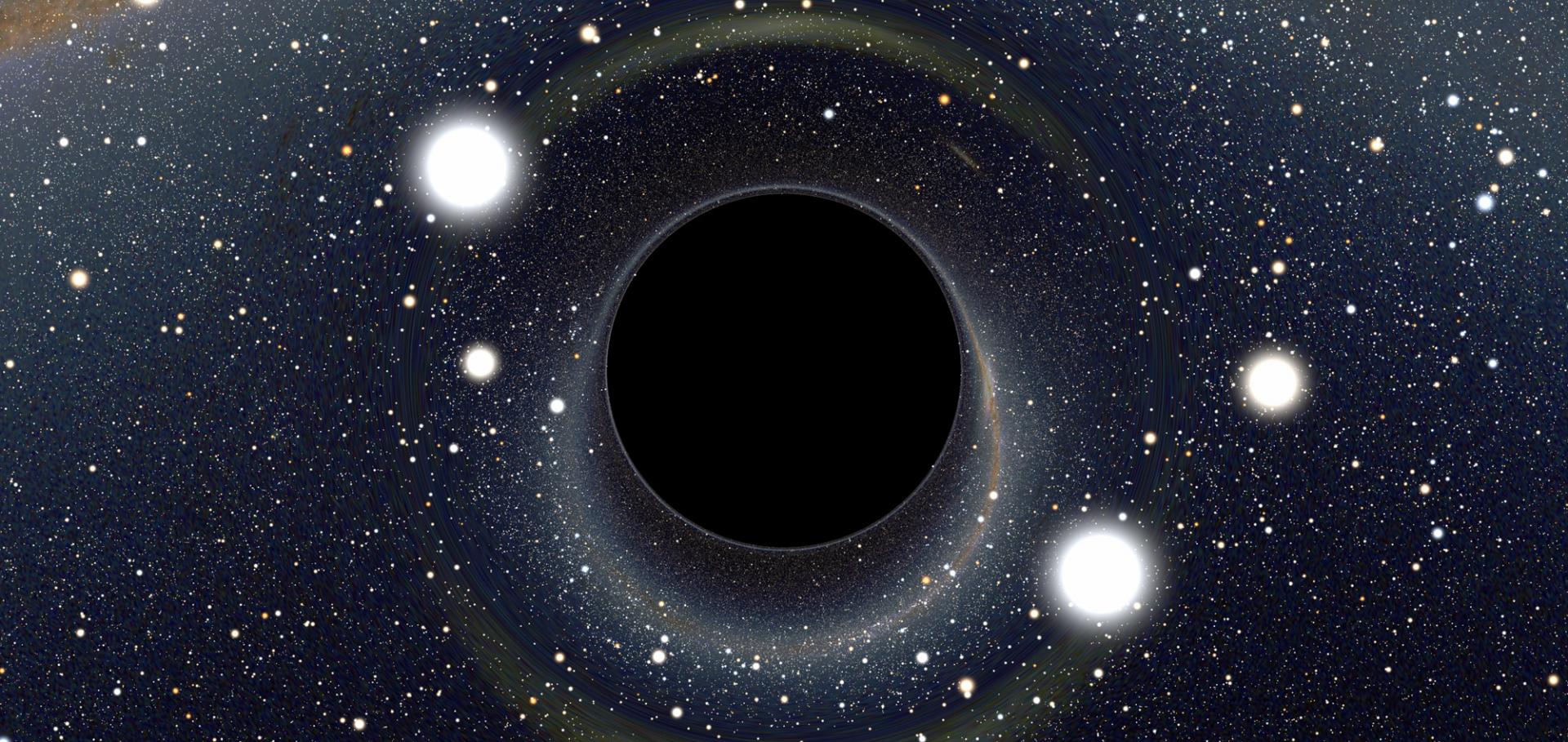
Black Hole

Lensing of space time around a black hole. At Oxford we study black holes observationally and theoretically on all size and time scales - it is some of our core work.

Credit: ALAIN RIAZUELO, IAP/UPMC/CNRS. CLICK HERE TO VIEW MORE IMAGES.

Dr Imogen Whittam

Hintze Fellow

Research theme

  • Astronomy and astrophysics

Sub department

  • Astrophysics

Research groups

  • Galaxy formation and evolution
  • Hintze Centre for Astrophysical Surveys
  • MeerKAT
  • Rubin-LSST
  • The Square Kilometre Array (SKA)
  • Euclid
imogen.whittam@physics.ox.ac.uk
Denys Wilkinson Building, room 558
Personal website
  • About
  • Publications

GMRT 610-MHz observations of the faint radio source population - and what these tell us about the higher radio-frequency sky

MONTHLY NOTICES OF THE ROYAL ASTRONOMICAL SOCIETY 464:3 (2017) 3357-3368

Authors:

IH Whittam, DA Green, MJ Jarvis, JM Riley
More details from the publisher
Details from ORA
More details
Details from ArXiV

The faint source population at 15.7 GHz - III. A high-frequency study of HERGs and LERGs

MONTHLY NOTICES OF THE ROYAL ASTRONOMICAL SOCIETY 462:2 (2016) 2122-2137

Authors:

IH Whittam, JM Riley, DA Green, MJ Jarvis
More details from the publisher
Details from ORA
More details
Details from ArXiV

10C continued: a deeper radio survey at 15.7 GHz

Monthly Notices of the Royal Astronomical Society Oxford University Press (OUP) 457:2 (2016) 1496-1506

Authors:

IH Whittam, JM Riley, DA Green, ML Davies, TMO Franzen, C Rumsey, MP Schammel, EM Waldram
More details from the publisher

10C continued: a deeper radio survey at 15.7 GHz

ArXiv 1601.00282 (2016)

Authors:

IH Whittam, JM Riley, DA Green, ML Davies, TMO Franzen, C Rumsey, MP Schammel, EM Waldram
Details from ArXiV

A large sky survey with MeerKAT

Proceedings of Science Part F138095 (2016)

Authors:

MG Santos, P Bull, S Camera, S Chen, J Fonseca, I Heywood, M Hilton, M Jarvis, GIG Józsa, K Knowles, L Leeuw, R Maartens, E Malefahlo, K McAlpine, K Moodley, P Patel, A Pourtsidou, M Prescott, K Spekkens, R Taylor, A Witzemann, I Whittam

Abstract:

© Copyright owned by the author(s). We discuss the ground-breaking science that will be possible with a wide area survey, using the MeerKAT telescope, known as MeerKLASS (MeerKAT Large Area Synoptic Survey). The current specifications of MeerKAT make it a great fit for cosmological applications, which require large volumes. In particular, a large survey over ∼ 4,000deg2for ∼ 4,000 hours will potentially provide the first ever measurements of the baryon acoustic oscillations using the 21cm intensity mapping technique, with enough accuracy to impose constraints on the nature of dark energy. The combination with multi-wavelength data will give unique additional information, such as the first constraints on primordial non-Gaussianity using the multi-tracer technique, as well as a better handle on foregrounds and systematics. The survey will also produce a large continuum galaxy sample down to a depth of 5 µJy in L-band, unmatched by any other concurrent telescope, which will allow to study the large-scale structure of the Universe out to high redshifts. Finally, the same survey will supply unique information for a range of other science applications, including a large statistical investigation of galaxy clusters, and the discovery of rare high-redshift AGN that can be used to probe the epoch of reionization as well as produce a rotation measure map across a huge swathe of the sky. The MeerKLASS survey will be a crucial step on the road to using SKA1-MID for cosmological applications, as described in the top priority SKA key science projects.

Pagination

  • First page First
  • Previous page Prev
  • …
  • Page 10
  • Page 11
  • Page 12
  • Page 13
  • Page 14
  • Page 15
  • Current page 16
  • Page 17
  • Page 18
  • Next page Next
  • Last page Last

Footer Menu

  • Contact us
  • Giving to the Dept of Physics
  • Work with us
  • Media

User account menu

  • Log in

Follow us

FIND US

Clarendon Laboratory,

Parks Road,

Oxford,

OX1 3PU

CONTACT US

Tel: +44(0)1865272200

University of Oxfrod logo Department Of Physics text logo
IOP Juno Champion logo Athena Swan Silver Award logo

© University of Oxford - Department of Physics

Cookies | Privacy policy | Accessibility statement

Built by: Versantus

  • Home
  • Research
  • Study
  • Engage
  • Our people
  • News & Comment
  • Events
  • Our facilities & services
  • About us
  • Giving to Physics
  • Current students
  • Staff intranet