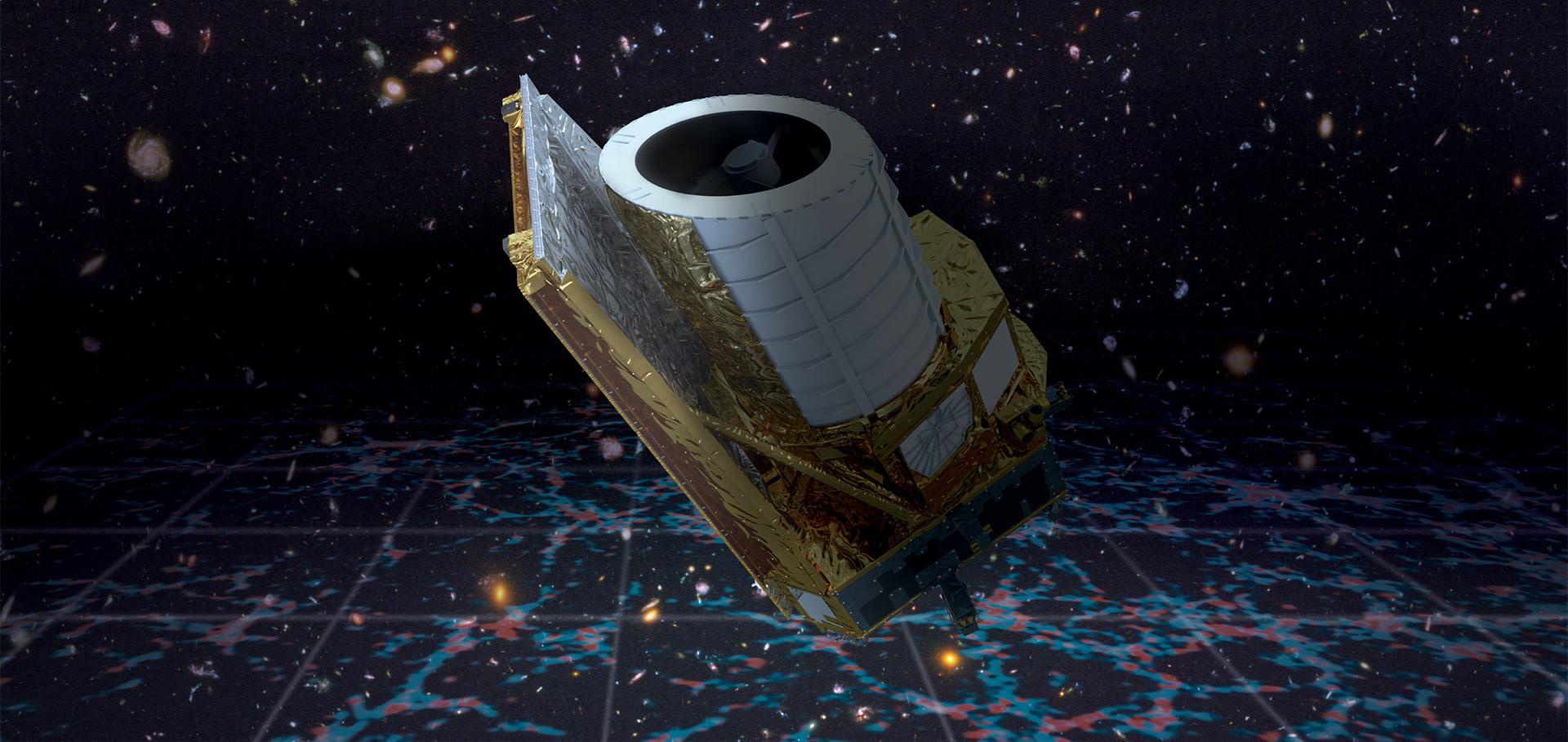
Euclid: The first statistical census of dusty and massive objects in the ERO/Perseus field

Astronomy & Astrophysics EDP Sciences 706 (2026) a371

Authors:

G Girardi, A Grazian, G Rodighiero, L Bisigello, G Gandolfi, E Bañados, S Belladitta, JR Weaver, S Eales, CC Lovell, KI Caputi, A Enia, A Bianchetti, E Dalla Bontà, T Saifollahi, A Vietri, N Aghanim, B Altieri, S Andreon, N Auricchio, H Aussel, C Baccigalupi, M Baldi, A Balestra, S Bardelli, P Battaglia, A Biviano, E Branchini, M Brescia, J Brinchmann, S Camera, G Cañas-Herrera, V Capobianco, C Carbone, J Carretero, S Casas, M Castellano, G Castignani, S Cavuoti, KC Chambers, A Cimatti, C Colodro-Conde, G Congedo, CJ Conselice, L Conversi, Y Copin, F Courbin, HM Courtois, M Cropper, A Da Silva, H Degaudenzi, G De Lucia, AM Di Giorgio, H Dole, M Douspis, F Dubath, CAJ Duncan, X Dupac, S Dusini, S Escoffier, M Farina, R Farinelli, F Faustini, S Ferriol, S Fotopoulou, M Frailis, E Franceschi, M Fumana, S Galeotta, K George, B Gillis, C Giocoli, J Gracia-Carpio, F Grupp, SVH Haugan, J Hoar, W Holmes, IM Hook, F Hormuth, A Hornstrup, P Hudelot, K Jahnke, M Jhabvala, E Keihänen, S Kermiche, A Kiessling, B Kubik, M Kümmel, M Kunz, H Kurki-Suonio, AMC Le Brun, D Le Mignant, P Liebing, S Ligori, PB Lilje, V Lindholm, I Lloro, G Mainetti, D Maino, E Maiorano, O Mansutti, S Marcin, O Marggraf, M Martinelli, N Martinet, F Marulli, R Massey, S Maurogordato, E Medinaceli, S Mei, Y Mellier, M Meneghetti, E Merlin, G Meylan, A Mora, M Moresco, L Moscardini, R Nakajima, C Neissner, RC Nichol, S-M Niemi, C Padilla, S Paltani, F Pasian, K Pedersen, WJ Percival, V Pettorino, G Polenta, M Poncet, LA Popa, L Pozzetti, F Raison, R Rebolo, A Renzi, J Rhodes, G Riccio, E Romelli, M Roncarelli, E Rossetti, B Rusholme, R Saglia, Z Sakr, D Sapone, B Sartoris, JA Schewtschenko, P Schneider, T Schrabback, A Secroun, G Seidel, M Seiffert, S Serrano, P Simon, C Sirignano, G Sirri, L Stanco, J Steinwagner, P Tallada-Crespí, D Tavagnacco, AN Taylor, I Tereno, R Toledo-Moreo, F Torradeflot, I Tutusaus, L Valenziano, J Valiviita, T Vassallo, G Verdoes Kleijn, A Veropalumbo, Y Wang, J Weller, G Zamorani, FM Zerbi, E Zucca, M Bolzonella, C Burigana, L Gabarra, J Martín-Fleitas, V Scottez

Abstract:

Our comprehension of the history of star formation at z > 3 strongly relies on rest-frame ultraviolet observations. However, this selection systematically misses the dustiest and most massive sources, resulting in an incomplete census at earlier times. Infrared facilities such as Spitzer and the James Webb Space Telescope have shed light on a hidden population lying at z = 3 − 6 characterised by extreme red colours named HIEROs (HST-to-IRAC extremely red objects), identified by the colour criterion H E − ch2 > 2.25. Recently, Euclid Early Release Observations (EROs) have opened the possibility to further study such objects, exploiting the comparison between Euclid and ancillary Spitzer /IRAC observations. The aim of this study was to investigate the effectiveness of this synergy in characterising the population of a small test area of 232 arcmin 2 . We utilised catalogues in the Perseus field across the VIS and NISP bands, supplemented by data from the four Spitzer channels and several ground-based MegaCam bands ( u , g , r , H α , i , and z ) already included in the ERO catalogue. We selected 121 HIEROs by applying the H E − ch2 > 2.25 colour cut, cleaned this sample of globular clusters and brown dwarfs, and then inspected by eye the multi-band cutouts of each source, ending with 42 reliable HIEROs. Photometric redshifts and other physical properties of the final sample were estimated using the spectral-energy-distribution-fitting software Bagpipes . From the z phot and M * values, we computed the galaxy stellar mass function at 3.5 < z < 5.5. When we exclude all galaxies that could host an active galactic nucleus, or whose stellar masses might be overestimated, we still find that the high-mass end of the galaxy stellar mass function is similar to previous estimates, indicating that the true value could be even higher. This investigation highlights the importance of a deeper study of this still mysterious population, in particular to assess its contribution to the cosmic star-formation rate density and its agreement with current galaxy evolution and formation models. These early results demonstrate Euclid ’s capabilities to push the boundaries of our understanding of obscured star formation across a wide range of epochs.

Revealing the link between halo mass and radio jet activities in quasars

ArXiv 2601.20576 (2026)

Authors:

B-H Yue, PN Best, HJA Röttgering, KJ Duncan, CL Hale, LK Morabito, DJB Smith

A JWST Paschen-alpha Calibration of the Radio Luminosity-Star Formation Rate Relation at z~1.3

ArXiv 2601.14588 (2026)

Authors:

Nick Seymour, Catherine Hale, Imogen Whittam, Pascal Oesch, Alba Covelo-Paz, Stijn Wuyts, Jose Afonso, Rebecca Bowler, Joe A Grundy, Ravi Jaiswar, Matt Jarvis, Allison Matthews, Romain A Meyer, Chloe Neufeld, Naveen A Reddy, Irene Shivaei, Dan Smith, Rohan Varadaraj, Michael A Wozniak, Lyla Jung

MIGHTEE: The evolving radio luminosity functions of star-forming galaxies to $z\sim 4.5$ and the cosmic history of star formation

ArXiv 2601.14913 (2026)

Authors:

Nijin J Thykkathu, Matt J Jarvis, Imogen H Whittam, CL Hale, AM Matthews, I Heywood, Eliab Malefahlo, RG Varadaraj, N Stylianou, Chris Pearson, Nick Seymour, Mattia Vaccari

Exploring the quasar disc-wind-jet connection with LoTSS and SDSS

Monthly Notices of the Royal Astronomical Society Oxford University Press (OUP) (2026) stag065

Authors:

Charlotte L Jackson, James H Matthews, Imogen H Whittam, Matt J Jarvis, Matthew J Temple, Amy L Rankine, Paul C Hewett

Abstract:

Abstract We investigate the relationship between disc winds, radio jets, accretion rates and black hole masses of a sample of ∼100k quasars at z ≈ 2. Combining spectra from the 17th data release of the Sloan Digital Sky Survey (SDSS) with radio fluxes from the 2nd data release of the Low Frequency ARray (LOFAR) Two-Meter Sky Survey (LoTSS), we statistically characterise a radio loud and radio quiet population using a two-component Gaussian Mixture model, and perform population matching in black hole mass and Eddington fraction. We determine how the fraction of radio loud sources changes across this parameter space, finding that jets are most efficiently produced in quasars with either a very massive central black hole (MBH > 109M⊙) or one that is rapidly accreting (λEdd > 0.3). We also show that there are differences in the blueshift of the $\textrm {C}\, \rm \small {IV}$ λ1549Å line and the equivalent width of the $\rm {He}\, \rm \small {II}$ λ1640Å line in radio loud and radio quiet quasars that persist even after accounting for differences in the mass and accretion rate of the central black hole. Generally, we find an anti-correlation between the inferred presence of disc winds and jets, which we suggest is mediated by differences in the quasars’ spectral energy distributions. The latter result is shown through the close coupling between tracers of wind kinematics and the ionising flux– which holds for both radio loud and radio quiet sources, despite differences between their emission line properties– and is hinted at by a different Baldwin effect in the two populations.