Home
Department Of Physics text logo
  • Research
    • Our research
    • Our research groups
    • Our research in action
    • Research funding support
    • Summer internships for undergraduates
  • Study
    • Undergraduates
    • Postgraduates
  • Engage
    • For young people
    • For teachers
    • For the public
    • For alumni
    • For business
  • Support
Menu
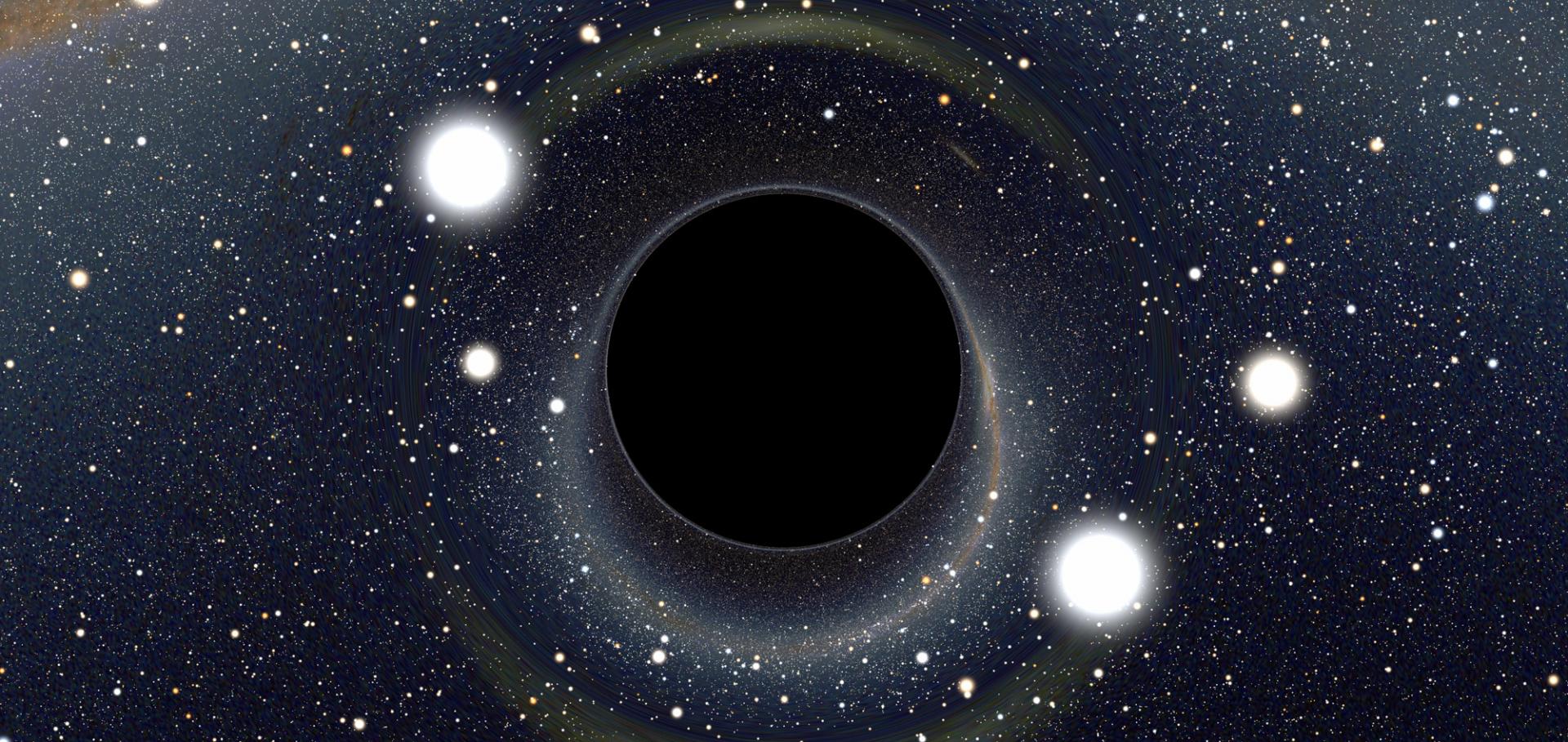
Black Hole

Lensing of space time around a black hole. At Oxford we study black holes observationally and theoretically on all size and time scales - it is some of our core work.

Credit: ALAIN RIAZUELO, IAP/UPMC/CNRS. CLICK HERE TO VIEW MORE IMAGES.

Professor Andrew Bunker

Professor of Astrophysics

Research theme

  • Astronomy and astrophysics

Sub department

  • Astrophysics

Research groups

  • Galaxy formation and evolution
Andy.Bunker@physics.ox.ac.uk
Telephone: 01865 (2)83126
Denys Wilkinson Building, room 702
  • About
  • Publications

SAPPHIRES: A Galaxy Overdensity in the Heart of Cosmic Reionization at z = 8.47

The Astrophysical Journal American Astronomical Society 1008:2 (2026) 217

Authors:

Yoshinobu Fudamoto, Jakob M Helton, Xiaojing Lin, Fengwu Sun, Peter Behroozi, Tiger Yu-Yang Hsiao, Eiichi Egami, Andrew J Bunker, Francesco D’Eugenio, Yuichi Harikane, Masami Ouchi, Yichen Liu, Weizhe Liu, Roberto Maiolino, Zhiyuan Ji, Xiangyu Jin, Wei Leong Tee, Feige Wang, Christopher NA Willmer, Yi Xu, Jinyi Yang, Yongda Zhu

Abstract:

We report the discovery of a galaxy protocluster candidate (dubbed MACS0416-OD-z8p5) at a spectroscopic redshift of z ∼ 8.47, dating back to ∼550 Myr after the Big Bang. The observations are part of the JWST Cycle 3 Treasury Program Slitless Areal Pure-Parallel HIgh-Redshift Emission Survey (or SAPPHIRES) using NIRCam grism observations. Using wide-field slitless spectroscopy (WFSS) obtained in the MACS0416 parallel field, we robustly confirm nine galaxies at zspec ∼ 8.47 via emission-line detections of [O iii] 5008 Å (with >5σ) and tentatively confirm one additional galaxy (at ∼3σ). This discovery represents the highest-redshift spectroscopically confirmed galaxy overdensity known to date and is ∼6–8 times more dense than the average number density of galaxies at the same redshift. Furthermore, a galaxy hosting a low-mass active galactic nucleus (a “little red dot”) is found as a member, suggesting that black hole growth may already be underway in dense environments at early cosmic times. This finding of a massive dark matter halo hosting a galaxy overdensity at z ∼ 8.5 is surprising given that our survey covered only a small, random field ( 16.5arcmin2 ) as part of a pure-parallel observation. Comparison with cosmological simulations shows that the likelihood of finding such a large-scale structure is <5% under the current galaxy formation scenario and within the observed survey volume. Our results demonstrate the power of WFSS observations for building complete samples of line-emitting galaxies and suggest an important role for overdensities in enhancing galaxy formation by funneling large-scale gas supplies into small cosmological volumes.
More details from the publisher

Mergers lighting the early Universe: modest star-formation enhancement without evidence for AGN or Lyα triggering

Monthly Notices of the Royal Astronomical Society Oxford University Press (OUP) (2026) stag1698

Authors:

Dávid Puskás, Sandro Tacchella, Charlotte Simmonds, Gareth C Jones, Ignas Juodžbalis, Jan Scholtz, William M Baker, Andrew J Bunker, Stefano Carniani, Emma Curtis-Lake, Qiao Duan, Daniel J Eisenstein, Kevin Hainline, Benjamin D Johnson, Roberto Maiolino, Marcia Rieke, Brant Robertson, Christina C Williams, Joris Witstok

Abstract:

Abstract Galaxy mergers and interactions are often invoked to explain enhanced star formation, black hole growth, and mass build-up of galaxies at later cosmic times, but their effect is poorly understood at high redshift (z > 2). We use JADES data to analyse a mass-complete sample of 1968 galaxies at z = 3 − 9 with log(M⋆/M⊙) = [8, 10], identifying major merger pairs (projected separation of 5 − 100 pkpc, mass ratio ≥1/4) using a probabilistic method. To look for signatures of enhancement in multiple physical properties, we carefully build a control sample of non-pairs that are simultaneously matched in redshift, stellar mass, isolation, and environment to the pair sample. We find a moderate enhancement in specific star-formation rate (sSFR) of a factor of 1.10 ± 0.05 at separations ≲ 20 kpc in pairs compared to their matched controls. We find that the interaction-related sSFR enhancement is most apparent at longer SFR averaging timescales (50–100 Myr), whereas the enhancement is not detected on 5—10 Myr timescales, where bursty star formation might be driven by internal processes. By averaging star formation histories, we find two distinct populations: one with monotonically rising SFRs and another with an earlier peak in SFR, potentially corresponding to different interaction stages. Finally, we find no significant excess of AGN in pairs, consistent with galaxy interactions not strongly triggering black hole activity at the separations probed (>5 kpc). Similarly, we also do not detect an excess in the fraction of Lyman-α emitters in pairs, suggesting that at the probed separations, galaxy interactions are not efficient at enhancing Lyman-α photon production and escape, which may only become important at the smallest physical scales.
More details from the publisher
More details

Little Red Dots: One Photometric Tag Concealing Diverse Spectroscopic Flavors of Massive Star Formation and Black Hole Activity

(2026)

Authors:

Pablo G Pérez-González, Guillermo Barro, Stefano Carniani, Francesco D'Eugenio, George H Rieke, Roberta Tripodi, Andrew J Bunker, Xihan Ji, Rui Marques-Chaves, Daniel Schaerer, Giacomo Venturi, Flor Arévalo-González, Santiago Arribas, Pierluigi Rinaldi, Bruno Rodríguez Del Pino, Joris Witstok, Rachana Bhatawdekar, Leindert A Boogaard, Stephane Charlot, Jacopo Chevallard, Luca Costantin, Mirko Curti, Emma Curtis-Lake, Emanuele Daddi, Kelcey Davis, Mark Dickinson, Callum T Donnan, Fergus R Donnan, James S Dunlop, Daniel J Eisenstein, Henry C Ferguson, Román Fernández Aranda, Steven L Finkelstein, Seiji Fujimoto, Giovanni Gandolfi, Mauro Giavalisco, Norman A Grogin, Mahmoud Hamed, Michaela Hirschmann, Jeyhan S Kartaltepe, Dale D Kocevski, Gene CK Leung, Cristina M Lofaro, Ray A Lucas, Derek J McLeod, Jens Melinder, Goran Östlin, Casey Papovich, Laura Pentericci, Borja Pérez-Díaz, Marcia Rieke, Jan Scholtz, Rachel S Somerville, Thomas M Stanton, Struan D Stevenson, Irene Shivaei, Sandro Tacchella, Jonathan R Trump, Hannah Übler, Xin Wang, Christina C Williams, Christopher NA Willmer, LY Aaron Yung, Yongda Zhu
More details from the publisher

GA-NIFS: The highest-redshift ring galaxy possibly resulting from a head-on collision

Astronomy & Astrophysics EDP Sciences 713 (2026) a86

Authors:

Michele Perna, Santiago Arribas, Luca Costantin, Pablo G Pérez-González, Carlota Prieto-Jiménez, Bruno Rodríguez Del Pino, Francesco D’Eugenio, Isabella Lamperti, Filippo Mannucci, Hannah Übler, Giovanni Cresci, Torsten Böker, Andrew J Bunker, Stefano Carniani, Stéphane Charlot, Roberto Maiolino, Elena Bertola, Daniel Ceverino, Chiara Circosta, Jan Scholtz, Lorenzo Ulivi, Giacomo Venturi

Abstract:

Context . Collisional ring galaxies are a rare class of interacting systems, comprising only ∼0.01% of galaxies in the local Universe. Their formation is typically attributed to a head-on collision of a massive galaxy with a compact satellite (intruder), triggering density waves propagating outwards that produce the characteristic ring morphology. Here, we report the discovery and detailed analysis of GS18660, the most distant ring galaxy known to date, at z = 3.076, based on JWST data obtained within of the GA-NIFS programme. Aims . This work aims to characterise the physical and dynamical properties of GS18660 and shed light on the formation of its ring. Specifically, we analysed the ionised gas properties, stellar populations, and gas kinematics of the system, and used the observed geometry to constrain the timescale of the collision. Methods . Our analysis is based on NIRSpec integral field spectrograph (IFS) data, including low-resolution ( R ∼ 100) spectroscopy covering 0.6–5.3 μ m (∼0.2–1.3 μ m rest-frame), and high-resolution ( R ∼ 2700) spectroscopy covering 1.66–3.17 μ m (0.4–0.8 μ m rest-frame). Multi-wavelength techniques (e.g. emission line diagnostics, full spectral fitting, and gas dynamics) were applied to derive nebular gas conditions and stellar population properties. Results . Gas kinematic analysis reveals that GS18660 exhibits a rotating disc component with an additional radial expansion velocity of ∼200 km s −1 , consistent with a propagating collisional wave. Nebular line diagnostics indicate an intense star formation (star formation rate SFR ∼100 M ⊙ yr −1 ) along the ring and in the nucleus. Stellar population analysis shows that the most recent star formation episode, occurring within the last ≈50 Myr, predominantly took place in the ring. We also identify a close companion, the intruder galaxy responsible for the collision, moving away with a relative velocity of ∼425 km s −1 . Conclusions . The evidence favours a collisional origin for the ring in GS18660, though the presence of a recently formed bar (and hence a resonance ring) cannot be completely excluded. This discovery provides a unique window to the physics of galaxy interactions and the rapid assembly of stellar structures in the early Universe.
More details from the publisher

The little blue and red dot Rosetta stones

Astronomy & Astrophysics EDP Sciences 713 (2026) a332

Authors:

M Brazzini, F D’Eugenio, R Maiolino, J Lyu, C DeCoursey, H Übler, X Ji, I Juodžbalis, J Scholtz, GC Jones, K Hainline, E Dalla Bontà, PG Pérez-González, S Geris, A Harshan, C Feruglio, M Bischetti, G Mazzolari, G Rieke, S Alberts, B Trefoloni, S Carniani, E Parlanti, A Marconi, G Risaliti, C Ramos Almeida, P Rinaldi, M Perna, S Zamora, I Lamperti, G Venturi, G Cresci, E Bertola, AJ Bunker, LR Ivey

Abstract:

The population of active galactic nuclei (AGNs) newly discovered by the James Webb Space Telescope (JWST) exhibits peculiar properties that distinguish it from both local type I AGNs and high-redshift quasars. Most of these sources are compact, appearing as ‘little dots’; among them, the sub-class (10−30% of the total) characterised by significantly red optical colours is known as ‘little red dots’ (LRDs). In this work, we introduce the analogous term ‘little blue dots’ (LBDs) to characterise the remaining (bluer) sources (70−90%). We present a comparative analysis of two bright prototypical representatives, which we refer to as the Rosetta stones of the two classes: GN-28074 at z=2.26 as the red Rosetta stone and GS-3073 at z=5.55 as the blue Rosetta stone. Both Rosetta stones exhibit non-Gaussian broad Balmer lines, better described by exponential or double-Gaussian profiles rather than single Gaussians, similarly to normal low-redshift type I AGNs, indicating that non-Gaussian wings are not unique to LRDs. They are both extremely X-ray weak, showing strong auroral λ 4363 emission, weak hot dust mid-IR emission, and no time variability. However, they do differ in terms of excitation diagnostics: the λ 4686 line is undetected in the red Rosetta, but strongly detected in the blue Rosetta in both narrow and broad components, with the latter being much broader than hydrogen Balmer lines. This supports BLR stratification and disfavours the cocoon electron-scattering scenario in LBDs. An additional difference is the presence of prominent Balmer absorption in the red Rosetta, which is indicative of extremely dense gas along the line of sight and also happens to be absent in the blue Rosetta. Taken together, these results suggest that LRDs and LBDs share the same central engine as standard type I AGNs, while differing in terms of the amount and geometry of dense gas surrounding the accretion disk and/or in their accretion properties.
More details from the publisher
More details

Pagination

  • First page First
  • Previous page Prev
  • Page 1
  • Page 2
  • Page 3
  • Current page 4
  • Page 5
  • Page 6
  • Page 7
  • Page 8
  • Page 9
  • …
  • Next page Next
  • Last page Last

Footer Menu

  • Contact us
  • Giving to the Dept of Physics
  • Work with us
  • Media

User account menu

  • Log in

Follow us

FIND US

Clarendon Laboratory,

Parks Road,

Oxford,

OX1 3PU

CONTACT US

Tel: +44(0)1865272200

University of Oxfrod logo Department Of Physics text logo
IOP Juno Champion logo Athena Swan Silver Award logo

© University of Oxford - Department of Physics

Cookies | Privacy policy | Accessibility statement

Built by: Versantus

  • Home
  • Research
  • Study
  • Engage
  • Our people
  • News & Comment
  • Events
  • Our facilities & services
  • About us
  • Giving to Physics
  • Current students
  • Staff intranet