Home
Department Of Physics text logo
  • Research
    • Our research
    • Our research groups
    • Our research in action
    • Research funding support
    • Summer internships for undergraduates
  • Study
    • Undergraduates
    • Postgraduates
  • Engage
    • For young people
    • For teachers
    • For the public
    • For alumni
    • For business
  • Support
Menu
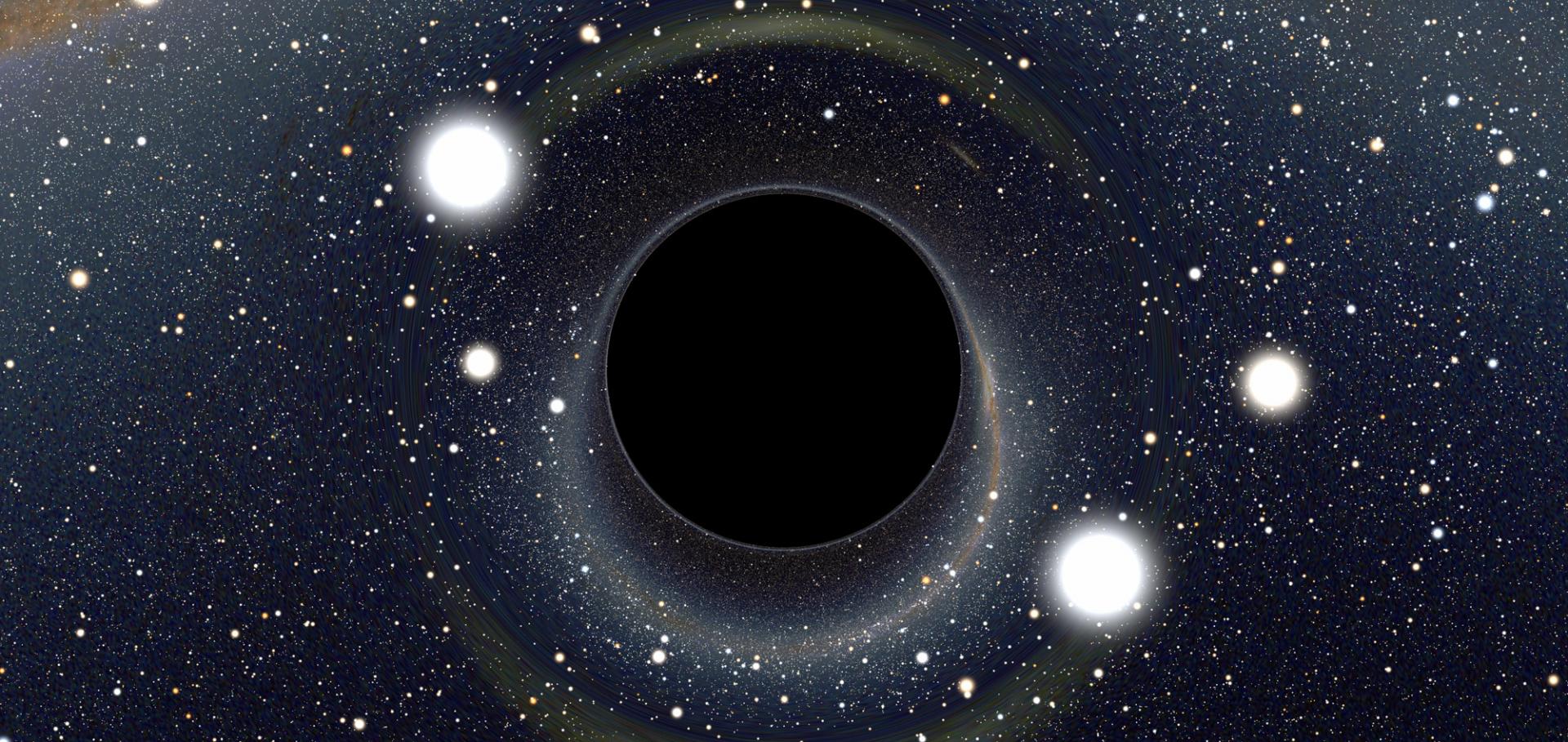
Black Hole

Lensing of space time around a black hole. At Oxford we study black holes observationally and theoretically on all size and time scales - it is some of our core work.

Credit: ALAIN RIAZUELO, IAP/UPMC/CNRS. CLICK HERE TO VIEW MORE IMAGES.

Professor Andrew Bunker

Professor of Astrophysics

Research theme

  • Astronomy and astrophysics

Sub department

  • Astrophysics

Research groups

  • Galaxy formation and evolution
Andy.Bunker@physics.ox.ac.uk
Telephone: 01865 (2)83126
Denys Wilkinson Building, room 702
  • About
  • Publications

GA-NIFS: interstellar medium properties and tidal interactions in the evolved massive merging system B14-65666 at z = 7.152

(2024)

Authors:

Gareth C Jones, Rebecca Bowler, Andrew J Bunker, Santiago Arribas, Stefano Carniani, Stephane Charlot, Michele Perna, Bruno Rodríguez Del Pino, Hannah Übler, Chris J Willott, Jacopo Chevallard, Giovanni Cresci, Eleonora Parlanti, Jan Scholtz, Giacomo Venturi
More details from the publisher
Details from ArXiV

A dormant overmassive black hole in the early Universe

Nature Nature Research 636:8043 (2024) 594-597

Authors:

Ignas Juodžbalis, Roberto Maiolino, William M Baker, Sandro Tacchella, Jan Scholtz, Francesco D’Eugenio, Joris Witstok, Raffaella Schneider, Alessandro Trinca, Rosa Valiante, Christa DeCoursey, Mirko Curti, Stefano Carniani, Jacopo Chevallard, Anna de Graaff, Santiago Arribas, Jake S Bennett, Martin A Bourne, Andrew J Bunker, Stéphane Charlot, Brian Jiang, Sophie Koudmani, Michele Perna, Brant Robertson

Abstract:

Recent observations have found a large number of supermassive black holes already in place in the first few hundred million years after the Big Bang, many of which seem to be overmassive relative to their host galaxy stellar mass when compared with local relation1, 2, 3, 4, 5, 6, 7, 8–9. Several different models have been proposed to explain these findings, ranging from heavy seeds to light seeds experiencing bursts of high accretion rate10, 11, 12, 13, 14, 15–16. Yet, current datasets are unable to differentiate between these various scenarios. Here we report the detection, from the JADES survey, of broad Hα emission in a galaxy at z = 6.68, which traces a black hole with a mass of about 4 × 10⁸M⊙ and accreting at a rate of only 0.02 times the Eddington limit. The black hole to host galaxy stellar mass ratio is about 0.4—that is, about 1,000 times above the local relation—whereas the system is closer to the local relations in terms of dynamical mass and velocity dispersion of the host galaxy. This object is most likely an indication of a much larger population of dormant black holes around the epoch of reionization. Its properties are consistent with scenarios in which short bursts of super-Eddington accretion have resulted in black hole overgrowth and massive gas expulsion from the accretion disk; in between bursts, black holes spend most of their life in a dormant state.
More details from the publisher
Details from ORA
More details
More details

Galaxy Activity, Torus, and Outflow Survey (GATOS). Black hole mass estimation using machine learning

Astronomy & Astrophysics EDP Sciences (2024)

Authors:

R Poitevineau, F Combes, S Garcia-Burillo, D Cornu, A Alonso Herrero, C Ramos Almeida, A Audibert, E Bellocchi, PG Boorman, AJ Bunker, R Davies, T Díaz-Santos, I García-Bernete, B García-Lorenzo, O González-Martín, EKS Hicks, SF Hönig, LK Hunt, M Imanishi, M Pereira-Santaella, C Ricci, D Rigopoulou, DJ Rosario, D Rouan, M Villar Martin, M Ward
More details from the publisher
More details

Hitting the slopes: A spectroscopic view of UV continuum slopes of galaxies reveals a reddening at z > 9.5

(2024)

Authors:

Aayush Saxena, Alex J Cameron, Harley Katz, Andrew J Bunker, Jacopo Chevallard, Francesco D'Eugenio, Santiago Arribas, Rachana Bhatawdekar, Kristan Boyett, Phillip A Cargile, Stefano Carniani, Stephane Charlot, Mirko Curti, Emma Curtis-Lake, Kevin Hainline, Zhiyuan Ji, Benjamin D Johnson, Gareth C Jones, Nimisha Kumari, Isaac Laseter, Michael V Maseda, Brant Robertson, Charlotte Simmonds, Sandro Tacchella, Hannah Ubler, Christina C Williams, Chris Willott, Joris Witstok, Yongda Zhu
More details from the publisher
Details from ArXiV

BEACON: JWST NIRCam Pure-parallel Imaging Survey. I. Survey Design and Initial Results

(2024)

Authors:

Takahiro Morishita, Charlotte A Mason, Kimi C Kreilgaard, Michele Trenti, Tommaso Treu, Benedetta Vulcani, Yechi Zhang, Abdurro'uf, Anahita Alavi, Hakim Atek, Yannick Bahe, Marusa Bradac, Larry D Bradley, Andrew J Bunker, Dan Coe, James Colbert, Viola Gelli, Matthew J Hayes, Tucker Jones, Tadayuki Kodama, Nicha Leethochawalit, Zhaoran Liu, Matthew A Malkan, Vihang Mehta, Benjamin Metha, Andrew B Newman, Marc Rafelski, Guido Roberts-Borsani, Michael J Rutkowski, Claudia Scarlata, Massimo Stiavelli, Ryo A Sutanto, Kosuke Takahashi, Harry I Teplitz, Xin Wang
More details from the publisher

Pagination

  • First page First
  • Previous page Prev
  • …
  • Page 42
  • Page 43
  • Page 44
  • Page 45
  • Current page 46
  • Page 47
  • Page 48
  • Page 49
  • Page 50
  • …
  • Next page Next
  • Last page Last

Footer Menu

  • Contact us
  • Giving to the Dept of Physics
  • Work with us
  • Media

User account menu

  • Log in

Follow us

FIND US

Clarendon Laboratory,

Parks Road,

Oxford,

OX1 3PU

CONTACT US

Tel: +44(0)1865272200

University of Oxfrod logo Department Of Physics text logo
IOP Juno Champion logo Athena Swan Silver Award logo

© University of Oxford - Department of Physics

Cookies | Privacy policy | Accessibility statement

Built by: Versantus

  • Home
  • Research
  • Study
  • Engage
  • Our people
  • News & Comment
  • Events
  • Our facilities & services
  • About us
  • Giving to Physics
  • Current students
  • Staff intranet