Home
Department Of Physics text logo
  • Research
    • Our research
    • Our research groups
    • Our research in action
    • Research funding support
    • Summer internships for undergraduates
  • Study
    • Undergraduates
    • Postgraduates
  • Engage
    • For young people
    • For teachers
    • For the public
    • For alumni
    • For business
  • Support
Menu
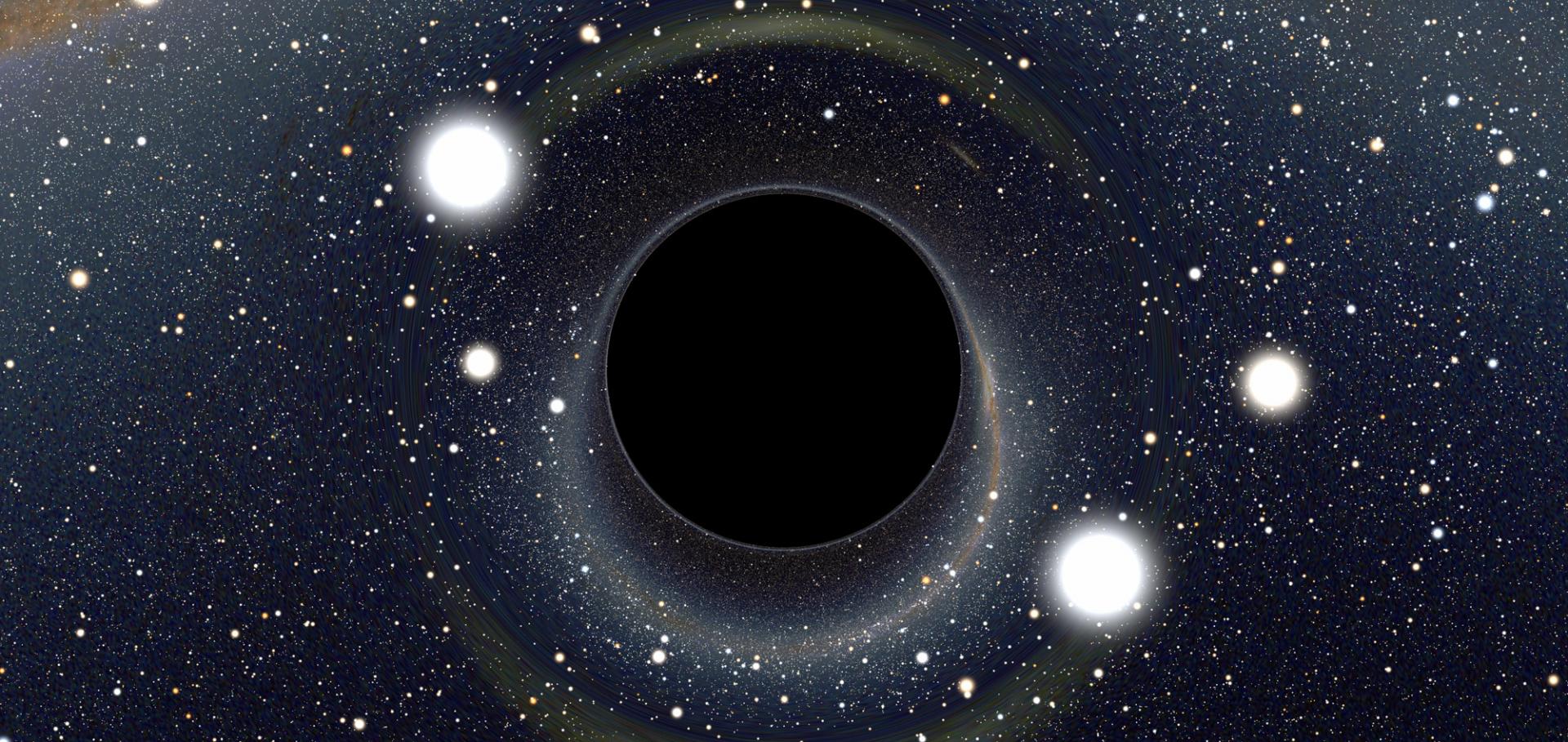
Black Hole

Lensing of space time around a black hole. At Oxford we study black holes observationally and theoretically on all size and time scales - it is some of our core work.

Credit: ALAIN RIAZUELO, IAP/UPMC/CNRS. CLICK HERE TO VIEW MORE IMAGES.

Professor Andrew Bunker

Professor of Astrophysics

Research theme

  • Astronomy and astrophysics

Sub department

  • Astrophysics

Research groups

  • Galaxy formation and evolution
Andy.Bunker@physics.ox.ac.uk
Telephone: 01865 (2)83126
Denys Wilkinson Building, room 702
  • About
  • Publications

Searching for Emission Lines at $z>11$: The Role of Damped Lyman-$α$ and Hints About the Escape of Ionizing Photons

(2024)

Authors:

Kevin N Hainline, Francesco D'Eugenio, Peter Jakobsen, Jacopo Chevallard, Stefano Carniani, Joris Witstok, Zhiyuan Ji, Emma Curtis-Lake, Benjamin D Johnson, Brant Robertson, Sandro Tacchella, Mirko Curti, Stephane Charlot, Jakob M Helton, Santiago Arribas, Rachana Bhatawdekar, Andrew J Bunker, Alex J Cameron, Eiichi Egami, Daniel J Eisenstein, Ryan Hausen, Nimisha Kumari, Roberto Maiolino, Pablo G Perez-Gonzalez, Marcia Rieke, Aayush Saxena, Jan Scholtz, Renske Smit, Fengwu Sun, Christina C Williams, Christopher NA Willmer, Chris Willott
More details from the publisher

The eventful life of a luminous galaxy at z = 14: metal enrichment, feedback, and low gas fraction?

(2024)

Authors:

Stefano Carniani, Francesco D'Eugenio, Xihan Ji, Eleonora Parlanti, Jan Scholtz, Fengwu Sun, Giacomo Venturi, Tom JLC Bakx, Mirko Curti, Roberto Maiolino, Sandro Tacchella, Jorge A Zavala, Kevin Hainline, Joris Witstok, Benjamin D Johnson, Stacey Alberts, Andrew J Bunker, Stéphane Charlot, Daniel J Eisenstein, Jakob M Helton, Peter Jakobsen, Nimisha Kumari, Brant Robertson, Aayush Saxena, Hannah Übler, Christina C Williams, Christopher NA Willmer, Chris Willott
More details from the publisher

Extended hot dust emission around the earliest massive quiescent galaxy

(2024)

Authors:

Zhiyuan Ji, Christina C Williams, George H Rieke, Jianwei Lyu, Stacey Alberts, Fengwu Sun, Jakob M Helton, Marcia Rieke, Irene Shivaei, Francesco D'Eugenio, Sandro Tacchella, Brant Robertson, Yongda Zhu, Roberto Maiolino, Andrew J Bunker, Yang Sun, Christopher NA Willmer
More details from the publisher

A Systematic Search for Galaxies with Extended Emission Line and Potential Outflows in JADES Medium-Band Images

(2024)

Authors:

Yongda Zhu, Marcia J Rieke, Zhiyuan Ji, Charlotte Simmonds, Fengwu Sun, Yang Sun, Stacey Alberts, Rachana Bhatawdekar, Andrew J Bunker, Phillip A Cargile, Stefano Carniani, Anna de Graaff, Kevin Hainline, Jakob M Helton, Gareth C Jones, Jianwei Lyu, George H Rieke, Pierluigi Rinaldi, Brant Robertson, Jan Scholtz, Hannah Übler, Christina C Williams, Christopher NA Willmer
More details from the publisher

A fast-rotator post-starburst galaxy quenched by supermassive black-hole feedback at z = 3

Nature Astronomy Nature Research 8:11 (2024) 1443-1456

Authors:

Francesco D’Eugenio, Pablo G Pérez-González, Roberto Maiolino, Jan Scholtz, Michele Perna, Chiara Circosta, Hannah Übler, Santiago Arribas, Torsten Böker, Andrew J Bunker, Stefano Carniani, Stephane Charlot, Jacopo Chevallard, Giovanni Cresci, Emma Curtis-Lake, Gareth C Jones, Nimisha Kumari, Isabella Lamperti, Tobias J Looser, Eleonora Parlanti, Hans-Walter Rix, Brant Robertson, Bruno Rodríguez Del Pino, Sandro Tacchella

Abstract:

The most massive galaxies in the Universe stopped forming stars due to the time-integrated feedback from central supermassive black holes (SMBHs). However, the exact quenching mechanism is not yet understood, because local massive galaxies were quenched billions of years ago. Here we present JWST/NIRSpec integral-field spectroscopy observations of GS-10578, a massive, quiescent galaxy at redshift z = 3.064 ± 0.002. From its spectrum, we measure a stellar mass M⋆ = 1.6 ± 0.2 × 10¹¹ M⊙ and a dynamical mass Mdyn = 2.0 ± 0.5 × 10¹¹ M⊙. Half of its stellar mass formed at z = 3.7–4.6, and the system is now quiescent, with a current star-formation rate of less than 19 M⊙ yr−1. We detect ionized- and neutral-gas outflows traced by [O iii] emission and Na i absorption, with mass outflow rates 0.14–2.9 and 30–100 M⊙ yr−1, respectively. Outflow velocities reach vout ≈ 1,000 km s−1, comparable to the galaxy escape velocity. GS-10578 hosts an active galactic nucleus, evidence that these outflows are due to SMBH feedback. The neutral outflow rate is higher than the star-formation rate. Hence, this is direct evidence for ejective SMBH feedback, with a mass loading capable of interrupting star formation by rapidly removing its fuel. Stellar kinematics show ordered rotation, with spin parameter λRe=0.62±0.07, meaning GS-10578 is rotation-supported. This study presents direct evidence for ejective active galactic nucleus feedback in a massive, recently quenched galaxy, thus helping to clarify how SMBHs quench their hosts. The high value of λRe implies that quenching can occur without destroying the stellar disk.
More details from the publisher
Details from ORA
More details

Pagination

  • First page First
  • Previous page Prev
  • …
  • Page 51
  • Page 52
  • Page 53
  • Page 54
  • Current page 55
  • Page 56
  • Page 57
  • Page 58
  • Page 59
  • …
  • Next page Next
  • Last page Last

Footer Menu

  • Contact us
  • Giving to the Dept of Physics
  • Work with us
  • Media

User account menu

  • Log in

Follow us

FIND US

Clarendon Laboratory,

Parks Road,

Oxford,

OX1 3PU

CONTACT US

Tel: +44(0)1865272200

University of Oxfrod logo Department Of Physics text logo
IOP Juno Champion logo Athena Swan Silver Award logo

© University of Oxford - Department of Physics

Cookies | Privacy policy | Accessibility statement

Built by: Versantus

  • Home
  • Research
  • Study
  • Engage
  • Our people
  • News & Comment
  • Events
  • Our facilities & services
  • About us
  • Giving to Physics
  • Current students
  • Staff intranet