Home
Department Of Physics text logo
  • Research
    • Our research
    • Our research groups
    • Our research in action
    • Research funding support
    • Summer internships for undergraduates
  • Study
    • Undergraduates
    • Postgraduates
  • Engage
    • For young people
    • For teachers
    • For the public
    • For alumni
    • For business
  • Support
Menu
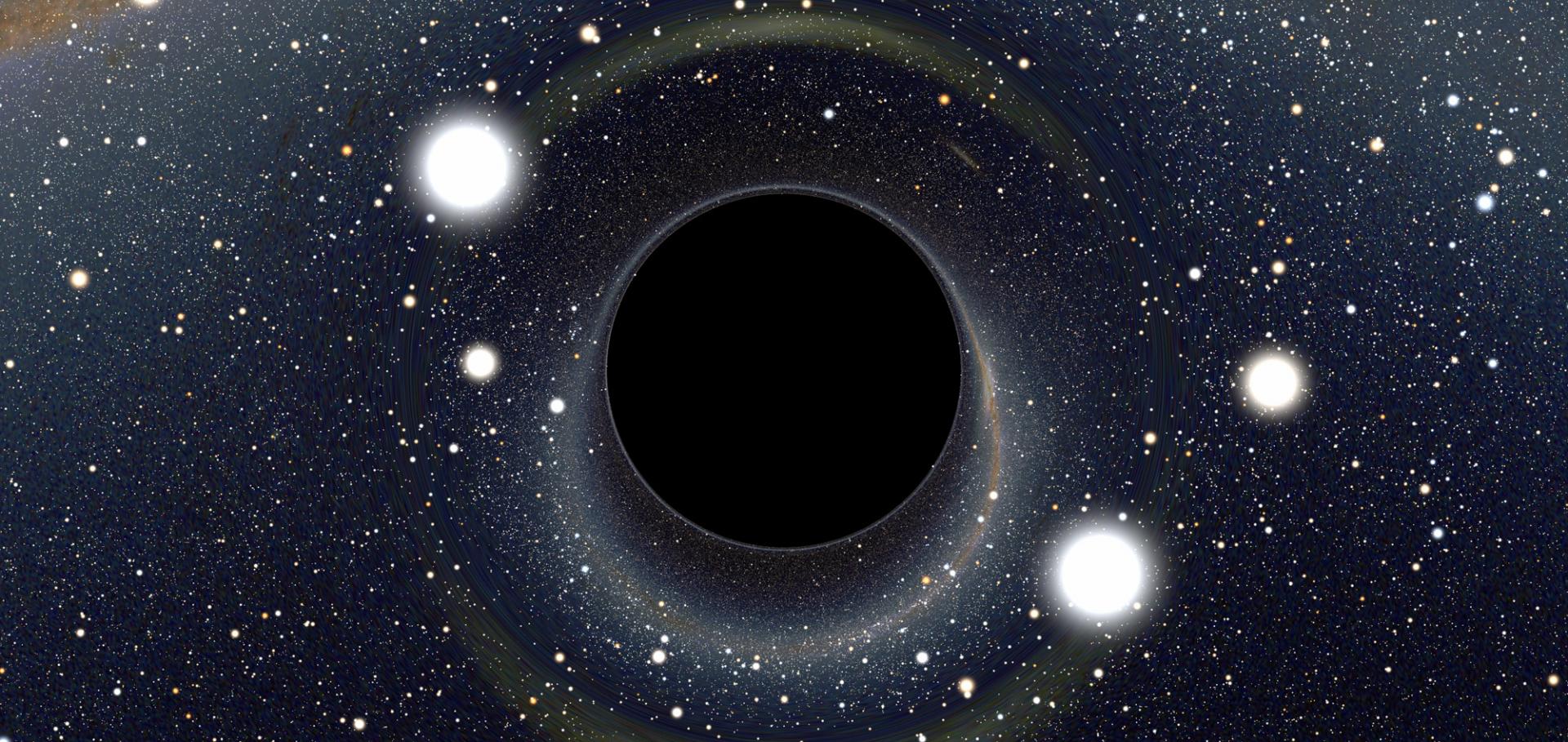
Black Hole

Lensing of space time around a black hole. At Oxford we study black holes observationally and theoretically on all size and time scales - it is some of our core work.

Credit: ALAIN RIAZUELO, IAP/UPMC/CNRS. CLICK HERE TO VIEW MORE IMAGES.

Martin Bureau

Professor of Astrophysics

Research theme

  • Astronomy and astrophysics

Sub department

  • Astrophysics

Research groups

  • Galaxy formation and evolution
  • Hintze Centre for Astrophysical Surveys
martin.bureau@physics.ox.ac.uk
Telephone: 01865 (2)73377
Denys Wilkinson Building, room 701
Home page
ORCID
  • About
  • Publications

Stellar populations of kinematically decoupled cores in E/S0 galaxies

Proceedings of the International Astronomical Union 2:S235 (2006) 122

Authors:

RM McDermid, E Emsellem, KL Shapiro, R Bacon, M Bureau, M Cappellari, RL Davies, T De Zeeuw, J Falcón-Barroso, D Krajnovíc, H Kuntschner, RF Peletier, M Sarzi

Abstract:

In this poster contribution, we present results from high spatial resolution integral-field spectroscopy of elliptical (E) and lenticular (S0) galaxies from the SAURON representative survey, obtained with the OASIS and GMOS spectrographs. These seeing-limited observations explore the central 10'10 (typically one kiloparsec diameter) regions of these galaxies using a spatial sampling four times higher than SAURON (027 vs. 094 spatial elements), resulting in almost a factor of two improvement in the median PSF. These data allow accurate study of the central regions to complement the large-scale view provided by SAURON. We derive the stellar and gas kinematics, stellar absorption-line strengths and nebular emission-line strengths for our sample, and derive maps of the luminosity-weighted stellar age, metallicity and abundance ratio via stellar population models. From these data we find a wealth of structures either not seen or poorly resolved in the SAURON data, including a number of kinematically-decoupled cores (KDCs) in the centres of some galaxies. We compare the intrinsic size and luminosity-weighted stellar age of all the visible KDCs in the full SAURON sample, and find two types of components: kiloparsec-scale KDCs, which are older than 8 Gyr, and are found in galaxies with little net rotation; and compact KDCs, which have intrinsic diameters of less than a few hundred parsec, show a range of stellar ages from 0.5 - 15 Gyr (with 5/6 younger than 5 Gyr), are found exclusively in fast-rotating galaxies, and are close to counter-rotating around the same axis as their host. Of the 7 galaxies in the SAURON sample with integrated luminosity-weighted ages less than 5 Gyr, 5 show such compact KDCs, suggesting a link between counter-rotation and recent star-formation. We show that this may be partly due to a combination of small sample size at young ages, and an observational bias, since young KDCs are easier to detect than their older and/or co-rot ating counterparts.
More details from the publisher

K-band observations of boxy bulges - I. Morphology and surface brightness profiles

Monthly Notices of the Royal Astronomical Society 370 (2006) 753-772

Authors:

MG Bureau, E. Athanassoula, G. Aronica, R.-J. Dettmar
More details from the publisher
More details

Dark matter in the central regions of early type galaxies

Eas Publications Series 20 (2006) 127-130

Authors:

M Cappellari, R Bacon, M Bureau, MC Damen, RL Davies, PT De Zeeuw, E Emsellem, J Falcon-Barroso, D Krajnović, H Kuntschner, RM McDermid, RF Peletier, M Sarzi, RCE Van Den Bosch, G Van De Ven

Abstract:

We investigate the well-known correlations between the dynamical rnass-to-light ratio M/L and other global observables of elliptical (E) arid lenticular (S0) galaxies. We construct two-integral Jeans and three-integral Schwarzschild dynamical models for a sample of 25 E/S0 galaxies with SAURON integral-field stellar kinematics to about one effective (half-light) radius Re. The comparison of the dynamical M/L with the (M/L)pop inferred from the analysis of the stellar population, indicates that dark matter in early-type galaxies contributes ∼30% of the total mass inside one Re, in agreement with previous studies, with significant variations from galaxy to galaxy. Our results suggest a variation in M/L at constant (M/L)pop, which seems to be linked to the galaxy dynamics. We speculate that fast rotating galaxies have lower dark matter fractions than the slow rotating and generally more massive ones. © EAS, EDP Sciences 2006.
More details from the publisher
More details
Details from ArXiV

K-Band Observations of Boxy Bulges. I. Morphology and Surface Brightness Profiles

(2006)

Authors:

M Bureau, G Aronica, E Athanassoula, R-J Dettmar, A Bosma, KC Freeman
More details from the publisher

Origin of the Counter-Rotating Gas in NGC 1596

(2006)

Authors:

Aeree Chung, Baerbel Koribalski, Martin Bureau, JH van Gorkom
More details from the publisher

Pagination

  • First page First
  • Previous page Prev
  • …
  • Page 70
  • Page 71
  • Page 72
  • Page 73
  • Current page 74
  • Page 75
  • Page 76
  • Page 77
  • Page 78
  • …
  • Next page Next
  • Last page Last

Footer Menu

  • Contact us
  • Giving to the Dept of Physics
  • Work with us
  • Media

User account menu

  • Log in

Follow us

FIND US

Clarendon Laboratory,

Parks Road,

Oxford,

OX1 3PU

CONTACT US

Tel: +44(0)1865272200

University of Oxfrod logo Department Of Physics text logo
IOP Juno Champion logo Athena Swan Silver Award logo

© University of Oxford - Department of Physics

Cookies | Privacy policy | Accessibility statement

Built by: Versantus

  • Home
  • Research
  • Study
  • Engage
  • Our people
  • News & Comment
  • Events
  • Our facilities & services
  • About us
  • Giving to Physics
  • Current students
  • Staff intranet