Home
Department Of Physics text logo
  • Research
    • Our research
    • Our research groups
    • Our research in action
    • Research funding support
    • Summer internships for undergraduates
  • Study
    • Undergraduates
    • Postgraduates
  • Engage
    • For alumni
    • For business
    • For schools
    • For the public
  • Support
Menu
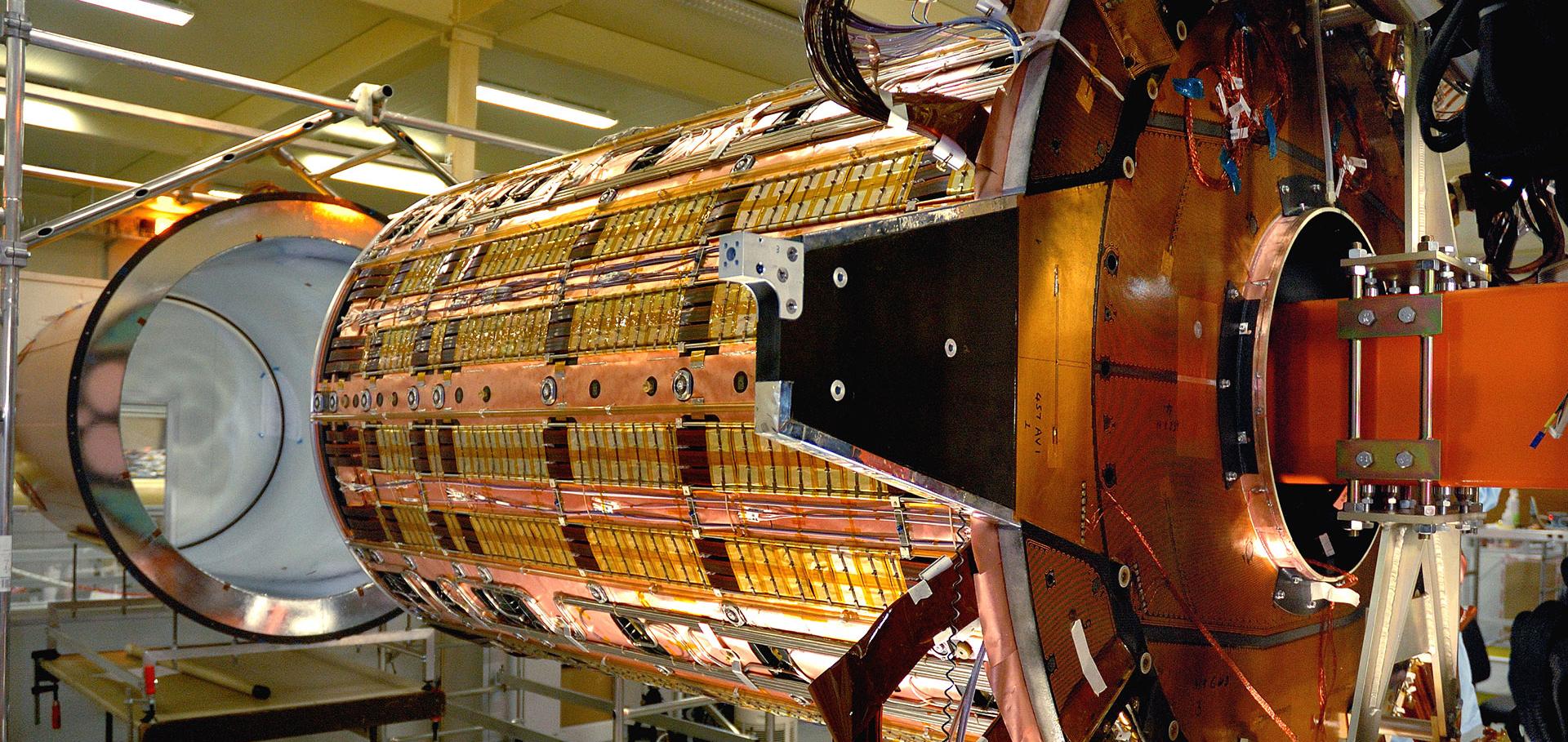
Insertion of STC into TRT at the Department of Physics, Oxford
Credit: CERN

Philip Burrows

Professor of Physics

Sub department

  • Particle Physics
Philip.Burrows@physics.ox.ac.uk
Telephone: 01865 (2)73451
Denys Wilkinson Building, room 615a
  • About
  • Publications

Millisecond burst extractions from synchrotrons using RF phase displacement acceleration

(2022)

Authors:

Pablo A Arrutia Sota, Philip N Burrows, Matthew A Fraser, Francesco M Velotti
More details from the publisher

The CLIC project

(2022)

Authors:

O Brunner, PN Burrows, S Calatroni, N Catalan Lasheras, R Corsini, G D'Auria, S Doebert, A Faus-Golfe, A Grudiev, A Latina, T Lefevre, G Mcmonagle, J Osborne, Y Papaphilippou, A Robson, C Rossi, R Ruber, D Schulte, S Stapnes, I Syratchev, W Wuensch
More details from the publisher

High-resolution, low-latency, bunch-by-bunch feedback system for nanobeam stabilization

Physical Review Accelerators and Beams American Physical Society 25:2 (2022) 22801

Authors:

Dr Bett, N Blaskovic Kraljevic, T Bromwich, Philip Burrows, Gb Christian, C Perry, R Ramjiawan

Abstract:

We report the design, operation, and performance of a high-resolution, low-latency, bunch-by-bunch feedback system for nanobeam stabilization. The system employs novel, ultralow quality-factor cavity beam position monitors (BPMs), a two-stage analog signal down-mixing system, and a digital signal processing and feedback board incorporating a field-programmable gate array. The field-programmable gate array firmware allows for the real-time integration of up to fifteen samples of the BPM waveforms within a measured latency of 232 ns. We show that this real-time sample integration improves significantly the beam position resolution and, consequently, the feedback performance. The best demonstrated real-time beam position resolution was 19 nm, which, as far as we are aware, is the best real-time resolution achieved in any operating BPM system. The feedback was operated in two complementary modes to stabilize the vertical position of the ultrasmall beam produced at the focal point of the ATF2 beamline at KEK. In single-BPM feedback mode, beam stabilization to 50±5 nm was demonstrated. In two-BPM feedback mode, beam stabilization to 41±4 nm was achieved.
More details from the publisher
Details from ORA
More details

European Strategy for Particle Physics -- Accelerator R&D Roadmap

(2022)

Authors:

C Adolphsen, D Angal-Kalinin, T Arndt, M Arnold, R Assmann, B Auchmann, K Aulenbacher, A Ballarino, B Baudouy, P Baudrenghien, M Benedikt, S Bentvelsen, A Blondel, A Bogacz, F Bossi, L Bottura, S Bousson, O Brüning, R Brinkmann, M Bruker, O Brunner, PN Burrows, G Burt, S Calatroni, K Cassou, A Castilla, N Catalan-Lasheras, E Cenni, A Chancé, N Colino, S Corde, L Corner, B Cros, A Cross, JP Delahaye, G Devanz, A-I Etienvre, P Evtushenko, A Faus-Golfe, P Fazilleau, M Ferrario, A Gallo, L García-Tabarés, C Geddes, F Gerigk, F Gianotti, S Gilardoni, A Grudiev, E Gschwendtner, G Hoffstaetter, M Hogan, S Hooker, A Hutton, R Ischebeck, K Jakobs, P Janot, E Jensen, J Kühn, W Kaabi, D Kayran, M Klein, J Knobloch, M Koratzinos, B Kuske, M Lamont, A Latina, P Lebrun, W Leemans, D Li, K Long, D Longuevergne, R Losito, W Lu, D Lucchesi, O Lundh, E Métral, F Marhauser, S Michizono, B Militsyn, J Mnich, E Montesinos, N Mounet, P Muggli, P Musumeci, S Nagaitsev, T Nakada, A Neumann, D Newbold, P Nghiem, M Noe, K Oide, J Osterhoff, M Palmer, N Pastrone, N Pietralla, S Prestemon, E Previtali, T Proslier, L Quettier, T Raubenheimer, B Rimmer, L Rivkin, E Rochepault, C Rogers, G Rosaz, T Roser, L Rossi, R Ruber, D Schulte, M Seidel, C Senatore, B Shepherd, J Shi, N Shipman, A Specka, S Stapnes, A Stocchi, D Stratakis, I Syratchev, O Tanaka, S Tantawi, C Tennant, E Tsesmelis, C Vaccarezza, A-M Valente, P Védrine, J Vieira, N Vinokurov, H Weise, M Wenskat, P Williams, M Wing, A Yamamoto, Y Yamamoto, K Yokoya, F Zimmermann
More details from the publisher
Details from ArXiV

A sub-micron resolution, bunch-by-bunch beam trajectory feedback system and its application to reducing wakefield effects in single-pass beamline

Journal of Instrumentation IOP Publishing 16 (2022) P01005

Authors:

Dr Bett, Pn Burrows, C Perry, Rebecca Ramjiawan, N Terunuma, K Kubo, T Okugi

Abstract:

A high-precision intra-bunch-train beam orbit feedback correction system has been developed and tested in the ATF2 beamline of the Accelerator Test Facility at the High Energy Accelerator Research Organization in Japan. The system uses the vertical position of the bunch measured at two beam position monitors (BPMs) to calculate a pair of kicks which are applied to the next bunch using two upstream kickers, thereby correcting both the vertical position and trajectory angle. Using trains of two electron bunches separated in time by 187.6 ns, the system was optimised so as to stabilize the beam offset at the feedback BPMs to better than 350 nm, yielding a local trajectory angle correction to within 250 nrad. The quality of the correction was verified using three downstream witness BPMs and the results were found to be in agreement with the predictions of a linear lattice model used to propagate the beam trajectory from the feedback region. This same model predicts a corrected beam jitter of c. 1 nm at the focal point of the accelerator. Measurements with a beam size monitor at this location demonstrate that reducing the trajectory jitter of the beam by a factor of 4 also reduces the increase in the measured beam size as a function of beam charge by a factor of c. 1.6.
More details from the publisher
Details from ORA
More details
Details from ArXiV

Pagination

  • First page First
  • Previous page Prev
  • …
  • Page 9
  • Page 10
  • Page 11
  • Page 12
  • Current page 13
  • Page 14
  • Page 15
  • Page 16
  • Page 17
  • …
  • Next page Next
  • Last page Last

Footer Menu

  • Contact us
  • Giving to the Dept of Physics
  • Work with us
  • Media

User account menu

  • Log in

Follow us

FIND US

Clarendon Laboratory,

Parks Road,

Oxford,

OX1 3PU

CONTACT US

Tel: +44(0)1865272200

University of Oxfrod logo Department Of Physics text logo
IOP Juno Champion logo Athena Swan Silver Award logo

© University of Oxford - Department of Physics

Cookies | Privacy policy | Accessibility statement

Built by: Versantus

  • Home
  • Research
  • Study
  • Engage
  • Our people
  • News & Comment
  • Events
  • Our facilities & services
  • About us
  • Giving to Physics
  • Current students
  • Staff intranet