Home
Department Of Physics text logo
  • Research
    • Our research
    • Our research groups
    • Our research in action
    • Research funding support
    • Summer internships for undergraduates
  • Study
    • Undergraduates
    • Postgraduates
  • Engage
    • For young people
    • For teachers
    • For the public
    • For alumni
    • For business
  • Support
Menu
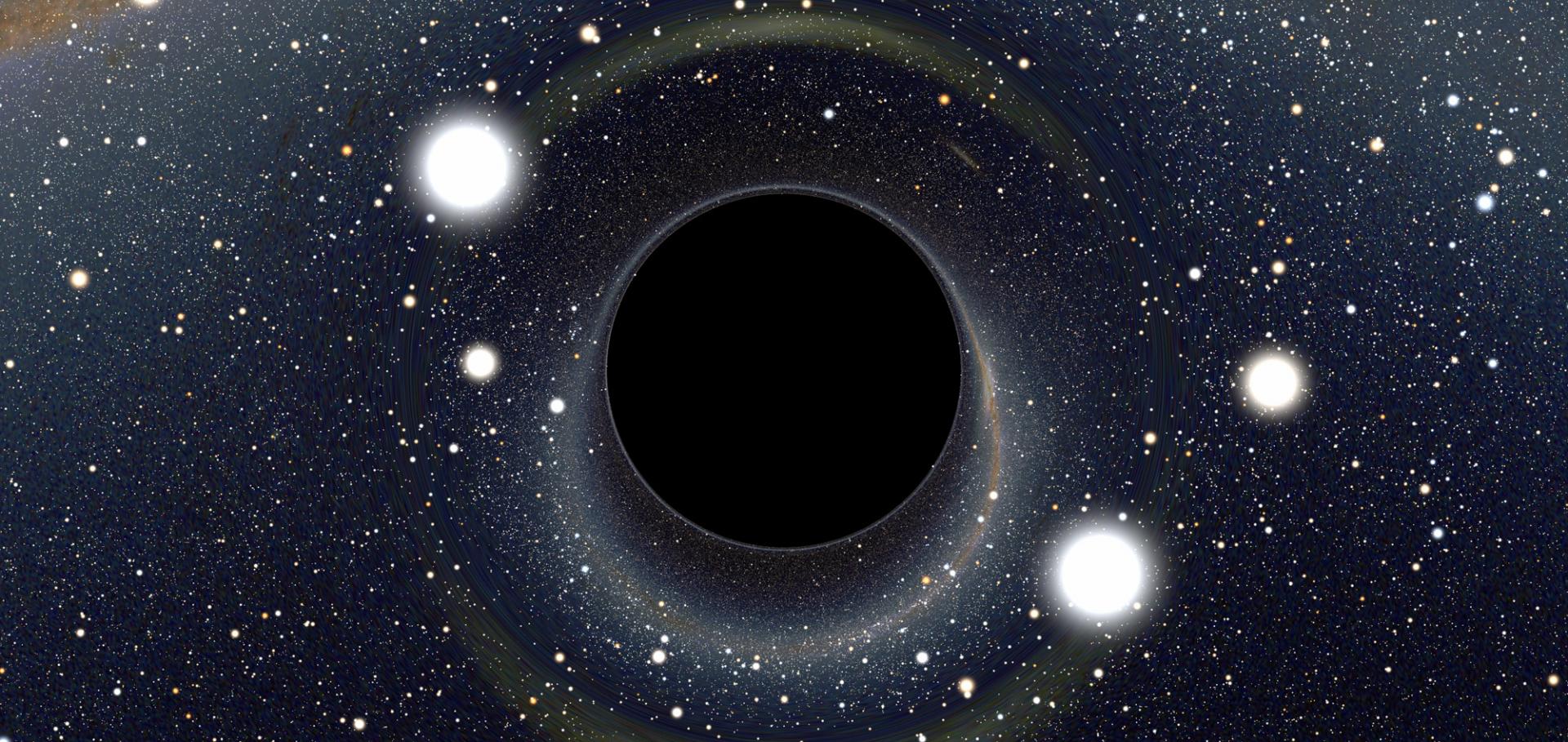
Black Hole

Lensing of space time around a black hole. At Oxford we study black holes observationally and theoretically on all size and time scales - it is some of our core work.

Credit: ALAIN RIAZUELO, IAP/UPMC/CNRS. CLICK HERE TO VIEW MORE IMAGES.

Michele Cappellari

Professor of Astrophysics

Research theme

  • Astronomy and astrophysics

Sub department

  • Astrophysics

Research groups

  • Galaxy formation and evolution
  • Extremely Large Telescope
michele.cappellari@physics.ox.ac.uk
Telephone: 01865 (2)73647
Denys Wilkinson Building, room 755
  • About
  • Publications

A z=1.82 Analog of Local Ultra-massive Elliptical Galaxies

(2010)

Authors:

M Onodera, E Daddi, R Gobat, M Cappellari, N Arimoto, A Renzini, Y Yamada, HJ McCracken, C Mancini, P Capak, M Carollo, A Cimatti, M Giavalisco, O Ilbert, X Kong, S Lilly, K Motohara, K Ohta, DB Sanders, N Scoville, N Tamura, Y Taniguchi
More details from the publisher

The NGC 404 Nucleus: Star Cluster and Possible Intermediate Mass Black Hole

(2010)

Authors:

Anil C Seth, Michele Cappellari, Nadine Neumayer, Nelson Caldwell, Nate Bastian, Knut Olsen, Robert D Blum, Victor P Debattista, Richard McDermid, Thomas Puzia, Andrew Stephens
More details from the publisher

Measuring the low mass end of the Mbh - sigma relation

(2010)

Authors:

Davor Krajnovic, Michele Cappellari, Richard M McDermid, Roger L Davies

Abstract:

We show that high quality laser guide star (LGS) adaptive optics (AO) observations of nearby early-type galaxies are possible when the tip-tilt correction is done by guiding on nuclei while the focus compensation due to the changing distance to the sodium layer is made 'open loop'. We achieve corrections such that 40% of flux comes from R<0.2 arcsec. To measure a black hole mass (Mbh) one needs integral field observations of both high spatial resolution and large field of view. With these data it is possible to determine the lower limit to Mbh even if the spatial resolution of the observations are up to a few times larger than the sphere of influence of the black hole.
More details from the publisher
Details from ORA
Details from ArXiV
More details

Measuring the low mass end of the Mbh - sigma relation

(2010)

Authors:

Davor Krajnovic, Michele Cappellari, Richard M McDermid, Roger L Davies
More details from the publisher

Nuclear Star Clusters and Black Holes

(2010)

Authors:

Anil Seth, Michele Cappellari, Nadine Neumayer, Nelson Caldwell, Nate Bastian, Knut Olsen, Robert Blum, Victor Debattista, Richard McDermid, Thomas Puzia, Andrew Stephens
More details from the publisher

Pagination

  • First page First
  • Previous page Prev
  • …
  • Page 97
  • Page 98
  • Page 99
  • Page 100
  • Current page 101
  • Page 102
  • Page 103
  • Page 104
  • Page 105
  • …
  • Next page Next
  • Last page Last

Footer Menu

  • Contact us
  • Giving to the Dept of Physics
  • Work with us
  • Media

User account menu

  • Log in

Follow us

FIND US

Clarendon Laboratory,

Parks Road,

Oxford,

OX1 3PU

CONTACT US

Tel: +44(0)1865272200

University of Oxfrod logo Department Of Physics text logo
IOP Juno Champion logo Athena Swan Silver Award logo

© University of Oxford - Department of Physics

Cookies | Privacy policy | Accessibility statement

Built by: Versantus

  • Home
  • Research
  • Study
  • Engage
  • Our people
  • News & Comment
  • Events
  • Our facilities & services
  • About us
  • Giving to Physics
  • Current students
  • Staff intranet