


NIR Spectroscopy of Star-Forming Galaxies at z~1.4 with Subaru/FMOS: The Mass-Metallicity Relation
(2011)
A project for an infrared synoptic survey from Antarctica with the Polar Large Telescope (PLT)
SF2A-2011: Proceedings of the Annual meeting of the French Society of Astronomy and Astrophysics (2011)
Abstract:
The Polar Large Telescope (PLT) aims at performing a new generation of astronomical Infrared Synoptic Survey from Antarctica (ISSA). It would carry out for the first time large scale periodic imaging surveys at ˜ 0.3 arcsec angular resolution in the short thermal infrared (2-5 micron) range benefiting from the extremely dry, cold, and stable polar atmosphere. The PLT consists of a 2.5 m class telescope equipped with a 250-Mpixel infrared camera. The survey would produce diffraction limited images at 2 micron covering a total of ˜ 5000 square degrees, explore the time domain from seconds to years down to mab =25.5 in Kd, generate alerts of transients and react quickly to alerts from other ground based or space borne facilities.Gyes, a multifibre spectrograph for the CFHT
EAS Publications Series 45 (2011) 219-222
Abstract:
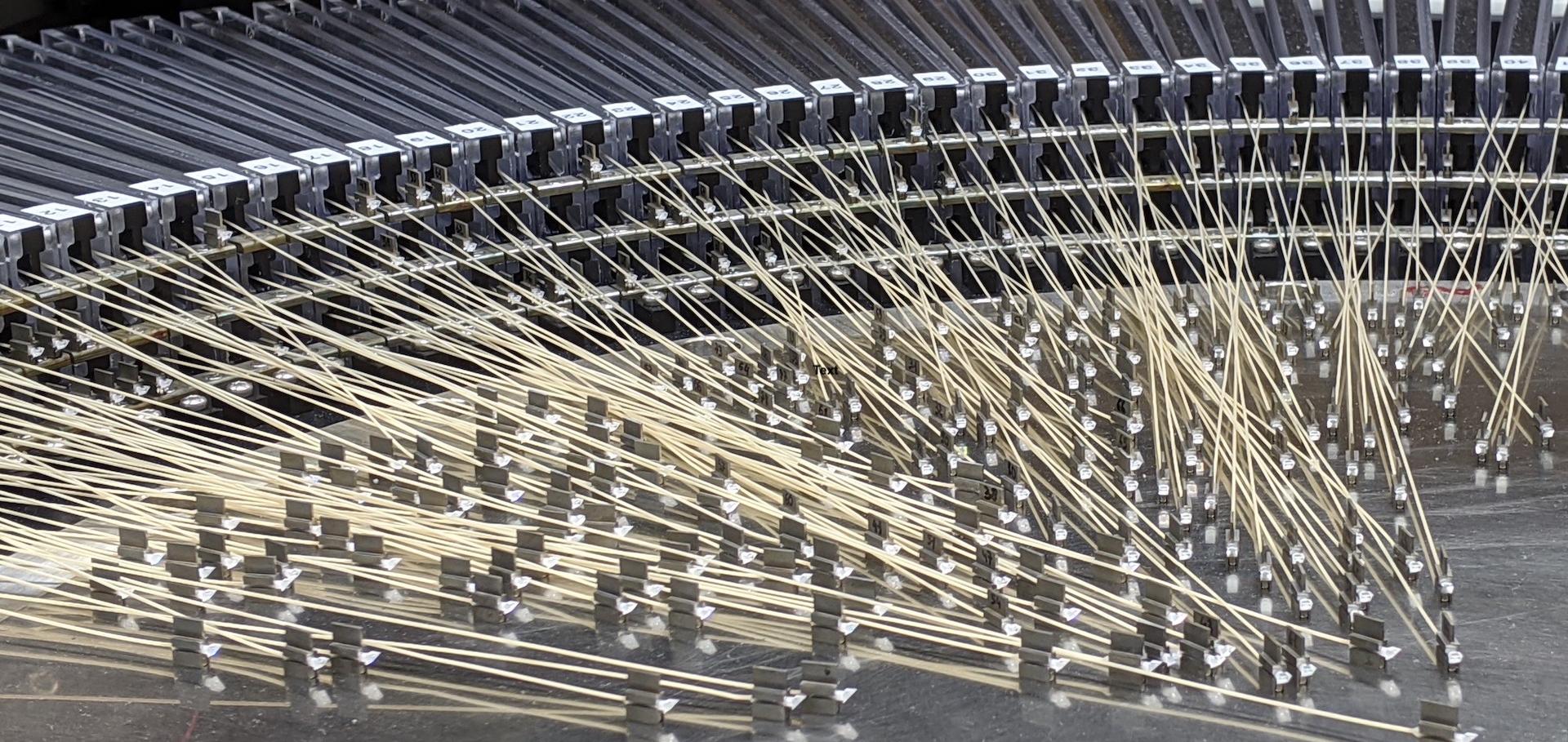
We have chosen the name of GYES, one of the mythological giants with one hundred arms, offspring of Gaia and Uranus, for our instrument study of a multifibre spectrograph for the prime focus of the Canada-France-Hawaii Telescope. Such an instrument could provide an excellent ground-based complement for the Gaia mission and a northern complement to the HERMES project on the AAT. The CFHT is well known for providing a stable prime focus environment, with a large field of view, which has hosted several imaging instruments, but has never hosted a multifibre spectrograph. Building upon the experience gained at GÉPI with FLAMES-Giraffe and X-Shooter, we are investigating the feasibility of a high multiplex spectrograph (about 500 fibres) over a field of view one degree in diameter. We are investigating an instrument with resolution in the range 15000 to 30000, which should provide accurate chemical abundances for stars down to 16th magnitude and radial velocities, accurate to 1 kms -1 for fainter stars. The study is led by GÉPI-Observatoire de Paris with a contribution from Oxford for the study of the positioner. The financing for the study comes from INSU CSAA and Observatoire de Paris. The conceptual study will be delivered to CFHT for review by October 1st 2010. © EAS, EDP Sciences 2011.The dependence of star formation activity on environment and stellar mass at z∼ 1 from the HiZELS-Hα survey
Monthly Notices of the Royal Astronomical Society 411:1 (2011) 675-692
Abstract:
This paper presents an environment and stellar mass study of a large sample of star-forming Hα emitters at z= 0.84 from the High-z Emission Line Survey (HiZELS), over 1.3 deg2 split over two fields (COSMOS and UKIDSS UDS). By taking advantage of a truly panoramic coverage of a wide range of environments, from the field to a rich cluster, it is shown that both stellar mass and environment play crucial roles in determining the properties of star-forming galaxies. Specific star formation rates (sSFRs) decline with stellar mass in all environments, and the fraction of Hα star-forming galaxies declines sharply from ≈40 per cent for galaxies with masses around 1010MCommissioning the VISTA IR camera
Proceedings of SPIE the International Society for Optical Engineering 7735:PART 1 (2010)