Home
Department Of Physics text logo
  • Research
    • Our research
    • Our research groups
    • Our research in action
    • Research funding support
    • Summer internships for undergraduates
  • Study
    • Undergraduates
    • Postgraduates
  • Engage
    • For young people
    • For teachers
    • For the public
    • For alumni
    • For business
  • Support
Menu
CMP
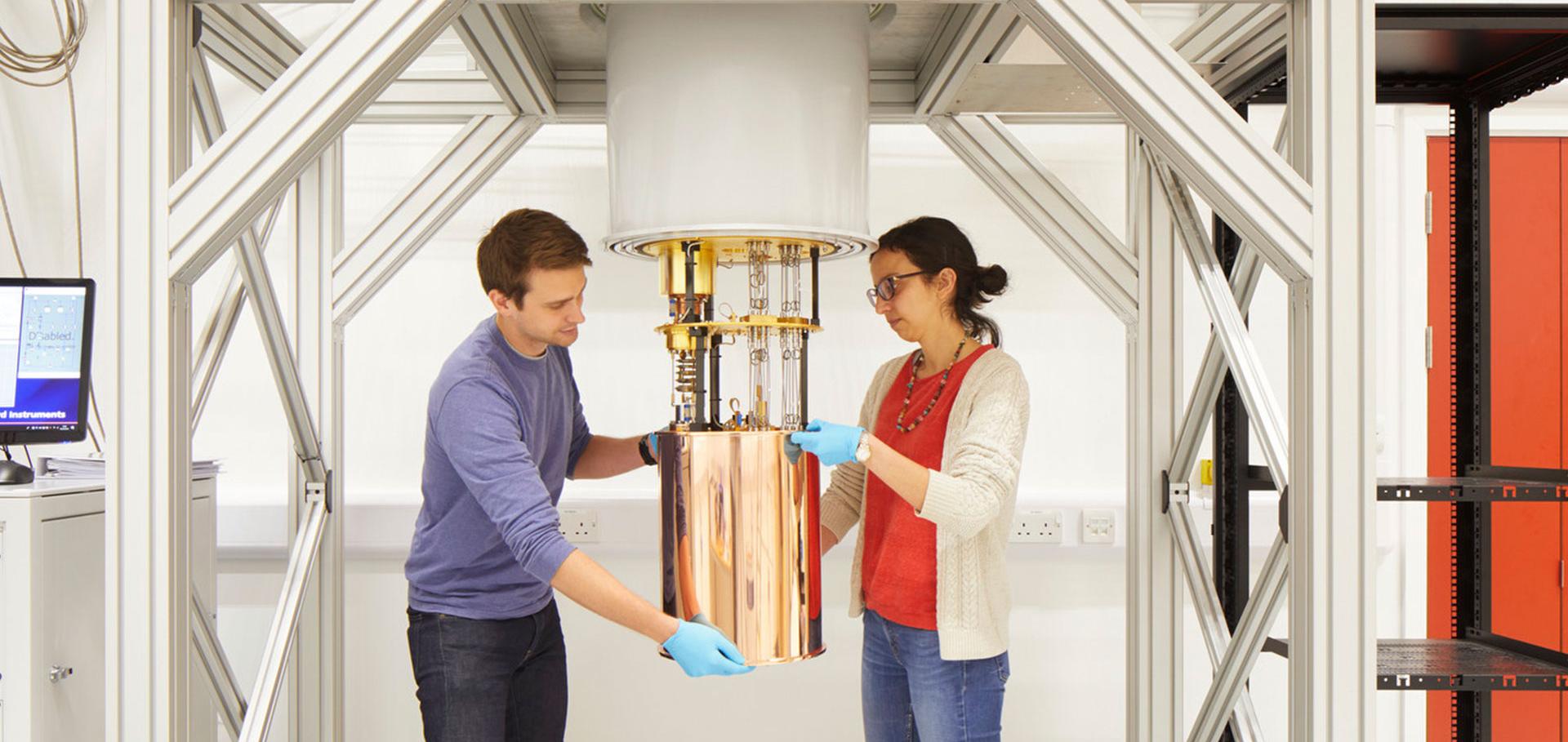
Credit: Jack Hobhouse

Seham Helmi

Long Term Visitor

Sub department

  • Condensed Matter Physics
seham.helmi@chem.ox.ac.uk
  • About
  • Publications

DNA-driven dimerization of Ku70/Ku80 regulates the synapsis of double-strand breaks by APLF

Nature Communications Springer Science and Business Media LLC (2026)

Authors:

Raman van Wee, Sara De Bragança, Eva M Martín-Cuevas, Ángel Rivera-Calzada, Sean A Burnap, Rafael Cazorla, Laia Romeu, Mikel Marín-Baquero, Raquel Arribas-Bosacoma, Clara Aicart-Ramos, Juan Tasis, Seham Helmi, Weston B Struwe, Oscar Llorca, Fernando Moreno-Herrero, Philipp Kukura

Abstract:

Abstract Repair of double-strand breaks via non-homologous end joining requires the synapsis of DNA ends. APLF is emerging as an important repair factor, capable of forming synaptic bridges in the presence of the Ku70/Ku80 heterodimer. However, only a single one-to-one interaction between Ku70/Ku80 and APLF has been reported to date, which is fundamentally insufficient for synapsis. Moreover, it remains unclear how APLF-mediated bridging of Ku70/Ku80 heterodimers is prevented in the absence of double-strand breaks. Using a combination of single-molecule techniques, including Mass Photometry, Atomic Force Microscopy, and Magnetic and Optical Tweezers, we demonstrate that APLF-mediated synapsis requires threading of at least two Ku70/Ku80 heterodimers per DNA end. We show that this requirement stems from the need for a simultaneous interaction of two poly(ADP-ribose) binding Zinc Fingers in APLF with threaded poly(ADP-ribosyl)ated Ku70/Ku80s on a single DNA. We further provide evidence that long non-coding RNA NIHCOLE cooperatively binds up to four Ku70/Ku80, consistent with a synapsis efficiency enhancement mechanism based on the bridging of two Kus70Ku80s bound on both sides of the break. Our results propose a model for the physiological significance of Ku70/Ku80 threading and a regulatory mechanism based on multivalency that restricts APLF-mediated bridging to DNA-bound Ku70/Ku80.
More details from the publisher

Continuous mass photometry by single-molecule trapping

Nature Methods Springer Science and Business Media LLC (2026)

Authors:

Dan Loewenthal, Roi Asor, Stephen Thorpe, Jack S Peters, Konstantin C Zouboulis, Merve Kaplan, Jan Christoph Thiele, Jack Bardzil, Seham Helmi, Sean A Burnap, Tiong Kit Tan, Weston B Struwe, Justin LP Benesch, Philipp Kukura

Abstract:

<jats:title>Abstract</jats:title> <jats:p>The dynamic choreography of biomolecular interactions underpins the processes of life, but its direct observation remains challenging. Here we introduce continuous mass photometry, enabling hour-long, mass-resolved observation of individual biomolecules tethered to supported lipid bilayers, their complexes and interactions, with up to sub-kilodalton mass precision and millisecond temporal resolution. Our approach represents a quantitative time-resolved single-molecule measurement modality for studying complex biomolecular mechanisms in action.</jats:p>
More details from the publisher
More details

Integration of a Synthetic Molecular Motor Into a Rotary DNA Nanostructure: A Framework for Single-Molecule Actuation

(2025)

Authors:

Seham Helmi, Erik Benson, Jan Christoph Thiele, Emilie Moulin, Nicolas Giuseppone, Andrew J Turberfield
More details from the publisher

A scalable, reproducible platform for molecular electronic technologies

(2025)

Authors:

Seham Helmi, Junjie Liu, Keith Andrews, Robert Schreiber, Jonathan Bath, Harry L Anderson, Andrew J Turberfield, Arzhang Ardavan
Details from ArXiV

Lifting the concentration limit of mass photometry by PEG nanopattering

Nano Letters American Chemical Society 24:33 (2024) 10032-10039

Authors:

Jiri Kratochvil, Roi Asor, Seham Helmi, Weston Struwe, Philipp Kukura

Abstract:

Mass photometry (MP) is a rapidly growing optical technique for label-free mass measurement of single biomolecules in solution. The underlying measurement principle provides numerous advantages over ensemble-based methods but has been limited to low analyte concentrations due to the need to uniquely and accurately quantify the binding of individual molecules to the measurement surface, which results in diffraction-limited spots. Here, we combine nanoparticle lithography with surface PEGylation to dramatically lower surface binding, resulting in a two-order magnitude improvement in the upper concentration limit associated with mass photometry. We demonstrate facile tunability of the degree of passivation, enabling measurements at increased analyte concentrations. These advances enable us to rapidly quantify protein- protein interactions in the high nM to low μM range, substantially expanding the application space of mass photometry.
More details from the publisher
Details from ORA
More details
More details

Pagination

  • Current page 1
  • Page 2
  • Page 3
  • Page 4
  • Next page Next
  • Last page Last

Footer Menu

  • Contact us
  • Giving to the Dept of Physics
  • Work with us
  • Media

User account menu

  • Log in

Follow us

FIND US

Clarendon Laboratory,

Parks Road,

Oxford,

OX1 3PU

CONTACT US

Tel: +44(0)1865272200

University of Oxfrod logo Department Of Physics text logo
IOP Juno Champion logo Athena Swan Silver Award logo

© University of Oxford - Department of Physics

Cookies | Privacy policy | Accessibility statement

Built by: Versantus

  • Home
  • Research
  • Study
  • Engage
  • Our people
  • News & Comment
  • Events
  • Our facilities & services
  • About us
  • Giving to Physics
  • Current students
  • Staff intranet