Home
Department Of Physics text logo
  • Research
    • Our research
    • Our research groups
    • Our research in action
    • Research funding support
    • Summer internships for undergraduates
  • Study
    • Undergraduates
    • Postgraduates
  • Engage
    • For young people
    • For teachers
    • For the public
    • For alumni
    • For business
  • Support
Menu
CMP
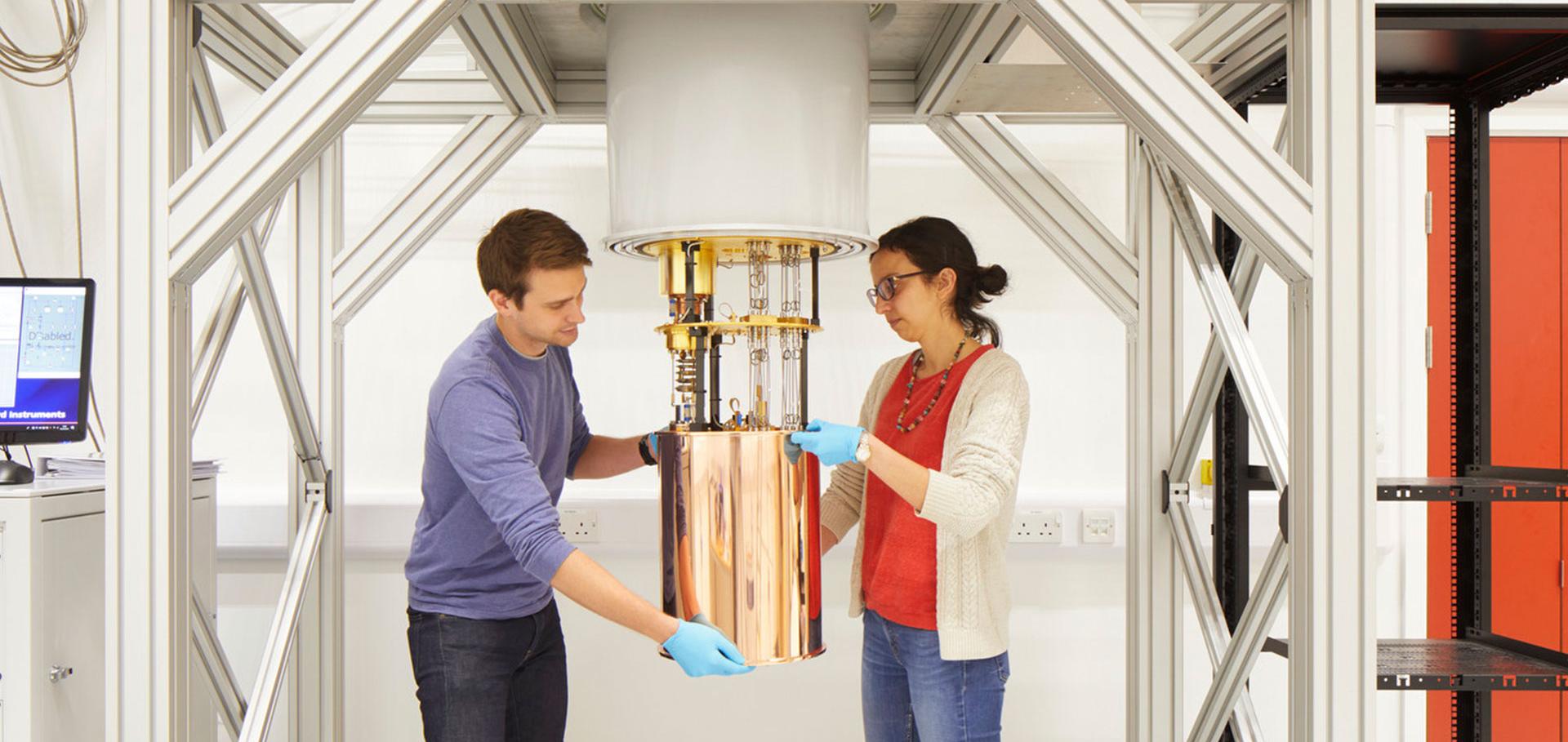
Credit: Jack Hobhouse

David Keen

Visiting Professor

Sub department

  • Condensed Matter Physics

Research groups

  • X-ray and neutron scattering
david.keen@physics.ox.ac.uk
Telephone: 01865 (2)72310
Clarendon Laboratory, room 106
  • About
  • Publications

Determination of structural disorder in superionic by neutron total scattering

Journal of Physics Condensed Matter IOP Publishing 10:37 (1998) 8217

Authors:

David A Keen, Stephen Hull
More details from the publisher

Direct measurement of the Si–O bond length and orientational disorder in the high-temperature phase of cristobalite

Physics and Chemistry of Minerals Springer Nature 24:4 (1997) 311-317

Authors:

Martin T Dove, David A Keen, Alex C Hannon, Ian P Swainson
More details from the publisher

Refining disordered structural models using reverse monte carlo methods: Application to vitreous silica

Phase Transitions Taylor & Francis 61:1-4 (1997) 109-124
More details from the publisher

Structural evidence for fast-ion conduction in the silver and copper halides at high temperatures and pressures

Ionics Springer Nature 3:3-4 (1997) 239-244

Authors:

NJG Gardner, W Hayes, S Hull, DA Keen
More details from the publisher

Neutron time-of-flight measurements of diffuse scattering

Physica B Condensed Matter 241-243 (1997) 201-203

Authors:

DA Keen, MJ Harris, WIF David

Abstract:

General surveys of reciprocal space are important for studies of many forms of crystalline disorder. In recent years, techniques for measuring good quality diffuse scattering from single crystals at pulsed neutron sources have been established. This paper shows how single-crystal time-of-flight neutron diffraction using large area position-sensitive detectors gives extremely rapid measurement of large volumes of reciprocal space to high Q. The effective measurement of more subtle, localised diffuse features using neutron time-of-flight instrumentation with highly collimated detectors is also described. Advantages and disadvantages over other neutron surveying techniques are discussed. Comparison of data quality (and quantity) is made with reference to diffuse scattering from C60 using the SXD diffractometer and from KNO3 using the PRISMA spectrometer, both at the ISIS source. © 1998 Elsevier Science B.V. All rights reserved.
More details from the publisher

Pagination

  • First page First
  • Previous page Prev
  • …
  • Page 46
  • Page 47
  • Page 48
  • Page 49
  • Current page 50
  • Page 51
  • Page 52
  • Page 53
  • Page 54
  • …
  • Next page Next
  • Last page Last

Footer Menu

  • Contact us
  • Giving to the Dept of Physics
  • Work with us
  • Media

User account menu

  • Log in

Follow us

FIND US

Clarendon Laboratory,

Parks Road,

Oxford,

OX1 3PU

CONTACT US

Tel: +44(0)1865272200

University of Oxfrod logo Department Of Physics text logo
IOP Juno Champion logo Athena Swan Silver Award logo

© University of Oxford - Department of Physics

Cookies | Privacy policy | Accessibility statement

Built by: Versantus

  • Home
  • Research
  • Study
  • Engage
  • Our people
  • News & Comment
  • Events
  • Our facilities & services
  • About us
  • Giving to Physics
  • Current students
  • Staff intranet