Home
Department Of Physics text logo
  • Research
    • Our research
    • Our research groups
    • Our research in action
    • Research funding support
    • Summer internships for undergraduates
  • Study
    • Undergraduates
    • Postgraduates
  • Engage
    • For young people
    • For teachers
    • For the public
    • For alumni
    • For business
  • Support
Menu
CMP
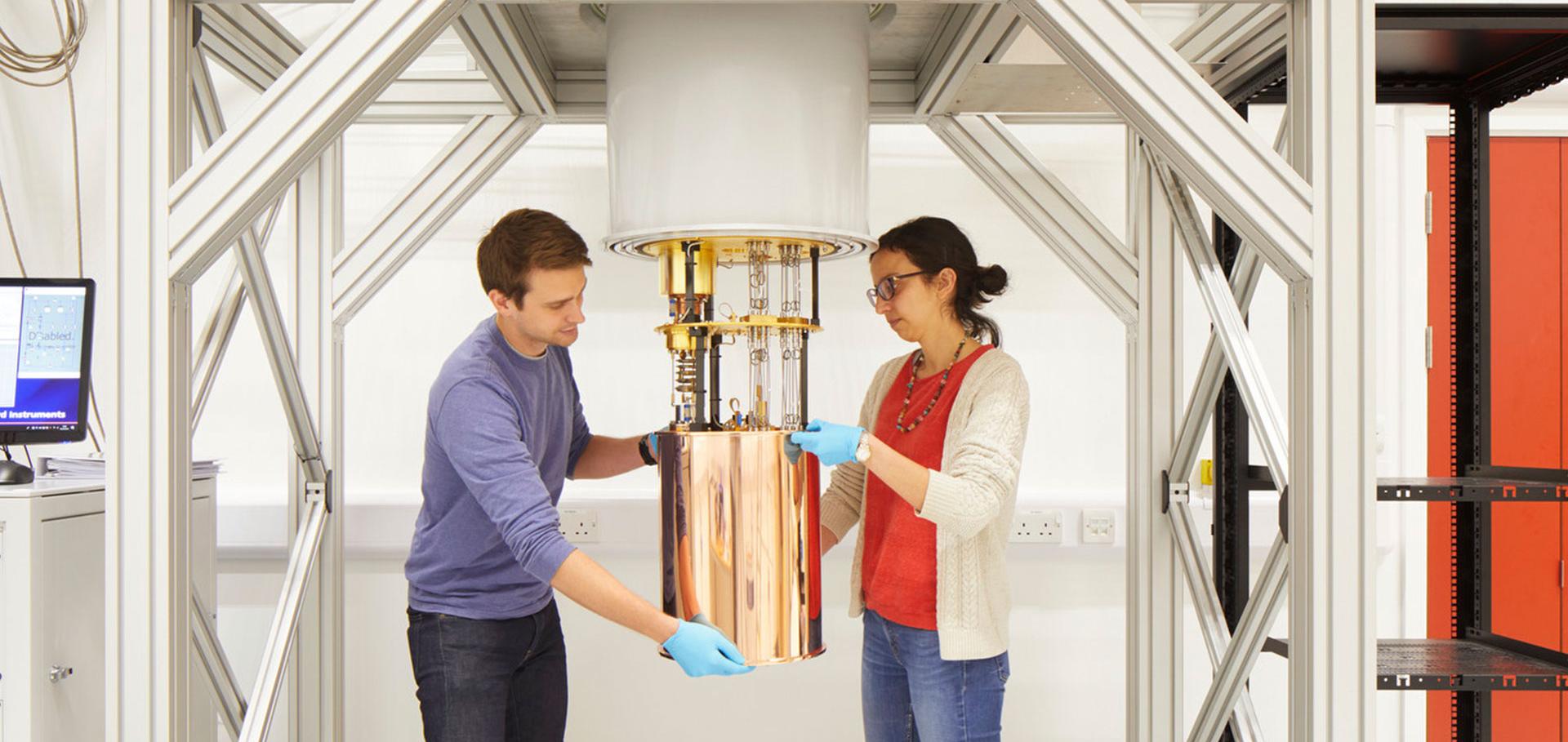
Credit: Jack Hobhouse

David Keen

Visiting Professor

Sub department

  • Condensed Matter Physics

Research groups

  • X-ray and neutron scattering
david.keen@physics.ox.ac.uk
Telephone: 01865 (2)72310
Clarendon Laboratory, room 106
  • About
  • Publications

Thermally activated structural phase transitions and processes in metal–organic frameworks

Chemical Society Reviews Royal Society of Chemistry 53:7 (2024) 3606-3629

Authors:

Celia Castillo-Blas, Ashleigh M Chester, David A Keen, Thomas D Bennett

Abstract:

The field of metal–organic frameworks (MOFs) has rapidly evolved from disconnected examples of multi-dimensional coordination polymers into an expansive collection of functional materials containing over 100,000 structures. Because any material’s chemical structure dictates its function, a robust structural understanding is a crucial prerequisite for the optimization of a material’s physical properties and its effective deployment towards an application. This is especially true for MOFs, which frequently demonstrate multiple possible structures from a single metal-ligand combination. Without proper identification, these phase distributions confuse analysis and hinder applicability of the material(s). Conversely, when well-understood, phase multiplicity serves to increase the number of available structures (and functions) within an established chemical window. Thus, control over phase distributions in MOF systems is a critical aspect of their analysis and utility.In this work, a luminescent ligand based on the tetraphenylethene (TPE) molecule is used as a foundation to generate three distinct MOF systems, which are analyzed for their essential structures and functional properties. All three TPE-based systems are found to demonstrate various degrees of phase multiplicity; while some distributions depend solely on the initial synthetic conditions to generate distinct framework isomers, others undergo dynamic and reversible phase transformations according to their post-synthetic treatments. These structural aspects are characterized in detail, and mechanistic explanations are presented that can be applied to broad design principles towards phase-controlled MOF systems
More details from the publisher
Details from ORA
More details
More details

Orientational order/disorder and network flexibility in deuterated methylammonium lead iodide perovskite by neutron total scattering

Journal of Materials Chemistry A: materials for energy and sustainability Royal Society of Chemistry 12:5 (2024) 2771-2785

Authors:

Jiaxun Liu, Juan Du, Peter B Wyatt, David A Keen, Anthony E Phillips, Martin T Dove

Abstract:

Methylammonium lead iodide crystallises in three phases. The high-temperature phase is cubic with a high degree of orientational disorder of the molecular ions. The intermediate phase shows progressive alignment of the molecules, but still with disorder.
More details from the publisher
Details from ORA
More details

Ultrafast Bragg coherent diffraction imaging of epitaxial thin films using deep complex-valued neural networks

npj Computational Materials Springer Nature 10:1 (2024) 24

Authors:

Xi Yu, Longlong Wu, Yuewei Lin, Jiecheng Diao, Jialun Liu, Jörg Hallmann, Ulrike Boesenberg, Wei Lu, Johannes Möller, Markus Scholz, Alexey Zozulya, Anders Madsen, Tadesse Assefa, Emil S Bozin, Yue Cao, Hoydoo You, Dina Sheyfer, Stephan Rosenkranz, Samuel D Marks, Paul G Evans, David A Keen, Xi He, Ivan Božović, Mark PM Dean, Shinjae Yoo, Ian K Robinson
More details from the publisher

Superstructure and Correlated Na+ Hopping in a Layered Mg-Substituted Sodium Manganate Battery Cathode are Driven by Local Electroneutrality

Chemistry of Materials American Chemical Society (ACS) 35:24 (2023) 10564-10583

Authors:

Euan N Bassey, Ieuan D Seymour, Joshua D Bocarsly, David A Keen, Guido Pintacuda, Clare P Grey
More details from the publisher
More details
More details

Siliceous zeolite-derived topology of amorphous silica

Communications Chemistry Nature Research 6:1 (2023) 269

Authors:

Hirokazu Masai, Shinji Kohara, Toru Wakihara, Yuki Shibazaki, Yohei Onodera, Atsunobu Masuno, Sohei Sukenaga, Koji Ohara, Yuki Sakai, Julien Haines, Claire Levelut, Philippe Hébert, Aude Isambert, David A Keen, Masaki Azuma

Abstract:

Abstract The topology of amorphous materials can be affected by mechanical forces during compression or milling, which can induce material densification. Here, we show that densified amorphous silica (SiO2) fabricated by cold compression of siliceous zeolite (SZ) is permanently densified, unlike densified glassy SiO2 (GS) fabricated by cold compression although the X-ray diffraction data and density of the former are identical to those of the latter. Moreover, the topology of the densified amorphous SiO2 fabricated from SZ retains that of crystalline SZ, whereas the densified GS relaxes to pristine GS after thermal annealing. These results indicate that it is possible to design new functional amorphous materials by tuning the topology of the initial zeolitic crystalline phases
More details from the publisher
Details from ORA
More details
More details

Pagination

  • First page First
  • Previous page Prev
  • …
  • Page 3
  • Page 4
  • Page 5
  • Page 6
  • Current page 7
  • Page 8
  • Page 9
  • Page 10
  • Page 11
  • …
  • Next page Next
  • Last page Last

Footer Menu

  • Contact us
  • Giving to the Dept of Physics
  • Work with us
  • Media

User account menu

  • Log in

Follow us

FIND US

Clarendon Laboratory,

Parks Road,

Oxford,

OX1 3PU

CONTACT US

Tel: +44(0)1865272200

University of Oxfrod logo Department Of Physics text logo
IOP Juno Champion logo Athena Swan Silver Award logo

© University of Oxford - Department of Physics

Cookies | Privacy policy | Accessibility statement

Built by: Versantus

  • Home
  • Research
  • Study
  • Engage
  • Our people
  • News & Comment
  • Events
  • Our facilities & services
  • About us
  • Giving to Physics
  • Current students
  • Staff intranet