Home
Department Of Physics text logo
  • Research
    • Our research
    • Our research groups
    • Our research in action
    • Research funding support
    • Summer internships for undergraduates
  • Study
    • Undergraduates
    • Postgraduates
  • Engage
    • For alumni
    • For business
    • For schools
    • For the public
  • Support
Menu
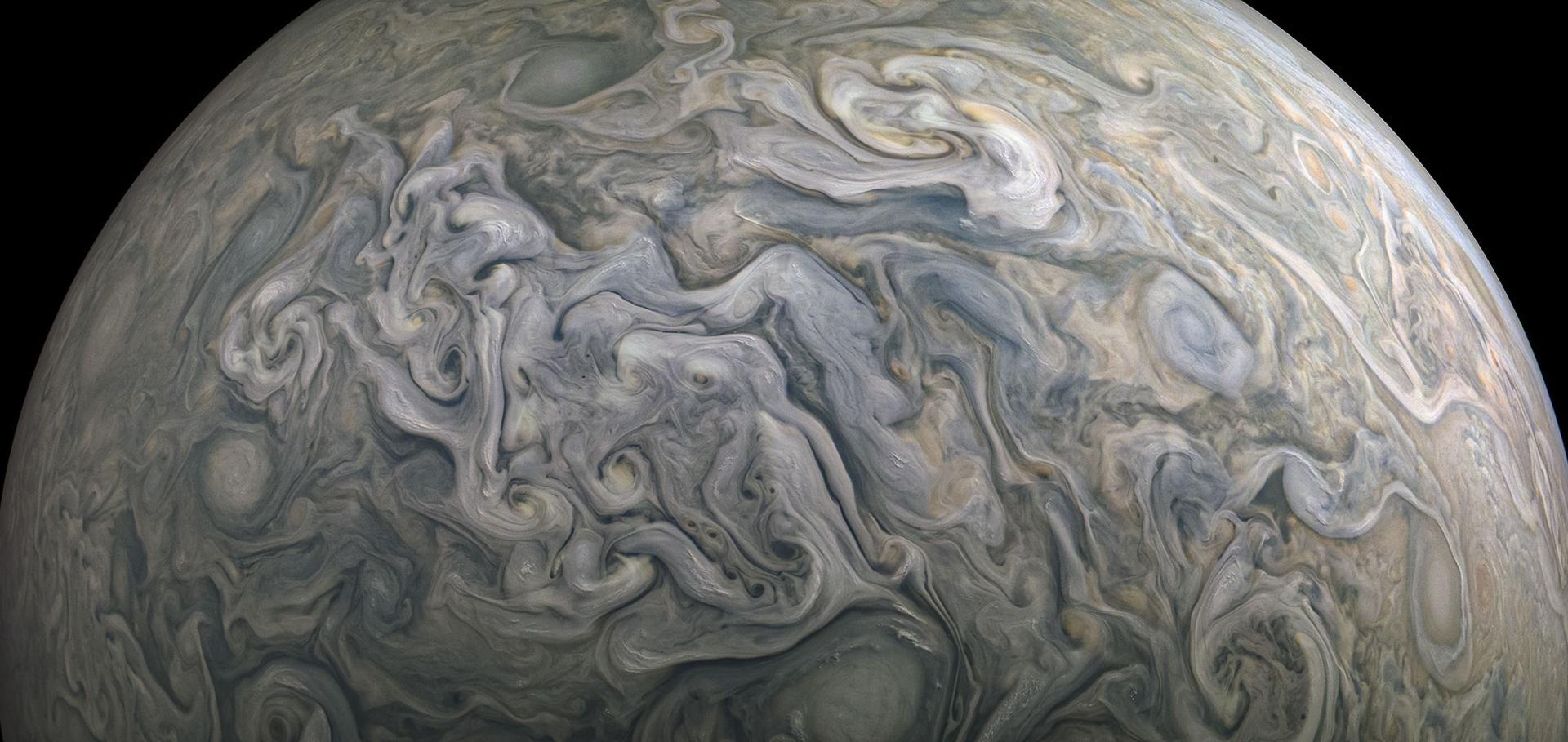
Juno Jupiter image

Dr Scott Osprey FRMetS

Senior NCAS Research Scientist

Research theme

  • Climate physics

Sub department

  • Atmospheric, Oceanic and Planetary Physics

Research groups

  • Climate dynamics
  • Predictability of weather and climate
Scott.Osprey@physics.ox.ac.uk
Telephone: 01865 (2)82434,01865 (2)72923
Robert Hooke Building, room S36
National Centre for Atmospheric Science
SPARC QBOi
Explaining & Predicting Earth System Change
  • About
  • Publications

Drivers behind the summer 2010 wave train leading to Russian heat wave and Pakistan flooding

npj Climate and Atmospheric Science Springer Nature 4 (2021) 55

Authors:

Giorgia Di Capua, Sarah Sparrow, Kai Kornhuber, Efi Rousi, Scott Osprey, David Wallom, Bart van den Hurk, Dim Coumou

Abstract:

Summer 2010 saw two simultaneous extremes linked by an atmospheric wave train: a record-breaking heatwave in Russia and severe floods in Pakistan. Here, we study this wave event using a large ensemble climate model experiment. First, we show that the circulation in 2010 reflected a recurrent wave train connecting the heatwave and flooding events. Second, we show that the occurrence of the wave train is favored by three drivers: (1) 2010 sea surface temperature anomalies increase the probability of this wave train by a factor 2-to-4 relative to the model’s climatology, (2) early-summer soil moisture deficit in Russia not only increases the probability of local heatwaves, but also enhances rainfall extremes over Pakistan by forcing an atmospheric wave response, and (3) high-latitude land warming favors wave-train occurrence and therefore rainfall and heat extremes. These findings highlight the complexity and synergistic interactions between different drivers, reconciling some seemingly contradictory results from previous studies.
More details from the publisher
Details from ORA
More details

Demonstrated Aeolus benefits in atmospheric sciences

2021 IEEE International Geoscience and Remote Sensing Symposium IGARSS IEEE (2021) 763-766

Authors:

Michael Rennie, Ad Stoffelen, Sergey Khaykin, Scott Osprey, Corwin Wright, Tim Banyard, Anne Grete Straume, Oliver Reitebuch, Isabell Krisch, Tommaso Parrinello, Jonas Von Bismarck, Denny Wernham

Abstract:

We highlight some of the scientific benefits of the Aeolus Doppler Wind Lidar mission since its launch in August 2018. Its scientific objectives are to improve weather forecasts and to advance the understanding of atmospheric dynamics and its interaction with the atmospheric energy and water cycle. A number of meteorological and science institutes across the world are starting to demonstrate that the Aeolus mission objectives are being met. Its wind product is being operationally assimilated by four Numerical Weather Prediction (NWP) centres, thanks to demonstrated useful positive impact on NWP analyses and forecasts. Applications of its atmospheric optical properties product have been found, e.g., in the detection and tracking of smoke from the extreme Australian wildfires of 2020 and in atmospheric composition data assimilation. The winds are finding novel applications in atmospheric dynamics research, such as tropical phenomena (Quasi-Biennial Oscillation disruption events), detection of atmospheric gravity waves, and in the smoke generated vortex associated with the Australian wildfires. It has been applied in the assessment of other types of satellite derived wind information such as atmospheric motions vectors. Aeolus is already successful with hopefully more to come.
More details from the publisher
Details from ORA
More details

Improving the QBO in climate models

The Stratosphere-troposphere Processes and their Role in Climate Office (2021) 12-17

Authors:

James Anstey, Neal Butchart, Kevin Hamilton, Scott Osprey, Andrew Bushell, Laura Holt, Yaga Richter, Anne Smith, Tim Stockdale
Details from ORA

Prospect of increased disruption to the QBO in a changing climate

Geophysical Research Letters Wiley 48:15 (2021) e2021GL093058

Authors:

James A Anstey, Timothy P Banyard, Neal Butchart, Lawrence Coy, Paul A Newman, Scott Osprey, Corwin J Wright

Abstract:

The quasi-biennial oscillation (QBO) of tropical stratospheric winds was disrupted during the 2019/20 Northern Hemisphere winter. We show that this latest disruption to the regular QBO cycling was similar in many respects to that seen in 2016, but initiated by horizontal momentum transport from the Southern Hemisphere. The predictable signal associated with the QBO's quasi-regular phase progression is lost during disruptions and the oscillation reemerges after a few months significantly shifted in phase from what would be expected if it had progressed uninterrupted. We infer from an increased wave-momentum flux into equatorial latitudes seen in climate model projections that disruptions to the QBO are likely to become more common in future. Consequently, it is possible that in the future, the QBO could be a less reliable source of predictability on lead times extending out to several years than it currently is.
More details from the publisher
Details from ORA
More details

Teleconnections of the Quasi-Biennial Oscillation in a multi-model ensemble of QBO-resolving models

Quarterly Journal of the Royal Meteorological Society Wiley 148:744 (2021) 1568-1592

Authors:

James A Anstey, Isla R Simpson, Jadwiga H Richter, Hiroaki Naoe, Masakazu Taguchi, Federico Serva, Lesley J Gray, Neal Butchart, Kevin Hamilton, Scott Osprey, Omar Bellprat, Peter Braesicke, Andrew C Bushell, Chiara Cagnazzo, Chih‐Chieh Chen, Hye‐Yeong Chun, Rolando R Garcia, Laura Holt, Yoshio Kawatani, Tobias Kerzenmacher, Young‐Ha Kim, Francois Lott, Charles McLandress, John Scinocca, Timothy N Stockdale, Stefan Versick, Shingo Watanabe, Kohei Yoshida, Seiji Yukimoto

Abstract:

The quasi‐biennial oscillation (QBO) dominates the interannual variability of the tropical stratosphere and influences other regions of the atmosphere. The high predictability of the QBO implies that its teleconnections could lead to increased skill of seasonal and decadal forecasts provided the relevant mechanisms are accurately represented in models. Here modelling and sampling uncertainties of QBO teleconnections are examined using a multi‐model ensemble of QBO‐resolving atmospheric general circulation models that have carried out a set of coordinated experiments as part of the Stratosphere‐troposphere Processes And their Role in Climate (SPARC) QBO initiative (QBOi). During Northern Hemisphere winter the stratospheric polar vortex in most of these models strengthens when the QBO near 50 hPa is westerly and weakens when it is easterly, consistent with, but weaker than, the observed response. These weak responses are likely due to model errors, such as systematically weak QBO amplitudes near 50 hPa, affecting the teleconnection. The teleconnection to the North Atlantic Oscillation is less well captured overall, but of similar strength to the observed signal in the few models that do show it. The models do not show clear evidence of a QBO teleconnection to the Northern Hemisphere Pacific‐sector subtropical jet.
More details from the publisher
Details from ORA
More details

Pagination

  • First page First
  • Previous page Prev
  • …
  • Page 7
  • Page 8
  • Page 9
  • Page 10
  • Current page 11
  • Page 12
  • Page 13
  • Page 14
  • Page 15
  • …
  • Next page Next
  • Last page Last

Footer Menu

  • Contact us
  • Giving to the Dept of Physics
  • Work with us
  • Media

User account menu

  • Log in

Follow us

FIND US

Clarendon Laboratory,

Parks Road,

Oxford,

OX1 3PU

CONTACT US

Tel: +44(0)1865272200

University of Oxfrod logo Department Of Physics text logo
IOP Juno Champion logo Athena Swan Silver Award logo

© University of Oxford - Department of Physics

Cookies | Privacy policy | Accessibility statement

Built by: Versantus

  • Home
  • Research
  • Study
  • Engage
  • Our people
  • News & Comment
  • Events
  • Our facilities & services
  • About us
  • Giving to Physics
  • Current students
  • Staff intranet