Home
Department Of Physics text logo
  • Research
    • Our research
    • Our research groups
    • Our research in action
    • Research funding support
    • Summer internships for undergraduates
  • Study
    • Undergraduates
    • Postgraduates
  • Engage
    • For young people
    • For teachers
    • For the public
    • For alumni
    • For business
  • Support
Menu
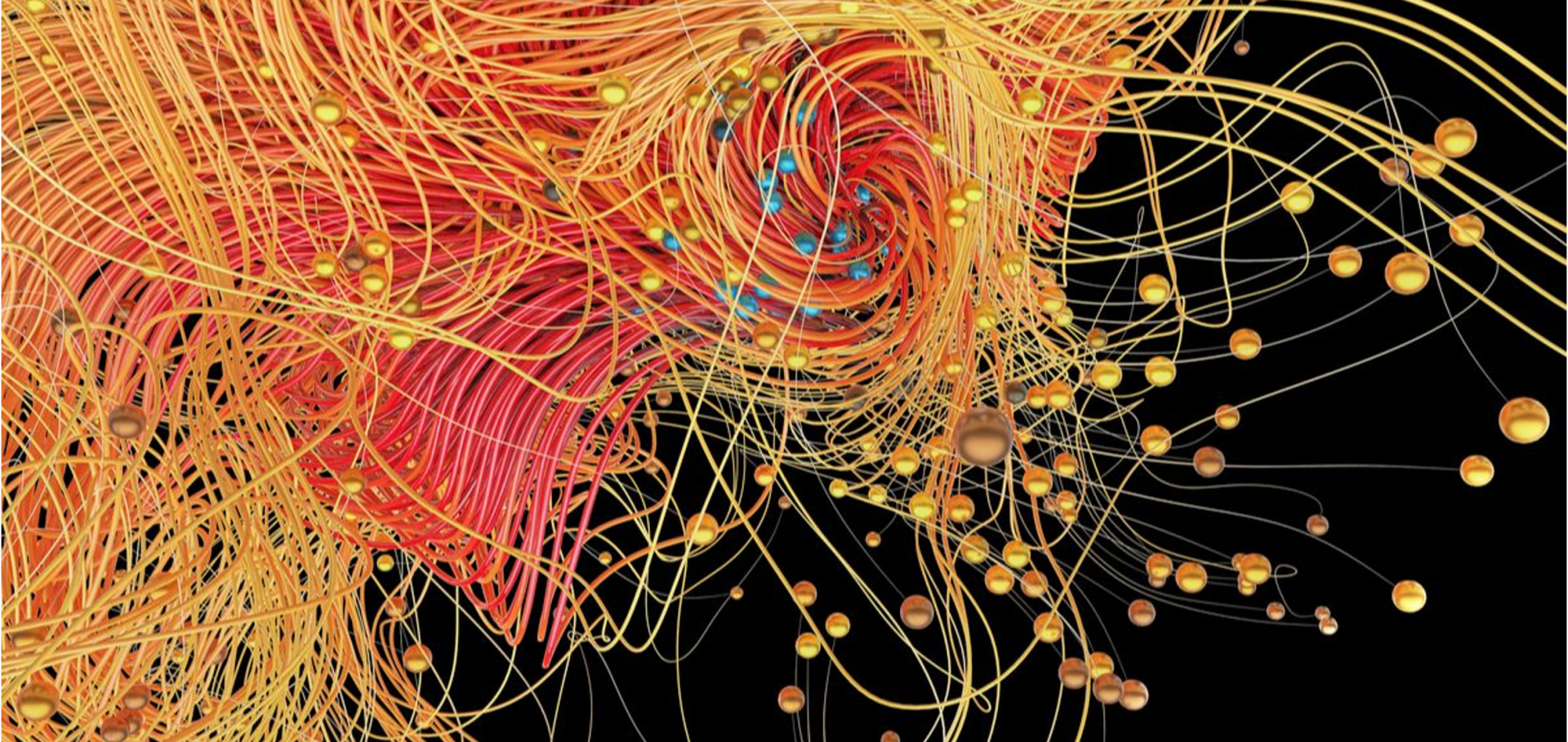
Cosmic strings in hematite

Professor Paolo G. Radaelli OSI

Dr Lee's Professor

Research theme

  • Quantum materials

Sub department

  • Condensed Matter Physics

Research groups

  • Oxide electronics
Paolo.Radaelli@physics.ox.ac.uk
Telephone: 01865 (2)70957
Clarendon Laboratory, room 264,115,101,111 (office)
  • About
  • Research
  • Publications

Prof Radaelli recognised with an MPLS "Excellent Supervisor" Award

Physics Award Winners
Prof Radaelli is one of the 5 Oxford Physicists recognised in the inaugural "Excellence in Research Supervision" award

Read the story at this link

Excellence in Research Supervision

A route towards stable homochiral topological textures in A-type antiferromagnets

(2021)

Authors:

Jack Harrison, Hariom Jani, Paolo G Radaelli
More details from the publisher
Details from ArXiV

Detailed crystallographic analysis of the ice V to ice XIII hydrogen-ordering phase transition.

The Journal of chemical physics 154:13 (2021) 134504-134504

Authors:

Christoph G Salzmann, Alexander Rosu-Finsen, Zainab Sharif, Paolo G Radaelli, John L Finney

Abstract:

Ice V is a structurally highly complex material with 28 water molecules in its monoclinic unit cell. It is classified as a hydrogen-disordered phase of ice. Yet, some of its hydrogen-bonded water molecules display significant orientational order. Upon cooling pure ice V, additional orientational ordering cannot be achieved on the experimental time scale. Doping with hydrochloric acid has been shown to be most effective in enabling the phase transition of ice V to its hydrogen-ordered counterpart ice XIII. Here, we present a detailed crystallographic study of this phase transition investigating the effects of hydrochloric and hydrofluoric acid as well as lithium and potassium hydroxide doping. The magnitudes of the stepwise changes in the lattice constants during the phase transition are found to be more sensitive indicators for the extent of hydrogen order in ice XIII than the appearance of new Bragg peaks. Hydrofluoric acid and lithium hydroxide doping enable similar ordering processes as hydrochloric acid but with slower kinetics. The various possible space groups and ordered configurations of ice XIII are examined systematically, and the previously determined P21/a structure is confirmed. Interestingly, the partial hydrogen order already present in ice V is found to perpetuate into ice XIII, and these ordering processes are found to be independent of pressure. Overall, the hydrogen ordering goes along with a small increase in volume, which appears to be the origin of the slower hydrogen-ordering kinetics under pressure. Heating pressure-quenched samples at ambient pressure revealed low-temperature "transient ordering" features in both diffraction and calorimetry.
More details from the publisher
More details
More details

Reversible hydrogen control of antiferromagnetic anisotropy in α-Fe2O3

Nature Communications Springer Nature 12:1 (2021) 1668

Authors:

Hariom Jani, Jiajun Linghu, Sonu Hooda, Rajesh V Chopdekar, Changjian Li, Ganesh Ji Omar, Saurav Prakash, Yonghua Du, Ping Yang, Agnieszka Banas, Krzysztof Banas, Siddhartha Ghosh, Sunil Ojha, GR Umapathy, Dinakar Kanjilal, A Ariando, Stephen J Pennycook, Elke Arenholz, Paolo G Radaelli, JMD Coey, Yuan Ping Feng, T Venkatesan
More details from the publisher
More details
More details

Crystallographic, optical, and electronic properties of the Cs2AgBi1-xInxBr6 double perovskite: understanding the fundamental photovoltaic efficiency challenges

ACS Energy Letters American Chemical Society 6:3 (2021) 1073-1081

Authors:

Laura Schade, Suhas Mahesh, George Volonakis, Marios Zacharias, Bernard Wenger, Felix Schmidt, Sameer Vajjala Kesava, Dharmalingam Prabhakaran, Mojtaba Abdi-Jalebi, Markus Lenz, Feliciano Giustino, Giulia Longo, Paolo Radaelli, Henry Snaith

Abstract:

We present a crystallographic and optoelectronic study of the double perovskite Cs2AgBi1–xInxBr6. From structural characterization we determine that the indium cation shrinks the lattice and shifts the cubic-to-tetragonal phase transition point to lower temperatures. The absorption onset is shifted to shorter wavelengths upon increasing the indium content, leading to wider band gaps, which we rationalize through first-principles band structure calculations. Despite the unfavorable band gap shift, we observe an enhancement in the steady-state photoluminescence intensity, and n-i-p photovoltaic devices present short-circuit current greater than that of neat Cs2AgBiBr6 devices. In order to evaluate the prospects of this material as a solar absorber, we combine accurate absorption measurements with thermodynamic modeling and identify the fundamental limitations of this system. Provided radiative efficiency can be increased and the choice of charge extraction layers are specifically improved, this material could prove to be a useful wide band gap solar absorber.
More details from the publisher
Details from ORA
More details

Antiferromagnetic half-skyrmions and bimerons at room temperature

Nature Springer Nature 590:7844 (2021) 74-79

Authors:

Hariom Jani, Jheng-Cyuan Lin, Jiahao Chen, Jack Harrison, Francesco Maccherozzi, Jonathan Schad, Saurav Prakash, Chang-Beom Eom, A Ariando, T Venkatesan, Paolo G Radaelli

Abstract:

In the quest for post-CMOS (complementary metal–oxide–semiconductor) technologies, driven by the need for improved efficiency and performance, topologically protected ferromagnetic ‘whirls’ such as skyrmions1,2,3,4,5,6,7,8 and their anti-particles have shown great promise as solitonic information carriers in racetrack memory-in-logic or neuromorphic devices1,9,10,11. However, the presence of dipolar fields in ferromagnets, which restricts the formation of ultrasmall topological textures3,6,8,9,12, and the deleterious skyrmion Hall effect, when skyrmions are driven by spin torques9,10,12, have thus far inhibited their practical implementation. Antiferromagnetic analogues, which are predicted to demonstrate relativistic dynamics, fast deflection-free motion and size scaling, have recently become the subject of intense focus9,13,14,15,16,17,18,19, but they have yet to be experimentally demonstrated in natural antiferromagnetic systems. Here we realize a family of topological antiferromagnetic spin textures in α-Fe2O3—an Earth-abundant oxide insulator—capped with a platinum overlayer. By exploiting a first-order analogue of the Kibble–Zurek mechanism20,21, we stabilize exotic merons and antimerons (half-skyrmions)8 and their pairs (bimerons)16,22, which can be erased by magnetic fields and regenerated by temperature cycling. These structures have characteristic sizes of the order of 100 nanometres and can be chemically controlled via precise tuning of the exchange and anisotropy, with pathways through which further scaling may be achieved. Driven by current-based spin torques from the heavy-metal overlayer, some of these antiferromagnetic textures could emerge as prime candidates for low-energy antiferromagnetic spintronics at room temperature1,9,10,11,23.
More details from the publisher
Details from ORA
More details
More details
Details from ArXiV

Pagination

  • First page First
  • Previous page Prev
  • …
  • Page 7
  • Page 8
  • Page 9
  • Page 10
  • Current page 11
  • Page 12
  • Page 13
  • Page 14
  • Page 15
  • …
  • Next page Next
  • Last page Last

Footer Menu

  • Contact us
  • Giving to the Dept of Physics
  • Work with us
  • Media

User account menu

  • Log in

Follow us

FIND US

Clarendon Laboratory,

Parks Road,

Oxford,

OX1 3PU

CONTACT US

Tel: +44(0)1865272200

University of Oxfrod logo Department Of Physics text logo
IOP Juno Champion logo Athena Swan Silver Award logo

© University of Oxford - Department of Physics

Cookies | Privacy policy | Accessibility statement

Built by: Versantus

  • Home
  • Research
  • Study
  • Engage
  • Our people
  • News & Comment
  • Events
  • Our facilities & services
  • About us
  • Giving to Physics
  • Current students
  • Staff intranet