Home
Department Of Physics text logo
  • Research
    • Our research
    • Our research groups
    • Our research in action
    • Research funding support
    • Summer internships for undergraduates
  • Study
    • Undergraduates
    • Postgraduates
  • Engage
    • For young people
    • For teachers
    • For the public
    • For alumni
    • For business
  • Support
Menu
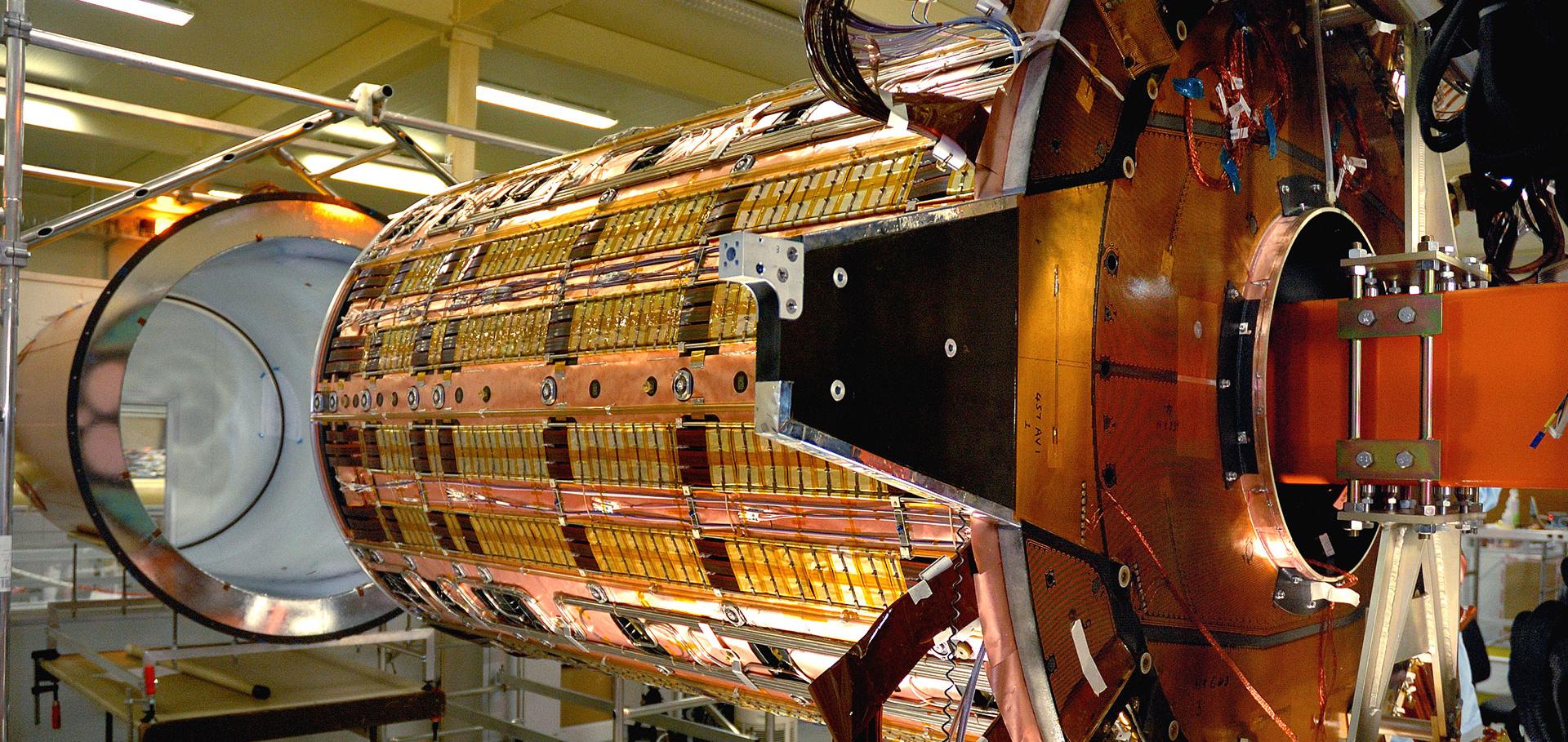
Insertion of STC into TRT at the Department of Physics, Oxford
Credit: CERN

Dr Suzie Sheehy

Visiting Lecture in Particle Physics

Research theme

  • Accelerator physics

Sub department

  • Particle Physics
suzie.sheehy@physics.ox.ac.uk
Professional Website
  • About
  • Publications

Failure modes and downtime of radiotherapy linear accelerators and Multi-Leaf Collimators in Indonesia

(2021)

Authors:

Gregory S Peiris, Supriyanto A Pawiro, Muhammad F Kasim, Suzanne L Sheehy
More details from the publisher
Details from ArXiV

Review of Technologies for Ion Therapy Accelerators

ArXiv 2105.08103 (2021)

Authors:

HXQ Norman, AF Steinberg, RB Appleby, HL Owen, E Benedetto, M Sapinski, SL Sheehy
Details from ArXiV

Beam delivery systems for linac-based proton therapy

(2021)

Authors:

Titus-Stefan Dascalu, Suzanne L Sheehy
More details from the publisher
Details from ArXiV

A study of coherent and incoherent resonances in high intensity beams using a linear Paul trap

New Journal of Physics IOP Publishing 21 (2019)

Authors:

Lucy Martin, Shinji Machida, David Kelliher, Suzie Sheehy

Abstract:

In this paper we present a quantitative measurement of the change in frequency (tune) with intensity of four transverse resonances in a high intensity Gaussian beam. Due to the non-linear space charge forces present in high intensity beams, particle motion cannot be analytically described. Instead we use the Simulator of Particle Orbit Dynamics (S-POD) and the Intense Beam Experiment (IBEX), two linear Paul traps, to experimentally replicate the system. In high intensity beams a coherent resonant response to both space charge and external field driven perturbations is possible, these coherent resonances are excited at a tune that differs by a factor $C_{m}$ from that of the incoherent resonance. By increasing the number of ions stored in the linear Paul trap and studying the location of four different resonances we extract provisional values describing the change in tune of the resonance with intensity. These values are then compared to the $C_{m}$ factors for coherent resonances. We find that the $C_{m}$ factors do not accurately predict the location of resonances in high intensity Gaussian beams. Further insight into the experiment is gained through simulation using Warp, a particle-in-cell code.
More details from the publisher
More details
Details from ArXiV

OPAL a Versatile Tool for Charged Particle Accelerator Simulations

ArXiv 1905.06654 (2019)

Authors:

Andreas Adelmann, Pedro Calvo, Matthias Frey, Achim Gsell, Uldis Locans, Christof Metzger-Kraus, Nicole Neveu, Chris Rogers, Steve Russell, Suzanne Sheehy, Jochem Snuverink, Daniel Winklehner
Details from ArXiV

Pagination

  • First page First
  • Previous page Prev
  • Page 1
  • Page 2
  • Current page 3
  • Page 4
  • Page 5
  • Page 6
  • Page 7
  • Page 8
  • Page 9
  • …
  • Next page Next
  • Last page Last

Footer Menu

  • Contact us
  • Giving to the Dept of Physics
  • Work with us
  • Media

User account menu

  • Log in

Follow us

FIND US

Clarendon Laboratory,

Parks Road,

Oxford,

OX1 3PU

CONTACT US

Tel: +44(0)1865272200

University of Oxfrod logo Department Of Physics text logo
IOP Juno Champion logo Athena Swan Silver Award logo

© University of Oxford - Department of Physics

Cookies | Privacy policy | Accessibility statement

Built by: Versantus

  • Home
  • Research
  • Study
  • Engage
  • Our people
  • News & Comment
  • Events
  • Our facilities & services
  • About us
  • Giving to Physics
  • Current students
  • Staff intranet