Home
Department Of Physics text logo
  • Research
    • Our research
    • Our research groups
    • Our research in action
    • Research funding support
    • Summer internships for undergraduates
  • Study
    • Undergraduates
    • Postgraduates
  • Engage
    • For alumni
    • For business
    • For schools
    • For the public
  • Support
Menu
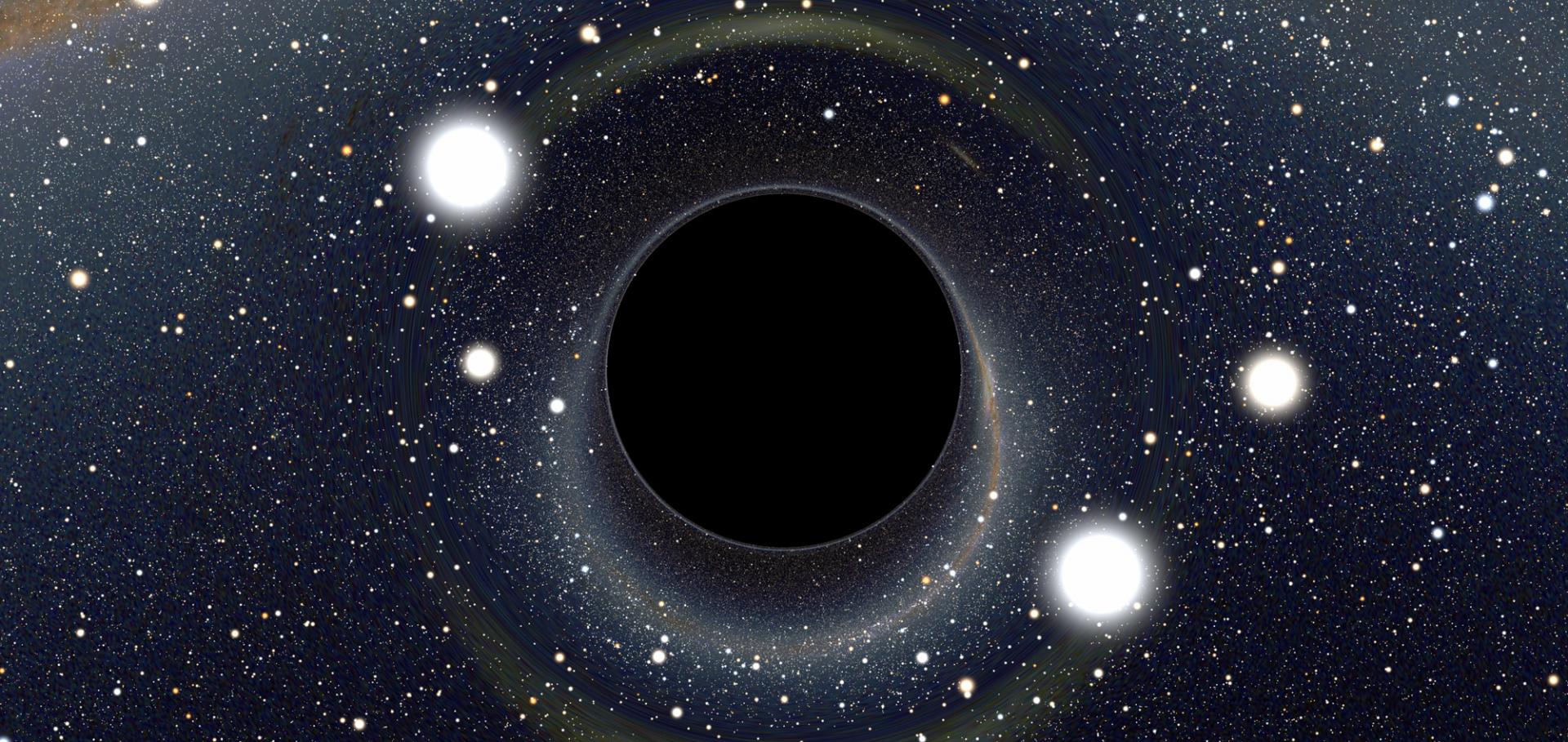
Black Hole

Lensing of space time around a black hole. At Oxford we study black holes observationally and theoretically on all size and time scales - it is some of our core work.

Credit: ALAIN RIAZUELO, IAP/UPMC/CNRS. CLICK HERE TO VIEW MORE IMAGES.

Dr Shubham Srivastav

Postdoctoral Research Assistant

Research theme

  • Astronomy and astrophysics

Sub department

  • Astrophysics

Research groups

  • Hintze Centre for Astrophysical Surveys
shubham.srivastav@physics.ox.ac.uk
Denys Wilkinson Building, room Tower
  • About
  • Publications

On the fate of the secondary white dwarf in double-degenerate double-detonation Type Ia supernovae – II. 3D synthetic observables

Monthly Notices of the Royal Astronomical Society Oxford University Press (OUP) 533:3 (2024) 3036-3052

Authors:

JM Pollin, SA Sim, R Pakmor, FP Callan, CE Collins, LJ Shingles, FK Röpke, S Srivastav

Abstract:

ABSTRACT A leading model for Type Ia supernovae involves the double-detonation of a sub-Chandrasekhar mass white dwarf. Double-detonations arise when a surface helium shell detonation generates shockwaves that trigger a core detonation; this mechanism may be triggered via accretion or during the merger of binaries. Most previous double-detonation simulations only included the primary white dwarf; however, the fate of the secondary has significant observational consequences. Recently, hydrodynamic simulations accounted for the companion in double-degenerate double-detonation mergers. In the merger of a 1.05 M$_{\odot }$ primary white dwarf and 0.7 M$_{\odot }$ secondary white dwarf, the primary consistently detonates while the fate of the secondary remains uncertain. We consider two versions of this scenario, one in which the secondary survives and another in which it detonates. We present the first 3D radiative transfer calculations for these models and show that the synthetic observables for both models are similar and match properties of the peculiar 02es-like subclass of Type Ia supernovae. Our calculations show angle dependencies sensitive to the companion’s fate, and we can obtain a closer spectroscopic match to normal Type Ia supernovae when the secondary detonates and the effects of helium detonation ash are minimized. The asymmetry in the width–luminosity relationship is comparable to previous double-detonation models, but the overall spread is increased with a secondary detonation. The secondary detonation has a meaningful impact on all synthetic observables; however, multidimensional nebular phase calculations are needed to support or rule out either model as a likely explanation for Type Ia supernovae.
More details from the publisher
More details

Discovery of the Optical and Radio Counterpart to the Fast X-Ray Transient EP 240315a

The Astrophysical Journal Letters American Astronomical Society 969:1 (2024) L14

Authors:

JH Gillanders, L Rhodes, S Srivastav, F Carotenuto, J Bright, ME Huber, HF Stevance, SJ Smartt, KC Chambers, T-W Chen, R Fender, A Andersson, AJ Cooper, PG Jonker, FJ Cowie, T de Boer, N Erasmus, MD Fulton, H Gao, J Herman, C-C Lin, T Lowe, EA Magnier, H-Y Miao

Abstract:

Fast X-ray Transients (FXTs) are extragalactic bursts of soft X-rays first identified ≳10 yr ago. Since then, nearly 40 events have been discovered, although almost all of these have been recovered from archival Chandra and XMM-Newton data. To date, optical sky surveys and follow-up searches have not revealed any multiwavelength counterparts. The Einstein Probe, launched in 2024 January, has started surveying the sky in the soft X-ray regime (0.5–4 keV) and will rapidly increase the sample of FXTs discovered in real time. Here we report the first discovery of both an optical and radio counterpart to a distant FXT, the fourth source publicly released by the Einstein Probe. We discovered a fast-fading optical transient within the 3′ localization radius of EP 240315a with the all-sky optical survey ATLAS, and our follow-up Gemini spectrum provides a redshift, z = 4.859 ± 0.002. Furthermore, we uncovered a radio counterpart in the S band (3.0 GHz) with the MeerKAT radio interferometer. The optical (rest-frame UV) and radio luminosities indicate that the FXT most likely originates from either a long gamma-ray burst or a relativistic tidal disruption event. This may be a fortuitous early mission detection by the Einstein Probe or may signpost a mode of discovery for high-redshift, high-energy transients through soft X-ray surveys, combined with locating multiwavelength counterparts.
More details from the publisher
Details from ORA
More details

Discovery and Extensive Follow-Up of SN 2024ggi, a nearby type IIP supernova in NGC 3621

(2024)

Authors:

Ting-Wan Chen, Sheng Yang, Shubham Srivastav, Takashi J Moriya, Stephen J Smartt, Sofia Rest, Armin Rest, Hsing Wen Lin, Hao-Yu Miao, Yu-Chi Cheng, Amar Aryan, Chia-Yu Cheng, Morgan Fraser, Li-Ching Huang, Meng-Han Lee, Cheng-Han Lai, Yu Hsuan Liu, Aiswarya Sankar K, Ken W Smith, Heloise F Stevance, Ze-Ning Wang, Joseph P Anderson, Charlotte R Angus, Thomas de Boer, Kenneth Chambers, Hao-Yuan Duan, Nicolas Erasmus, Hua Gao, Joanna Herman, Wei-Jie Hou, Hsiang-Yao Hsiao, Mark E Huber, Chien-Cheng Lin, Hung-Chin Lin, Eugene A Magnier, Ka Kit Man, Thomas Moore, Chow-Choong Ngeow, Matt Nicholl, Po-Sheng Ou, Giuliano Pignata, Yu-Chien Shiau, Julian Silvester Sommer, John L Tonry, Xiao-Feng Wang, David R Young, You-Ting Yeh, Jujia Zhang
More details from the publisher

NEural Engine for Discovering Luminous Events (NEEDLE): identifying rare transient candidates in real time from host galaxy images

Monthly Notices of the Royal Astronomical Society Oxford University Press (OUP) 531:2 (2024) 2474-2492

Authors:

Xinyue Sheng, Matt Nicholl, Ken W Smith, David R Young, Roy D Williams, Heloise F Stevance, Stephen J Smartt, Shubham Srivastav, Thomas Moore
More details from the publisher
More details

The Extremely Metal-Poor SN 2023ufx: A Local Analog to High-Redshift Type II Supernovae

(2024)

Authors:

Michael A Tucker, Jason Hinkle, Charlotte R Angus, Katie Auchettl, Willem B Hoogendam, Benjamin Shappee, Christopher S Kochanek, Chris Ashall, Thomas de Boer, Kenneth C Chambers, Dhvanil D Desai, Aaron Do, Michael D Fulton, Hua Gao, Joanna Herman, Mark Huber, Chris Lidman, Chien-Cheng Lin, Thomas B Lowe, Eugene A Magnier, Bailey Martin, Paloma Minguez, Matt Nicholl, Miika Pursiainen, SJ Smartt, Ken W Smith, Shubham Srivastav, Brad E Tucker, Richard J Wainscoat
More details from the publisher

Pagination

  • First page First
  • Previous page Prev
  • …
  • Page 5
  • Page 6
  • Page 7
  • Page 8
  • Current page 9
  • Page 10
  • Page 11
  • Page 12
  • Page 13
  • …
  • Next page Next
  • Last page Last

Footer Menu

  • Contact us
  • Giving to the Dept of Physics
  • Work with us
  • Media

User account menu

  • Log in

Follow us

FIND US

Clarendon Laboratory,

Parks Road,

Oxford,

OX1 3PU

CONTACT US

Tel: +44(0)1865272200

University of Oxfrod logo Department Of Physics text logo
IOP Juno Champion logo Athena Swan Silver Award logo

© University of Oxford - Department of Physics

Cookies | Privacy policy | Accessibility statement

Built by: Versantus

  • Home
  • Research
  • Study
  • Engage
  • Our people
  • News & Comment
  • Events
  • Our facilities & services
  • About us
  • Giving to Physics
  • Current students
  • Staff intranet