Home
Department Of Physics text logo
  • Research
    • Our research
    • Our research groups
    • Our research in action
    • Research funding support
    • Summer internships for undergraduates
  • Study
    • Undergraduates
    • Postgraduates
  • Engage
    • For alumni
    • For business
    • For schools
    • For the public
  • Support
Menu
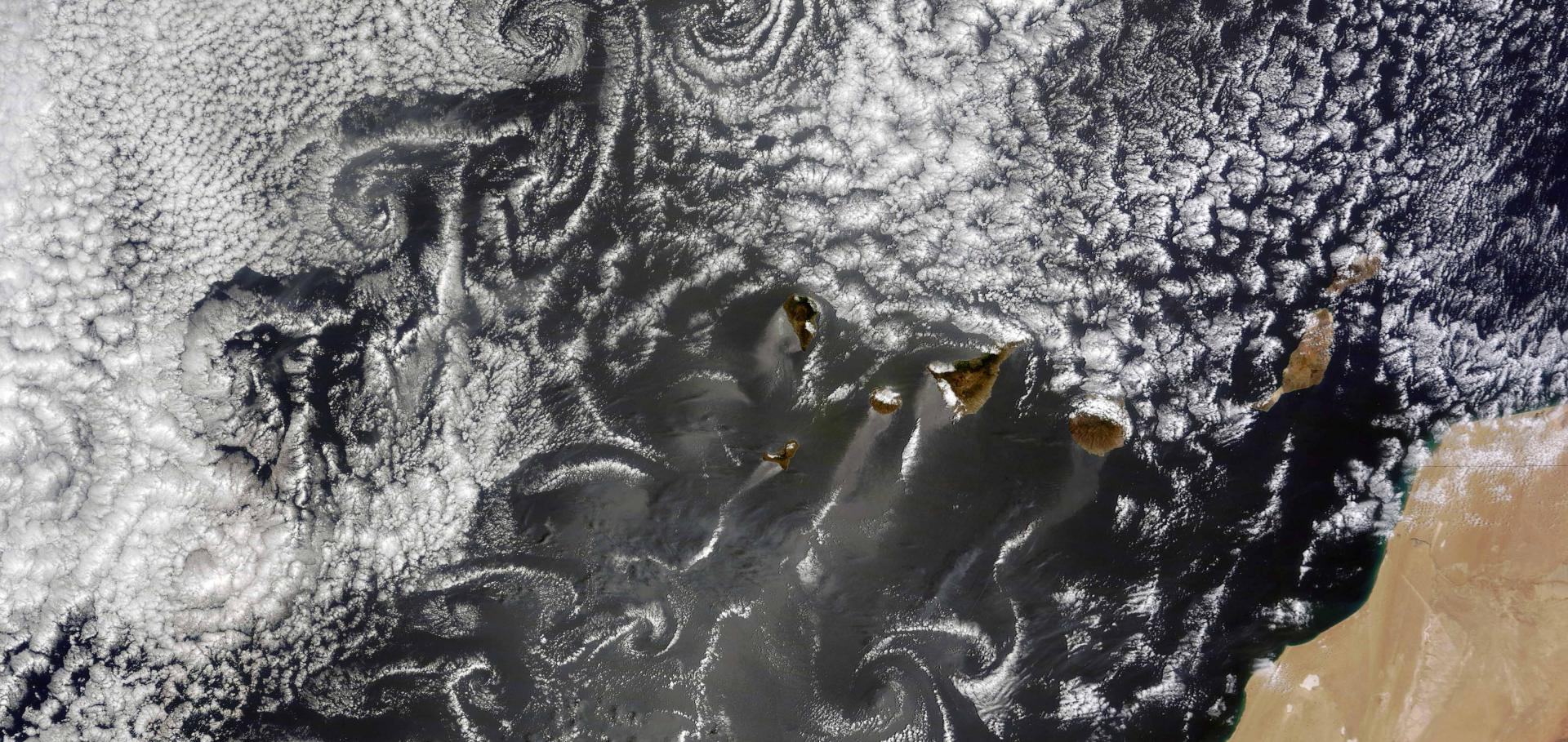
von Kármán vortex street over Canary Islands
Credit: NASA

Philip Stier

Professor of Atmospheric Physics

Research theme

  • Climate physics

Sub department

  • Atmospheric, Oceanic and Planetary Physics

Research groups

  • Climate processes
philip.stier@physics.ox.ac.uk
Telephone: 01865 (2)72887
Atmospheric Physics Clarendon Laboratory, room 103
  • About
  • Research
  • Teaching
  • CV
  • Publications

Effects of aerosol in simulations of realistic shallow cumulus cloud fields in a large domain

ATMOSPHERIC CHEMISTRY AND PHYSICS 19:21 (2019) 13507-13517

Authors:

George Spill, Philip Stier, Paul R Field, Guy Dagan
More details from the publisher

Understanding Rapid Adjustments to Diverse Forcing Agents

Geophysical Research Letters American Geophysical Union (2018)

Authors:

C Smith, R Kramer, G Myhre, P Forster, T Andrews, O Boucher, D Fläschner, Ø Hodnebrog, M Kasoar, V Kharin, A Kirkevag, J-F Lamarque, J Mülmenstädt, D Olivié, T Richardson, B Samset, D Shindell, P STIER, T Takemura, A Voulgarakis, D WATSON-PARRIS
More details from the publisher
Details from ORA
More details
More details

Quantifying the importance of rapid adjustments for global precipitation changes

Geophysical Research Letters American Geophysical Union 45:20 (2018) 11,399-11,405

Authors:

G Myhre, RJ Kramer, CJ Smith, O Hodnebrog, P Forster, B Soden, BH Samset, CW Stjern, T Andrews, O Boucher, G Faluvegi, D Fläschner, M Kasoar, A Kirkevåg, J-F Lamarque, D Olivié, T Richardson, D Shindell, Philip Stier, T Takemura, A Voulgarakis, Duncan Watson-Parris

Abstract:

Different climate drivers influence precipitation in different ways. Here we use radiative kernels to understand the influence of rapid adjustment processes on precipitation in climate models. Rapid adjustments are generally triggered by the initial heating or cooling of the atmosphere from an external climate driver. For precipitation changes, rapid adjustments due to changes in temperature, water vapor and clouds are most important. In this study we have investigated five climate drivers (CO2, CH4, solar irradiance, black carbon (BC), and sulfate aerosols) The fast precipitation response to a doubling of CO2 and a tenfold increase in BC is found to be similar, despite very different instantaneous changes in the radiative cooling, individual rapid adjustments and sensible heating. The model diversity in rapid adjustments is smaller for the experiment involving an increase in the solar irradiance compared to the other climate driver perturbations, and this is also seen in the precipitation changes.
More details from the publisher
Details from ORA
More details
More details

The global aerosol-climate model ECHAM6.3-HAM2.3 – Part 1: Aerosol evaluation

Geoscientific Model Development Copernicus Publications (2018)

Authors:

I Tegen, D Neubauer, S Ferrachat, C Siegenthaler-Le Drian, I Bey, N Schutgens, P STIER, D WATSON-PARRIS, T Stanelle, H Schmidt, S Rast, H Kokkola, M Schultz, S Schroeder, N Daskalakis, S Barthel, B Heinold, U Lohmann
More details from the publisher
Details from ORA

SALSA2.0: The sectional aerosol module of the aerosol–chemistry–climate model ECHAM6.3.0-HAM2.3-MOZ1.0

Geoscientific Model Development Copernicus GmbH 11:9 (2018) 3833-3863

Authors:

Harri Kokkola, Thomas Kühn, Anton Laakso, Tommi Bergman, Kari EJ Lehtinen, Tero Mielonen, Antti Arola, Scarlet Stadtler, Hannele Korhonen, Sylvaine Ferrachat, Ulrike Lohmann, David Neubauer, Ina Tegen, Colombe Siegenthaler-Le Drian, Martin G Schultz, Isabelle Bey, Philip Stier, Nikos Daskalakis, Colette L Heald, Sami Romakkaniemi

Abstract:

<jats:p>Abstract. In this paper, we present the implementation and evaluation of the aerosol microphysics module SALSA2.0 in the framework of the aerosol–chemistry–climate model ECHAM-HAMMOZ. It is an alternative microphysics module to the default modal microphysics scheme M7 in ECHAM-HAMMOZ. The SALSA2.0 implementation within ECHAM-HAMMOZ is evaluated against observations of aerosol optical properties, aerosol mass, and size distributions, comparing also to the skill of the M7 implementation. The largest differences between the implementation of SALSA2.0 and M7 are in the methods used for calculating microphysical processes, i.e., nucleation, condensation, coagulation, and hydration. These differences in the microphysics are reflected in the results so that the largest differences between SALSA2.0 and M7 are evident over regions where the aerosol size distribution is heavily modified by the microphysical processing of aerosol particles. Such regions are, for example, highly polluted regions and regions strongly affected by biomass burning. In addition, in a simulation of the 1991 Mt. Pinatubo eruption in which a stratospheric sulfate plume was formed, the global burden and the effective radii of the stratospheric aerosol are very different in SALSA2.0 and M7. While SALSA2.0 was able to reproduce the observed time evolution of the global burden of sulfate and the effective radii of stratospheric aerosol, M7 strongly overestimates the removal of coarse stratospheric particles and thus underestimates the effective radius of stratospheric aerosol. As the mode widths of M7 have been optimized for the troposphere and were not designed to represent stratospheric aerosol, the ability of M7 to simulate the volcano plume was improved by modifying the mode widths, decreasing the standard deviations of the accumulation and coarse modes from 1.59 and 2.0, respectively, to 1.2 similar to what was observed after the Mt. Pinatubo eruption. Overall, SALSA2.0 shows promise in improving the aerosol description of ECHAM-HAMMOZ and can be further improved by implementing methods for aerosol processes that are more suitable for the sectional method, e.g., size-dependent emissions for aerosol species and size-resolved wet deposition. </jats:p>
More details from the publisher

Pagination

  • First page First
  • Previous page Prev
  • …
  • Page 39
  • Page 40
  • Page 41
  • Page 42
  • Current page 43
  • Page 44
  • Page 45
  • Page 46
  • Page 47
  • …
  • Next page Next
  • Last page Last

Footer Menu

  • Contact us
  • Giving to the Dept of Physics
  • Work with us
  • Media

User account menu

  • Log in

Follow us

FIND US

Clarendon Laboratory,

Parks Road,

Oxford,

OX1 3PU

CONTACT US

Tel: +44(0)1865272200

University of Oxfrod logo Department Of Physics text logo
IOP Juno Champion logo Athena Swan Silver Award logo

© University of Oxford - Department of Physics

Cookies | Privacy policy | Accessibility statement

Built by: Versantus

  • Home
  • Research
  • Study
  • Engage
  • Our people
  • News & Comment
  • Events
  • Our facilities & services
  • About us
  • Giving to Physics
  • Current students
  • Staff intranet