The gemini NICI planet-finding campaign
Proceedings of SPIE - The International Society for Optical Engineering 7736:PART 1 (2010)
Abstract:
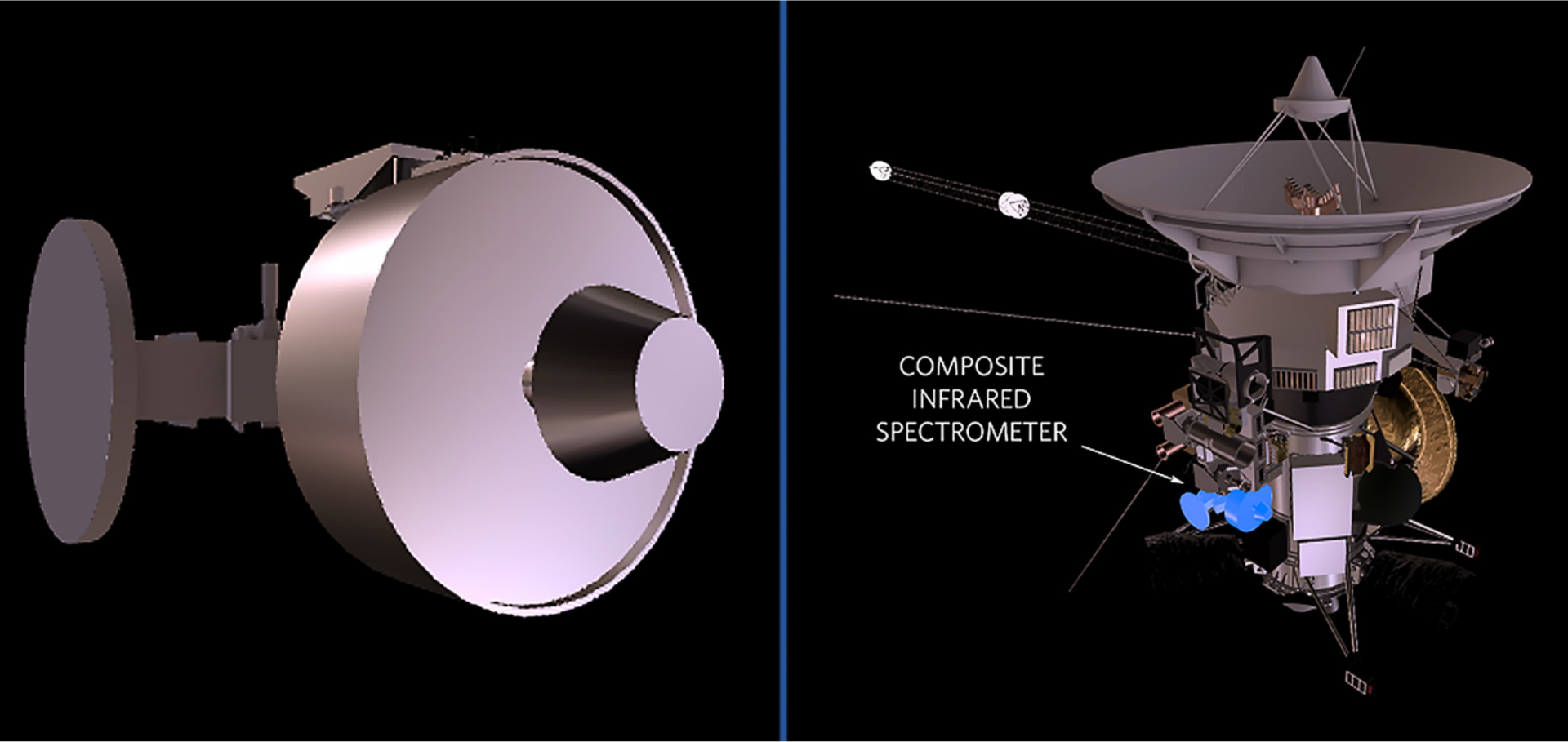
Our team is carrying out a multi-year observing program to directly image and characterize young extrasolar planets using the Near-Infrared Coronagraphic Imager (NICI) on the Gemini-South 8.1-meter telescope. NICI is the first instrument on a large telescope designed from the outset for high-contrast imaging, comprising a high-performance curvature adaptive optics (AO) system with a simultaneous dual-channel coronagraphic imager. Combined, with state-of-the-art AO observing methods and data processing, NICI typically achieves ≈2 magnitudes better contrast compared to previous ground-based or space-based planet-finding efforts, at separations inside of ≈2". In preparation for the Campaign, we carried out efforts to identify previously unrecognized, young stars as targets, to develop a rigorous quantitative method, for constructing our observing strategy, and to optimize the combination of angular differential imaging and spectral differential imaging. The Planet-Finding Campaign is in its second year, with first-epoch imaging of 174 stars already obtained out of a total sample of 300 stars. We describe the Campaign's goals, design, target selection, implementation, on-sky performance, and preliminary results. The NICI Planet-Finding Campaign represents the largest and most sensitive imaging survey to date for massive (≳1 MJup) planets around other stars. Upon completion, the Campaign will establish the best measurements to date on the properties of young gas-giant planets at ≳5-10 AU separations. Finally, Campaign discoveries will be well-suited to long-term orbital monitoring and detailed spectrophotometric followup with next-generation planet-finding instruments. © 2010 SPIE.Infrared limb sounding of Titan with the cassini composite infrared spectrometer: Effects of the mid-IR detector spatial responses: Errata
Applied Optics 49:29 (2010) 5575-5576
Abstract:
We provide a revised Table 5 for the paper by Nixon et al. [Appl. Opt. 48, 1912 (2009)], in which the abundances of 13CO2 and C 18O were incorrect . © 2010 Optical Society of America.Venus Cloud Properties from Venus Express VIRTIS Observations
AAS/Division for Planetary Sciences Meeting Abstracts #42 42 (2010) 994-994
Global silicate mineralogy of the moon from the diviner lunar radiometer
Science 329:5998 (2010) 1507-1509
Abstract:
We obtained direct global measurements of the lunar surface using multispectral thermal emission mapping with the Lunar Reconnaissance Orbiter Diviner Lunar Radiometer Experiment. Most lunar terrains have spectral signatures that are consistent with known lunar anorthosite and basalt compositions. However, the data have also revealed the presence of highly evolved, silica-rich lunar soils in kilometer-scale and larger exposures, expanded the compositional range of the anorthosites that dominate the lunar crust, and shown that pristine lunar mantle is not exposed at the lunar surface at the kilometer scale. Together, these observations provide compelling evidence that the Moon is a complex body that has experienced a diverse set of igneous processes.Highly silicic compositions on the moon
Science 329:5998 (2010) 1510-1513