Home
Department Of Physics text logo
  • Research
    • Our research
    • Our research groups
    • Our research in action
    • Research funding support
    • Summer internships for undergraduates
  • Study
    • Undergraduates
    • Postgraduates
  • Engage
    • For alumni
    • For business
    • For schools
    • For the public
  • Support
Menu
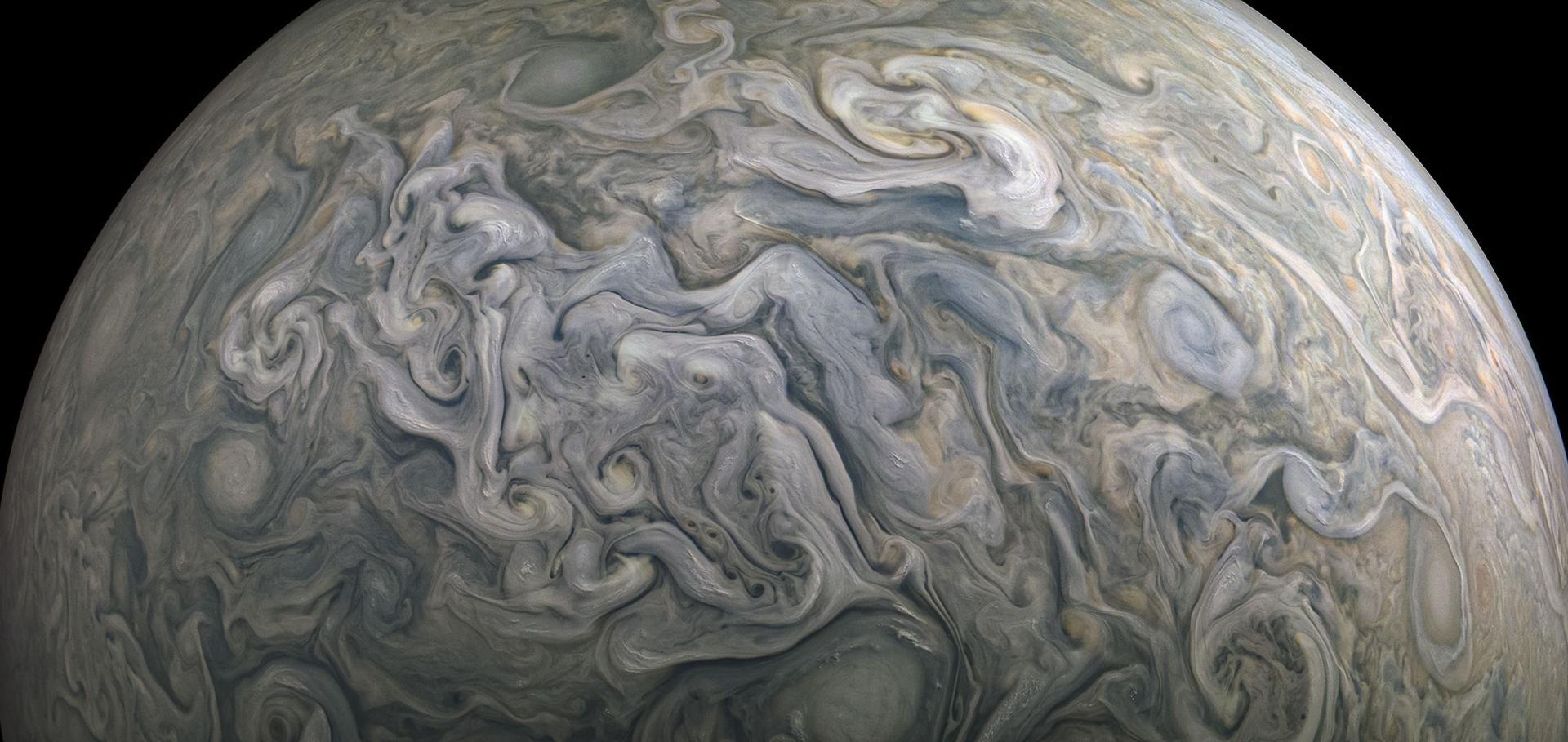
Juno Jupiter image

Neil Bowles

Professor of Planetary Science

Sub department

  • Atmospheric, Oceanic and Planetary Physics

Research groups

  • Planetary atmosphere observation analysis
  • Planetary surfaces
  • Solar system
  • Space instrumentation
Neil.Bowles@physics.ox.ac.uk
Telephone: 01865 (2)72097
Atmospheric Physics Clarendon Laboratory, room 307
  • About
  • Publications

Asteroid electrostatic instrumentation and modelling

Journal of Physics: Conference Series 301:1 (2011)

Authors:

KL Aplin, NE Bowles, E Urbak, D Keane, EC Sawyer

Abstract:

Asteroid surface material is expected to become photoelectrically charged, and is likely to be transported through electrostatic levitation. Understanding any movement of the surface material is relevant to proposed space missions to return samples to Earth for detailed isotopic analysis. Motivated by preparations for the Marco Polo sample return mission, we present electrostatic modelling for a real asteroid, Itokawa, for which detailed shape information is available, and verify that charging effects are likely to be significant at the terminator and at the edges of shadow regions for the Marco Polo baseline asteroid, 1999JU3. We also describe the Asteroid Charge Experiment electric field instrumentation intended for Marco Polo. Finally, we find that the differing asteroid and spacecraft potentials on landing could perturb sample collection for the short landing time of 20min that is currently planned.
More details from the publisher
More details

Lunar regolith thermal gradients and emission spectra: Modeling and validation

Journal of Geophysical Research: Planets 116:12 (2011)

Authors:

L Millán, I Thomas, N Bowles

Abstract:

The retrieval of surface composition from IR measurements of airless bodies requires a model capable of computing the significant thermal gradients present in the top few hundred microns of the regolith. In this study we introduce a model which reproduces most of the features found in controlled experiments made in the simulated lunar environment emission chamber (SLEEC). Although the model presented here is forced by a lower boundary held at a fixed temperature, we conclude that a similar algorithm driven by solar illumination may be used as a forward model to retrieve composition, particle size and effective thermal conductivity from IR measurements of airless bodies. Copyright 2011 by the American Geophysical Union.
More details from the publisher

Lunar Net-a proposal in response to an ESA M3 call in 2010 for a medium sized mission

Experimental Astronomy (2011) 1-58

Authors:

A Smith, IA Crawford, RA Gowen, R Ambrosi, M Anand, B Banerdt, N Bannister, N Bowles, C Braithwaite, P Brown, J Chela-Flores, T Cholinser, P Church, AJ Coates, T Colaprete, G Collins, G Collinson, T Cook, R Elphic, G Fraser, Y Gao, E Gibson, T Glotch, M Grande, A Griffiths, J Grygorczuk, M Gudipati, A Hagermann, J Heldmann, LL Hood, AP Jones, KH Joy, OB Khavroshkin, G Klingelhoefer, M Knapmeyer, G Kramer, D Lawrence, W Marczewski, S McKenna-Lawlor, K Miljkovic, S Narendranath, E Palomba, A Phipps, WT Pike, D Pullan, J Rask, DT Richard, K Seweryn, S Sheridan, M Sims, M Sweeting, T Swindle, D Talboys, L Taylor, N Teanby, V Tong, S Ulamec, R Wawrzaszek, M Wieczorek, L Wilson, I Wright

ORTIS - ORbiter terahertz infrared sounder

21st International Symposium on Space Terahertz Technology 2010, ISSTT 2010 (2010) 208

Authors:

BN Ellison, PGJ Irwin, SB Calcutt, S Rea, B Alderman, N Bowles, R Irshad, J Hurley

Abstract:

Accurate measurement of the temperature, composition and dynamics of Jupiter's atmosphere is one of the main scientific goals of ESA's and NASA's Outer Planet Mission proposals. Infrared remote sounding provides a powerful tool for achieving these objectives and was used by Voyager/IRIS and Cassini/CIRS, but is insensitive to some altitudes and gases. The sub-millimetre wavelength (terahertz) region of the electromagnetic spectrum, which has not been significantly exploited to date in the discipline of planetary science, provides unique spectral information over a range of atmospheric pressures and, when combined with infrared data, is a powerful in situ planetary atmospheric sounder. We will describe a novel low mass and low power consumption combined terahertz/IR instrument proposed for inclusion on the Jupiter Ganymede Orbiter that will greatly improve our understanding of the atmosphere of Jupiter. Through the combination of high spectral resolution 2.2THz spectroscopy (R=106) and lowspectral resolution IR radiometry, the entire temperature profile of the Jovian atmosphere from 0.6 to 10-3 bar can be evaluated (filling in the currently unmeasured levels between 0.1 and 0.01 bar). In addition, the tropospheric and stratospheric composition can be determined (especially water vapour) and observations of the Doppler shifting of sub-millimetre lines can also be used to measure horizontal wind speeds.

Diviner lunar radiometer observations of cold traps in the moon's south polar region

Science 330:6003 (2010) 479-482

Authors:

DA Paige, MA Siegler, JA Zhang, PO Hayne, EJ Foote, KA Bennett, AR Vasavada, BT Greenhagen, JT Schofield, DJ McCleese, MC Foote, E DeJong, BG Bills, W Hartford, BC Murray, CC Allen, K Snook, LA Soderblom, S Calcutt, FW Taylor, NE Bowles, JL Bandfield, R Elphic, R Ghent, TD Glotch, MB Wyatt, PG Lucey

Abstract:

Diviner Lunar Radiometer Experiment surface-temperature maps reveal the existence of widespread surface and near-surface cryogenic regions that extend beyond the boundaries of persistent shadow. The Lunar Crater Observation and Sensing Satellite (LCROSS) struck one of the coldest of these regions, where subsurface temperatures are estimated to be 38 kelvin. Large areas of the lunar polar regions are currently cold enough to cold-trap water ice as well as a range of both more volatile and less volatile species. The diverse mixture of water and high-volatility compounds detected in the LCROSS ejecta plume is strong evidence for the impact delivery and cold-trapping of volatiles derived from primitive outer solar system bodies.
More details from the publisher
More details
More details

Pagination

  • First page First
  • Previous page Prev
  • …
  • Page 17
  • Page 18
  • Page 19
  • Page 20
  • Current page 21
  • Page 22
  • Page 23
  • Page 24
  • Page 25
  • …
  • Next page Next
  • Last page Last

Footer Menu

  • Contact us
  • Giving to the Dept of Physics
  • Work with us
  • Media

User account menu

  • Log in

Follow us

FIND US

Clarendon Laboratory,

Parks Road,

Oxford,

OX1 3PU

CONTACT US

Tel: +44(0)1865272200

University of Oxfrod logo Department Of Physics text logo
IOP Juno Champion logo Athena Swan Silver Award logo

© University of Oxford - Department of Physics

Cookies | Privacy policy | Accessibility statement

Built by: Versantus

  • Home
  • Research
  • Study
  • Engage
  • Our people
  • News & Comment
  • Events
  • Our facilities & services
  • About us
  • Giving to Physics
  • Current students
  • Staff intranet