Home
Department Of Physics text logo
  • Research
    • Our research
    • Our research groups
    • Our research in action
    • Research funding support
    • Summer internships for undergraduates
  • Study
    • Undergraduates
    • Postgraduates
  • Engage
    • For young people
    • For teachers
    • For the public
    • For alumni
    • For business
  • Support
Menu
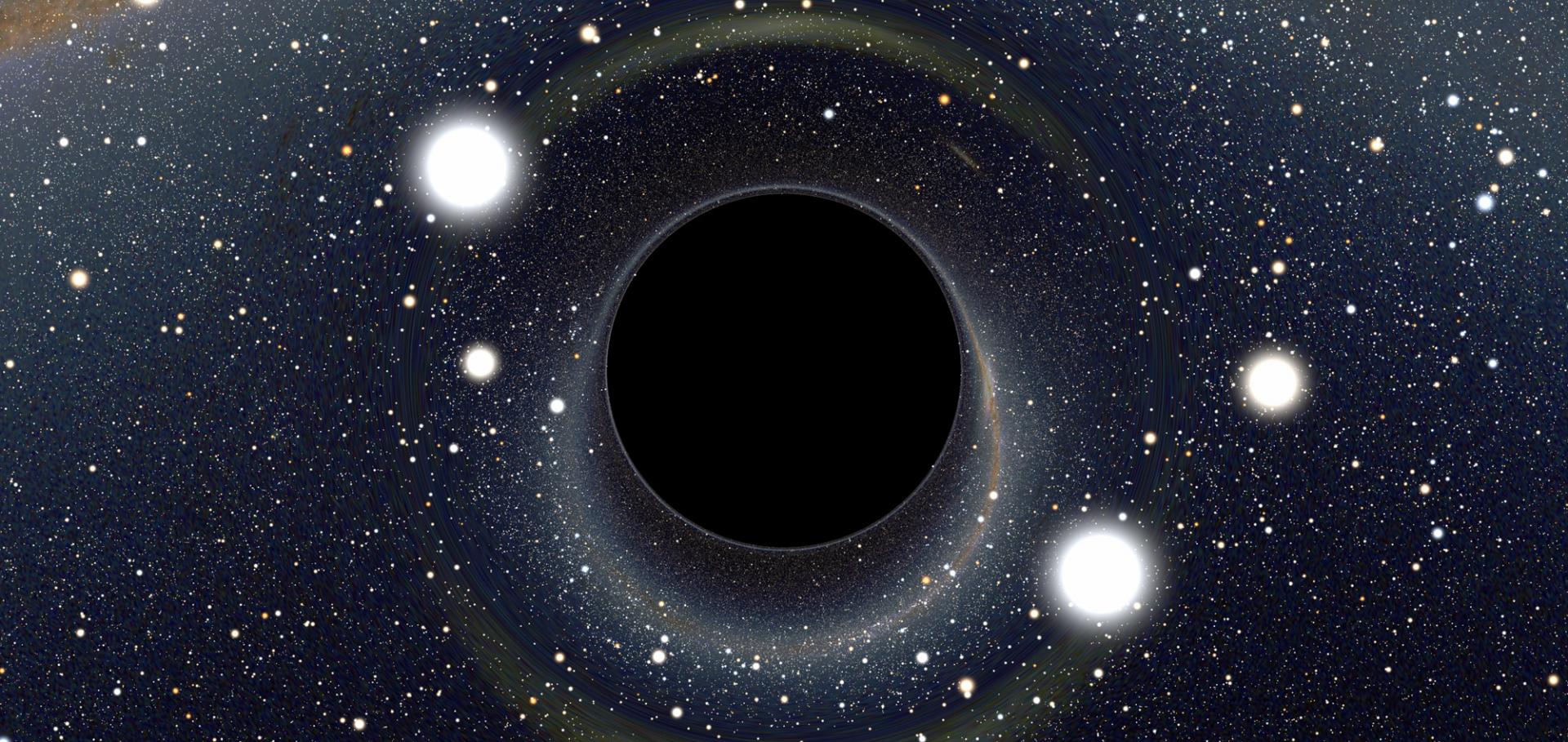
Black Hole

Lensing of space time around a black hole. At Oxford we study black holes observationally and theoretically on all size and time scales - it is some of our core work.

Credit: ALAIN RIAZUELO, IAP/UPMC/CNRS. CLICK HERE TO VIEW MORE IMAGES.

Professor Andrew Bunker

Professor of Astrophysics

Research theme

  • Astronomy and astrophysics

Sub department

  • Astrophysics

Research groups

  • Galaxy formation and evolution
Andy.Bunker@physics.ox.ac.uk
Telephone: 01865 (2)83126
Denys Wilkinson Building, room 702
  • About
  • Publications

Keck Spectroscopy of Faint 3

(2010)

Authors:

Daniel P Stark, Richard S Ellis, Kuenley Chiu, Masami Ouchi, Andrew Bunker
More details from the publisher

New Star Forming Galaxies at z\approx 7 from WFC3 Imaging

(2010)

Authors:

Stephen M Wilkins, Andrew J Bunker, Silvio Lorenzoni, Joseph Caruana
More details from the publisher

2D kinematics and physical properties of z ∼ 3 star-forming galaxies

Monthly Notices of the Royal Astronomical Society 401:3 (2010) 1657-1669

Authors:

M Lemoine-Busserolle, A Bunker, F Lamareille, M Kissler-Patig

Abstract:

We present results from a study of the kinematic structure of star-forming galaxies at redshift z ∼ 3 selected in the VIMOS VLT Deep Survey (VVDS), using integral field spectroscopy of rest-frame optical nebular emission lines, in combination with rest-frame UV spectroscopy, ground-based optical/near-IR and Spitzer photometry. We also constrain the underlying stellar populations to address the evolutionary status of these galaxies. We infer the kinematic properties of four galaxies: VVDS-20298666, VVDS-020297772, VVDS-20463884 and VVDS-20335183 with redshifts z = 3.2917, 3.2878, 3.2776 and 3.7062, respectively. While VVDS-20463884 presents an irregular velocity field with a peak in the local velocity dispersion of the galaxy shifted from the centre of the galaxy, VVDS-20298666 has a well-resolved gradient in velocity over a distance of ∼4.5 kpc with a peak-to-peak amplitude of v = 91 km s -1. We discovered that the nearby galaxy, VVDS-020297772 (which shows traces of active galactic nucleus activity), is in fact a companion at a similar redshift with a projected separation of 12 kpc. In contrast, the velocity field of VVDS-020335183 seems more consistent with a merger on a rotating disc. However, all of the objects have a high local velocity dispersion (σ ∼ 60-70 km s-1), which gives v/σ ≲ 1. It is unlikely that these galaxies are a dynamically cold rotating disc of ionized gas. © 2009 RAS.
More details from the publisher
More details

Constraints on star-forming galaxies at z ≥ 6.5 from HAWK-I Y-band imaging of GOODS-South

Monthly Notices of the Royal Astronomical Society 404:1 (2010) 212-223

Authors:

S Hickey, A Bunker, MJ Jarvis, K Chiu, D Bonfield

Abstract:

We present the results of our search for high-redshift Lyman-break galaxies over the GOODS-South field. We use Hubble Space Telescope (HST)-ACS data in B, V, i′ & z′, Very Large Telescope (VLT)-ISAAC J and Ks, Spitzer-Infrared Array Camera (IRAC) 3.6, 4.5, 5.8 and 8.0 μm data in conjunction with the new HAWK-I Y-band science verification data to search for dropout galaxies in the redshift range 6 < z < 9. We survey ≈119 arcmin2 to YAB = 25.7 (5σ), of which 37.5 arcmin2 reaches YAB = 25.9. Candidate z′ and Y dropouts were selected on the basis of a colour cut of (Y - J)AB > 0.75 mag and (z′ - Y)AB > 1.0 mag, respectively. We find no robust Y-drops (z ≈ 9) brighter than JAB < 25.4. In our search for z′-band dropouts (z ≈ 6.5-7.5), we identify four possible candidates, two with z′-drop colours and clear Spitzer-IRAC detections and two less likely candidates. We also identify two previously known Galactic T-dwarf stellar contaminants with these colours, and two likely transient objects seen in the Y-band data. The implications if all or none of our candidates is real on the ultraviolet galaxy luminosity functions at z > 6.5 are explored. We find our number of z′-drop candidates to be insufficient based on the expected number of z′ drops in a simple no-evolution scenario from the z = 3 Lyman-break galaxy luminosity function but we are consistent with the observed luminosity function at z ≈ 6 (if all our candidates are real). However, if one or both of our best z′-drop candidates are not z > 6.5 galaxies, this would demand evolution of the luminosity function at early epochs, in the sense that the number density of ultraviolet luminous star- forming galaxies at z > 7 is less than at z ~ 6. We show that the future surveys to be conducted with the European Southern Observatory VISTA telescope over the next 5 yr will be able to measure the bulk of the luminosity function for both z′ and Y dropouts and thus provide the strongest constraints on the level of star-formation within the epoch of reionization. © 2010 The Authors. Journal compilation. © 2010 RAS.
More details from the publisher
More details
Details from ArXiV

GRB 090426: The environment of a rest-frame 0.35-s gamma-ray burst at a redshift of 2.609

Monthly Notices of the Royal Astronomical Society 401:2 (2010) 963-972

Authors:

EM Levesque, JS Bloom, NR Butler, DA Perley, SB Cenko, JX Prochaska, LJ Kewley, A Bunker, HW Chen, R Chornock, AV Filippenko, K Glazebrook, S Lopez, J Masiero, M Modjaz, A Morgan, D Poznanski

Abstract:

We present the discovery of an absorption-line redshift of z = 2.609 for GRB 090426, establishing the first firm lower limit to a redshift for a gamma-ray burst (GRB) with an observed duration of <2 s. With a rest-frame burst duration of T90z = 0.35 s and a detailed examination of the peak energy of the event, we suggest that this is likely (at >90 per cent confidence) a member of the short/hard phenomenological class of GRBs. From analysis of the optical-afterglow spectrum we find that the burst originated along a very low H i column density sightline, with NH i < 3.2 × 1019 cm-2. Our GRB 090426 afterglow spectrum also appears to have weaker low-ionization absorption (Si ii, C ii) than ∼95 per cent of previous afterglow spectra. Finally, we also report the discovery of a blue, very luminous, star-forming putative host galaxy (∼2L *) at a small angular offset from the location of the optical afterglow. We consider the implications of this unique GRB in the context of burst duration classification and our understanding of GRB progenitor scenarios. © 2009 RAS.
More details from the publisher
More details

Pagination

  • First page First
  • Previous page Prev
  • …
  • Page 96
  • Page 97
  • Page 98
  • Page 99
  • Current page 100
  • Page 101
  • Page 102
  • Page 103
  • Page 104
  • …
  • Next page Next
  • Last page Last

Footer Menu

  • Contact us
  • Giving to the Dept of Physics
  • Work with us
  • Media

User account menu

  • Log in

Follow us

FIND US

Clarendon Laboratory,

Parks Road,

Oxford,

OX1 3PU

CONTACT US

Tel: +44(0)1865272200

University of Oxfrod logo Department Of Physics text logo
IOP Juno Champion logo Athena Swan Silver Award logo

© University of Oxford - Department of Physics

Cookies | Privacy policy | Accessibility statement

Built by: Versantus

  • Home
  • Research
  • Study
  • Engage
  • Our people
  • News & Comment
  • Events
  • Our facilities & services
  • About us
  • Giving to Physics
  • Current students
  • Staff intranet