Home
Department Of Physics text logo
  • Research
    • Our research
    • Our research groups
    • Our research in action
    • Research funding support
    • Summer internships for undergraduates
  • Study
    • Undergraduates
    • Postgraduates
  • Engage
    • For young people
    • For teachers
    • For the public
    • For alumni
    • For business
  • Support
Menu
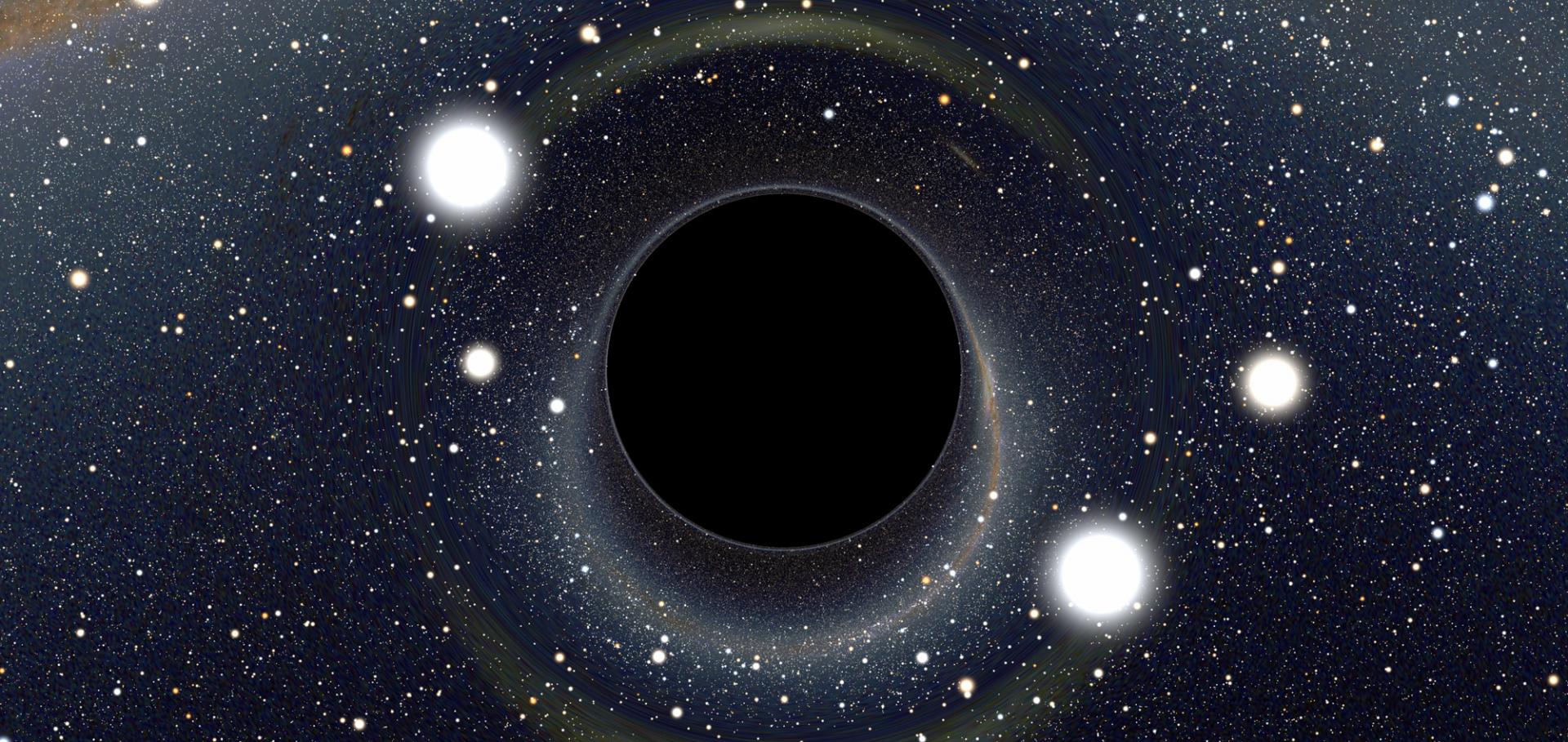
Black Hole

Lensing of space time around a black hole. At Oxford we study black holes observationally and theoretically on all size and time scales - it is some of our core work.

Credit: ALAIN RIAZUELO, IAP/UPMC/CNRS. CLICK HERE TO VIEW MORE IMAGES.

Professor Roger Davies

Emeritus Wetton Professor

Research theme

  • Astronomy and astrophysics
  • Instrumentation

Sub department

  • Astrophysics

Research groups

  • Astronomical instrumentation
  • Cosmology
  • Galaxy formation and evolution
  • Hintze Centre for Astrophysical Surveys
  • Rubin-LSST
  • Extremely Large Telescope
Roger.Davies@physics.ox.ac.uk
  • About
  • Publications

The KMOS Galaxy Clusters Project

Proceedings of the International Astronomical Union Cambridge University Press (CUP) 10:S311 (2014) 110-115

Authors:

Roger L Davies, A Beifiori, R Bender, M Cappellari, J Chan, R Houghton, T Mendel, R Saglia, R Sharples, J Stott, R Smith, D Wilman
More details from the publisher
More details

Distribution of slow and fast rotators in the Fornax cluster

Monthly Notices of the Royal Astronomical Society Oxford University Press (OUP) 441:1 (2014) 274-288

Authors:

Nicholas Scott, Roger L Davies, Ryan CW Houghton, Michele Cappellari, Alister W Graham, Kevin A Pimbblet
More details from the publisher
More details

THE SINS/zC-SINF SURVEY OF z ∼ 2 GALAXY KINEMATICS: EVIDENCE FOR POWERFUL ACTIVE GALACTIC NUCLEUS-DRIVEN NUCLEAR OUTFLOWS IN MASSIVE STAR-FORMING GALAXIES**Based on observations obtained at the Very Large Telescope of the European Southern Observatory, Paranal, Chile (ESO program IDs 074.A-0911, 075.A-0466, 076.A-0527, 078.A-0600, 082.A-0396, 183.A-0781, 088.A-0202, 091.A-0126). Also based on observations made with the NASA/ESA Hubble Space Telescope, obtained at the Space Telescope Science Institute, which is operated by the Association of Universities for Research in Astronomy, Inc., under NASA contract NAS 5–26555; these observations are associated with GO programs Nos. 10924 and 12578.

The Astrophysical Journal American Astronomical Society 787:1 (2014) 38

Authors:

NM Förster Schreiber, R Genzel, SF Newman, JD Kurk, D Lutz, LJ Tacconi, S Wuyts, K Bandara, A Burkert, P Buschkamp, CM Carollo, G Cresci, E Daddi, R Davies, F Eisenhauer, EKS Hicks, P Lang, SJ Lilly, V Mainieri, C Mancini, T Naab, Y Peng, A Renzini, D Rosario, K Shapiro Griffin, AE Shapley, A Sternberg, S Tacchella, D Vergani, E Wisnioski, E Wuyts, G Zamorani
More details from the publisher

THE SINS/zC-SINF SURVEY OF z ∼ 2 GALAXY KINEMATICS: EVIDENCE FOR GRAVITATIONAL QUENCHING**Based on observations obtained at the Very Large Telescope of the European Southern Observatory, Paranal, Chile (ESO program IDs 076.A-0527, 079.A-0341, 080.A-0330, 080.A-0339, 080.A-0635, 081.A-0672, 082.A-0396, 183.A-0781, 087.A-0081, 088.A-0202, 088.A-0202, 088.A-0209, 091.A-0126). Also based on observations made with the NASA/ESA Hubble Space Telescope, obtained at the Space Telescope Science Institute, which is operated by the Association of Universities for Research in Astronomy, Inc., under NASA contract NAS 5-26555 (GO programs Nos. 10924 and 12587).

The Astrophysical Journal American Astronomical Society 785:1 (2014) 75

Authors:

R Genzel, NM Förster Schreiber, P Lang, S Tacchella, LJ Tacconi, S Wuyts, K Bandara, A Burkert, P Buschkamp, CM Carollo, G Cresci, R Davies, F Eisenhauer, EKS Hicks, J Kurk, SJ Lilly, D Lutz, C Mancini, T Naab, S Newman, Y Peng, A Renzini, K Shapiro Griffin, A Sternberg, D Vergani, E Wisnioski, E Wuyts, G Zamorani
More details from the publisher

How typical is the Coma cluster?

Monthly Notices of the Royal Astronomical Society 438:4 (2014) 3049-3057

Authors:

KA Pimbblet, SJ Penny, RL Davies

Abstract:

Coma is frequently used as the archetype z ∼ 0 galaxy cluster to compare higher redshift work against. It is not clear, however, how representative the Coma cluster is for galaxy clusters of its mass or X-ray luminosity, and significantly, recent works have suggested that the galaxy population of Coma may be in some ways anomalous. In this work, we present a comparison of Coma to an X-ray-selected control sample of clusters. We show that although Coma is typical against the control sample in terms of its internal kinematics (sub-structure and velocity dispersion profile), it has a significantly high (∼3σ) X-ray temperature set against clusters of comparable mass. By de-redshifting our control sample cluster galaxies star formation rates using a fit to the galaxy main-sequence evolution at z < 0.1, we determine that the typical star formation rate of Coma galaxies as a function of mass is higher than for galaxies in our control sample at a confidence level of >99 per cent. One way to alleviate this discrepancy and bring Coma in line with the control sample would be to have the distance to Coma to be slightly lower, perhaps through a non-negligible peculiar velocity with respect to the Hubble expansion, but we do not regard this as likely given precision measurements using a variety of approaches. Therefore, in summary, we urge caution in using Coma as a z ∼ 0 baseline cluster in galaxy evolution studies. © 2014 The Authors Published by Oxford University Press on behalf of the Royal Astronomical Society.
More details from the publisher
More details

Pagination

  • First page First
  • Previous page Prev
  • …
  • Page 12
  • Page 13
  • Page 14
  • Page 15
  • Current page 16
  • Page 17
  • Page 18
  • Page 19
  • Page 20
  • …
  • Next page Next
  • Last page Last

Footer Menu

  • Contact us
  • Giving to the Dept of Physics
  • Work with us
  • Media

User account menu

  • Log in

Follow us

FIND US

Clarendon Laboratory,

Parks Road,

Oxford,

OX1 3PU

CONTACT US

Tel: +44(0)1865272200

University of Oxfrod logo Department Of Physics text logo
IOP Juno Champion logo Athena Swan Silver Award logo

© University of Oxford - Department of Physics

Cookies | Privacy policy | Accessibility statement

Built by: Versantus

  • Home
  • Research
  • Study
  • Engage
  • Our people
  • News & Comment
  • Events
  • Our facilities & services
  • About us
  • Giving to Physics
  • Current students
  • Staff intranet