Home
Department Of Physics text logo
  • Research
    • Our research
    • Our research groups
    • Our research in action
    • Research funding support
    • Summer internships for undergraduates
  • Study
    • Undergraduates
    • Postgraduates
  • Engage
    • For young people
    • For teachers
    • For the public
    • For alumni
    • For business
  • Support
Menu
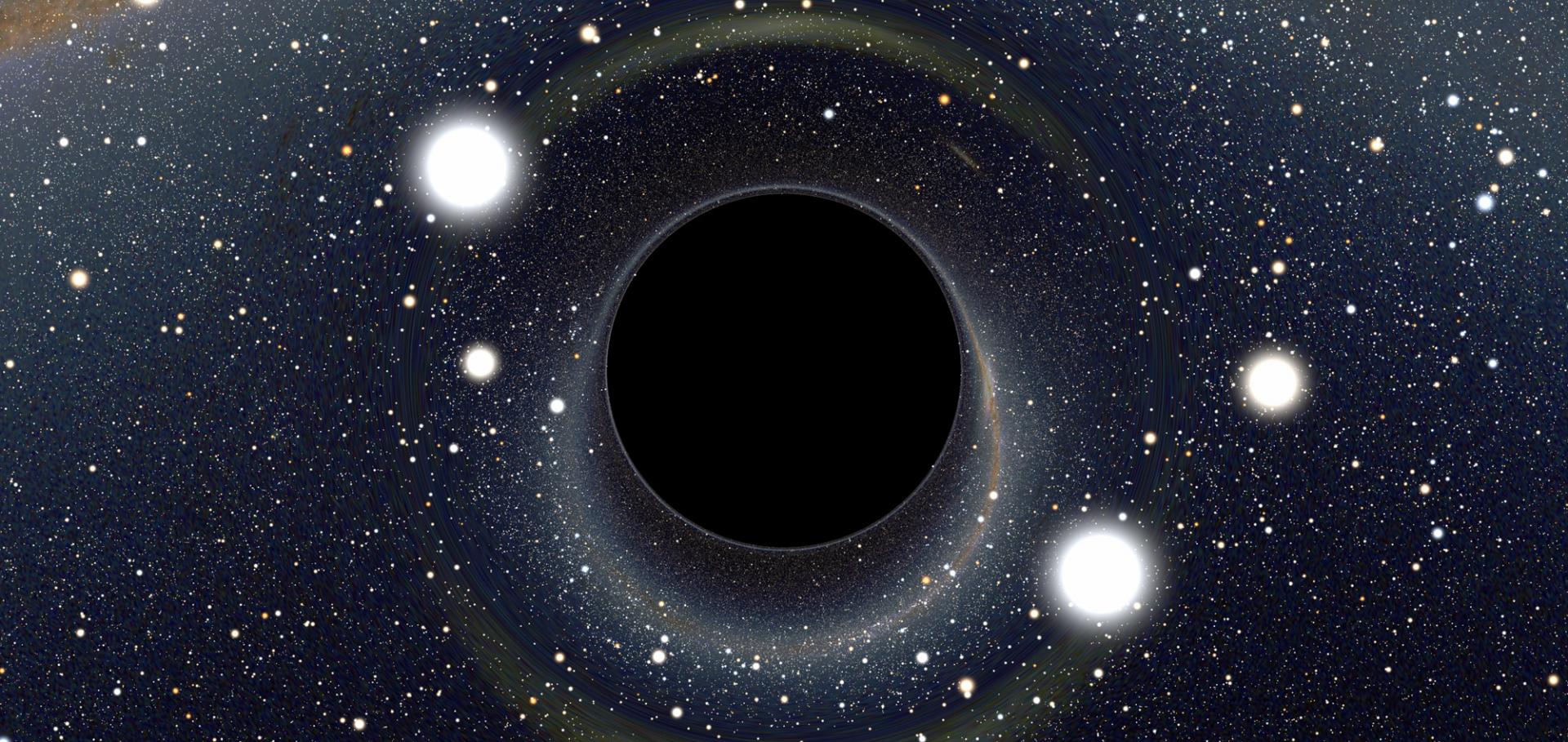
Black Hole

Lensing of space time around a black hole. At Oxford we study black holes observationally and theoretically on all size and time scales - it is some of our core work.

Credit: ALAIN RIAZUELO, IAP/UPMC/CNRS. CLICK HERE TO VIEW MORE IMAGES.

Professor Roger Davies

Emeritus Wetton Professor

Research theme

  • Astronomy and astrophysics
  • Instrumentation

Sub department

  • Astrophysics

Research groups

  • Astronomical instrumentation
  • Cosmology
  • Galaxy formation and evolution
  • Hintze Centre for Astrophysical Surveys
  • Rubin-LSST
  • Extremely Large Telescope
Roger.Davies@physics.ox.ac.uk
  • About
  • Publications

Extragalactic integral field spectroscopy on the Gemini telescopes

Astronomische Nachrichten 325:2 (2004) 139-142

Authors:

A Bunker, J Smith, I Parry, R Sharp, A Dean, G Gilmore, R Bower, M Swinbank, R Davies, RB Metcalf, R De Grijs

Abstract:

We have been undertaking a programme on the Gemini 8-m telescopes to demonstrate the power of integral field spectroscopy, using the optical GMOS spectrograph, and the new CIRPASS instrument in the near-infrared. Here we present some preliminary results from 3D spectroscopy of extra-galactic objects, mapping the emission lines in a 3CR radio galaxy and in a gravitationally lensed arc, exploring dark matter sub-structure through observations of an Einstein Cross gravitational lens, and the star formation time-scales of young massive clusters in the starburst galaxy NGC 1140.
More details from the publisher
More details

Early-type Galaxies in the Cluster Abell 2390 at z=0.23

Carnegie Observatories Astrophysics Series (2004)

Authors:

A Fritz, BL Ziegler, RG Bower, I Smail, RL Davies

Abstract:

To examine the evolution of the early-type galaxy population in the rich cluster Abell 2390 at z=0.23 we have gained spectroscopic data of 51 elliptical and lenticular galaxies with MOSCA at the 3.5 m telescope on Calar Alto Observatory. This investigation spans both a broad range in luminosity (-19.3>M_B>-22.3) and uses a wide field of view of 10'x10', therefore the environmental dependence of different formation scenarios can be analysed in detail as a function of radius from the cluster centre. Here we present results on the surface brightness modelling of galaxies where morphological and structural information is available in the F814W filter aboard the Hubble Space Telescope (HST) and investigate for this subsample the evolution of the Fundamental Plane.
Details from ArXiV
More details

NOAO Fundamental Plane Survey. I. Survey design, redshifts, and velocity dispersion data

Astronomical Journal 128:4 (2004) 1558-1569

Authors:

RJ Smith, MJ Hudson, JE Nelan, SAW Moore, SJ Quinney, GA Wegner, JR Lucey, RL Davies, JJ Malecki, D Schade, NB Suntzeff

Abstract:

We introduce the NOAO Fundamental Plane Survey (NFPS), a wide-field imaging/spectroscopic study of rich, low-redshift galaxy clusters. The survey targets X-ray-selected clusters at 0.010 < z < 0.067, distributed over the whole sky, with imaging and spectroscopic observations obtained for 93 clusters. This data set will be used in investigations of galaxy properties in the cluster environment and of large-scale velocity fields through the fundamental plane. In this paper, we present details of the cluster sample construction and the strategies employed to select early-type galaxy samples for spectroscopy. Details of the spectroscopic observations are reported. From observations of 5479 red galaxies, we present redshift measurements for 5388 objects and internal velocity dispersions for 4131. The velocity dispersions have a median estimated error ∼7%. The NFPS has ∼15% overlap with previously published velocity dispersion data sets. Comparisons to these external catalogs are presented and indicate typical external errors of ∼8%.
More details from the publisher
More details

The SAURON project - III. Integral-field absorption-line kinematics of 48 elliptical and lenticular galaxies

Monthly Notices of the Royal Astronomical Society 352:3 (2004) 721-743

Authors:

E Emsellem, M Cappellari, RF Peletier, RM McDermid, R Bacon, M Bureau, Y Copin, RL Davies, D Krajnović, H Kuntschner, BW Miller, PT De Zeeuw

Abstract:

We present the stellar kinematics of 48 representative elliptical and lenticular galaxies obtained with our custom-built integral-field spectrograph SAURON operating on the William Herschel Telescope. The data were homogeneously processed through a dedicated reduction and analysis pipeline. All resulting SAURON data cubes were spatially binned to a constant minimum signal-to-noise ratio. We have measured the stellar kinematics with an optimized (penalized pixel-fitting) routine which fits the spectra in pixel space, via the use of optimal templates, and prevents the presence of emission lines to affect the measurements. We have thus generated maps of the mean stellar velocity V, the velocity dispersion σ, and the Gauss-Hermite moments h3 and h4 of the line-of-sight velocity distributions. The maps extend to approximately one effective radius. Many objects display kinematic twists, kinematically decoupled components, central stellar discs, and other peculiarities, the nature of which will be discussed in future papers of this series.
More details from the publisher
More details
Details from ArXiV

Deep SAURON spectral imaging of the diffuse Lyman α halo LAB1 in SSA 22

Monthly Notices of the Royal Astronomical Society 351:1 (2004) 63-69

Authors:

RG Bower, SL Morris, R Bacon, RJ Wilman, M Sullivan, S Chapman, RL Davies, PT De Zeeuw, E Emsellem

Abstract:

We have used the SAURON panoramic integral field spectrograph to study the structure of the Lyα emission-line halo, LAB1, surrounding the submillimetre galaxy SMM J221726+0013. This emission-line halo was discovered during a narrow-band imaging survey of the z = 3.1 large-scale structure in the SSA 22 region. Our observations trace the emission halo out to almost 100 kpc from the submillimetre source and identify two distinct Lyα 'mini-haloes' around the nearby Lyman-break galaxies. The main emission region has a broad line profile, with variations in the line profile seeming chaotic and lacking evidence for a coherent velocity structure. The data also suggest that Lyα emission is suppressed around the submillimetre source. Interpretation of the line structure needs care because Lyα may be resonantly scattered, leading to complex radiative transfer effects, and we suggest that the suppression in this region arises because of such effects. We compare the structure of the central emission-line halo with local counterparts, and find that the emission-line halo around NGC 1275 in the Perseus cluster may be a good local analogue, although the high-redshift halo is factor of ∼ 100 more luminous and appears to have higher velocity broadening. Around the Lyman-break galaxy C15, the emission line is narrower, and a clear shear in the emission wavelength is seen. A plausible explanation for the line profile is that the emission gas is expelled from C15 in a bipolar outflow, similar to that seen in M82.
More details from the publisher
More details
Details from ArXiV

Pagination

  • First page First
  • Previous page Prev
  • …
  • Page 47
  • Page 48
  • Page 49
  • Page 50
  • Current page 51
  • Page 52
  • Page 53
  • Page 54
  • Page 55
  • …
  • Next page Next
  • Last page Last

Footer Menu

  • Contact us
  • Giving to the Dept of Physics
  • Work with us
  • Media

User account menu

  • Log in

Follow us

FIND US

Clarendon Laboratory,

Parks Road,

Oxford,

OX1 3PU

CONTACT US

Tel: +44(0)1865272200

University of Oxfrod logo Department Of Physics text logo
IOP Juno Champion logo Athena Swan Silver Award logo

© University of Oxford - Department of Physics

Cookies | Privacy policy | Accessibility statement

Built by: Versantus

  • Home
  • Research
  • Study
  • Engage
  • Our people
  • News & Comment
  • Events
  • Our facilities & services
  • About us
  • Giving to Physics
  • Current students
  • Staff intranet