Home
Department Of Physics text logo
  • Research
    • Our research
    • Our research groups
    • Our research in action
    • Research funding support
    • Summer internships for undergraduates
  • Study
    • Undergraduates
    • Postgraduates
  • Engage
    • For young people
    • For teachers
    • For the public
    • For alumni
    • For business
  • Support
Menu
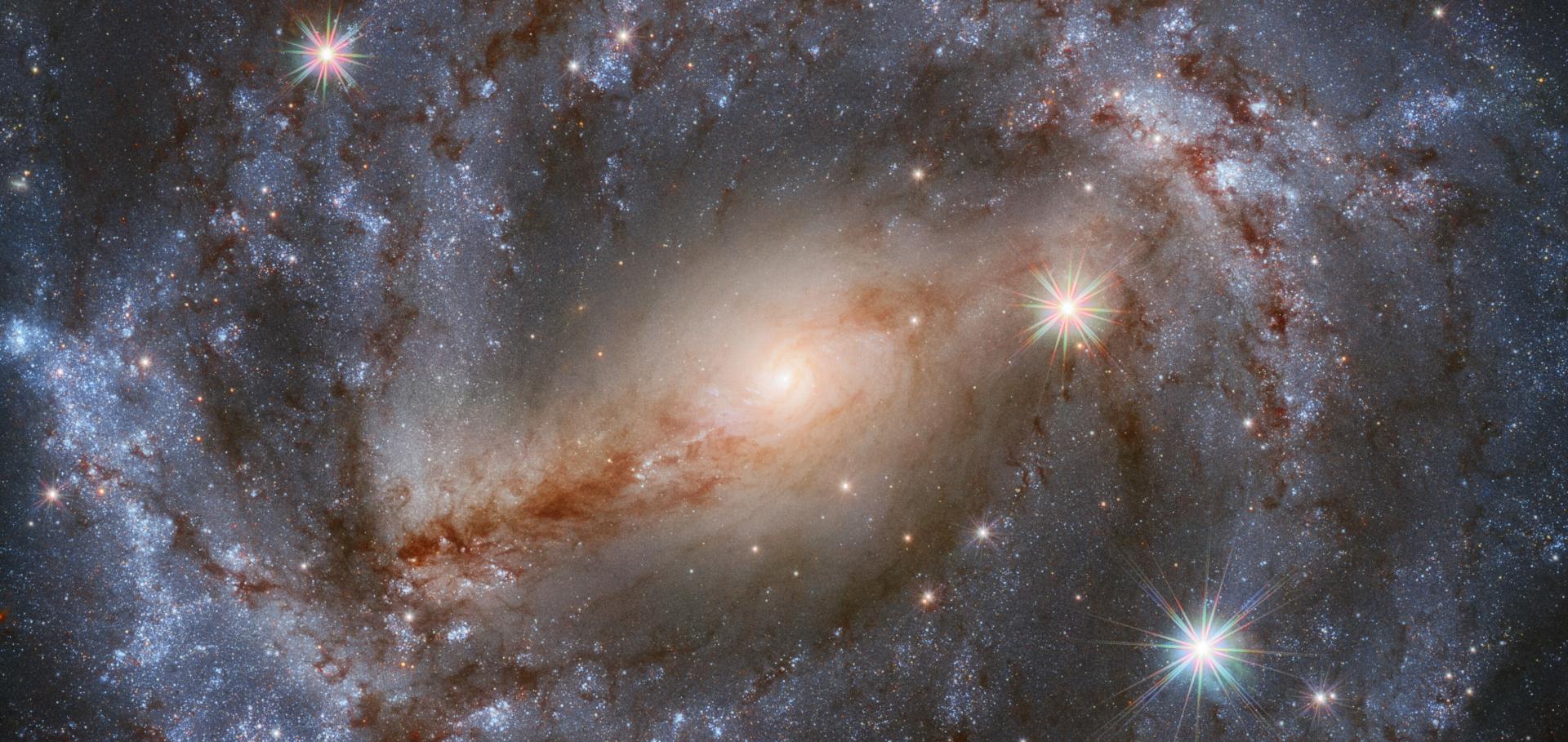
NGC 5643

NGC 5643

Credit: ESA/Hubble & NASA, A. Riess et al.

Dr Ismael Garcia Bernete

Visitor

Research theme

  • Astronomy and astrophysics

Sub department

  • Astrophysics

Research groups

  • Galaxy formation and evolution
ismael.garciabernete@physics.ox.ac.uk
Denys Wilkinson Building, room 765
  • About
  • Publications

The Galaxy Activity, Torus, and Outflow Survey (GATOS): II. Torus and polar dust emission in nearby Seyfert galaxies

Astronomy and Astrophysics EDP Sciences 652 (2021) A99

Authors:

A Alonso-Herrero, S Garcia-Burillo, Sf Honig, I Garcia-Bernete, C Ramos Almeida, O Gonzalez-Martin, E Lopez-Rodriguez, Pg Boorman, Aj Bunker, L Burtscher, F Combes, R Davies, T Diaz-Santos, P Gandhi, B Garcia-Lorenzo, Eks Hicks, Lk Hunt, K Ichikawa, M Imanishi, T Izumi, A Labiano, Na Levenson, C Packham, M Pereira-Santaella, C Ricci, D Rigopoulou, P Roche, Dj Rosario, D Rouan, T Shimizu, M Stalevski, K Wada, D Williamson

Abstract:

We compare high angular resolution mid-infrared (mid-IR) and Atacama Large Millimeter/submillimeter Array (ALMA) far-infrared (far-IR) images of twelve nearby (median 21 Mpc) Seyfert galaxies selected from the Galaxy Activity, Torus, and Outflow Survey (GATOS). The mid-IR unresolved emission contributes more than 60% of the nuclear (diameters of 1.5″ ∼ 150 pc) emission in most galaxies. By contrast, the ALMA 870 μm continuum emission is mostlyresolved with a median diameter of 42 pc and typically along the equatorial direction of the torus (Paper I). The Eddington ratios and nuclear hydrogen column densities (NH) of half the sample are favorable to launching polar and/or equatorial dusty winds, according to numerical simulations. Six of these show mid-IR extended emission approximately in the polar direction as traced by the narrow line region and perpendicular to the ALMA emission. In a few galaxies, the nuclear NH might be too high to uplift large quantities of dusty material along the polar direction. Five galaxies have low NH and/or Eddington ratios and thus polar dusty winds are not likely. We generated new radiative transfer CAT3D-WIND disk+wind models and model images at 8, 12, and 700 μm. We tailored these models to the properties of the GATOS Seyferts in this work. At low wind-to-disk cloud ratios, the far-IR model images have disk- and ring-like morphologies. The characteristic “X”-shape associated with dusty winds is seen better in the far-IR at intermediate-high inclinations for the extended-wind configurations. In most of the explored models, the mid-IR emission mainly comes from the inner part of the disk and cone. Extended biconical and one-sided polar mid-IR emission is seen in extended-wind configurations and high wind-to-disk cloud ratios. When convolved to the typical angular resolution of our observations, the CAT3D-WIND model images reproduce qualitative aspects of the observed mid- and far-IR morphologies. However, low to intermediate values of the wind-to-disk ratio are required to account for the observed large fractions of unresolved mid-IR emission in our sample. This work and Paper I provide observational support for the torus+wind scenario. The wind component is more relevant at high Eddington ratios and/or active galactic nucleus luminosities, and polar dust emission is predicted at nuclear column densities of up to ∼1024 cm−2. The torus or disk component, on the other hand, prevails at low luminosities and/or Eddington ratios.

More details from the publisher
Details from ORA
More details
Details from ArXiV

The Galaxy Activity, Torus, and Outflow Survey (GATOS)

Astronomy & Astrophysics EDP Sciences 652 (2021) a98

Authors:

S García-Burillo, A Alonso-Herrero, C Ramos Almeida, O González-Martín, F Combes, A Usero, S Hönig, M Querejeta, EKS Hicks, LK Hunt, D Rosario, R Davies, PG Boorman, AJ Bunker, L Burtscher, L Colina, T Díaz-Santos, P Gandhi, I García-Bernete, B García-Lorenzo, K Ichikawa, M Imanishi, T Izumi, A Labiano, NA Levenson, E López-Rodríguez, C Packham, M Pereira-Santaella, C Ricci, D Rigopoulou, D Rouan, T Shimizu, M Stalevski, K Wada, D Williamson
More details from the publisher
More details

The dust-gas AGN torus as constrained from X-ray and mid-infrared observations

Astronomy & Astrophysics EDP Sciences 651 (2021) a91

Authors:

D Esparza-Arredondo, O Gonzalez-Martín, D Dultzin, J Masegosa, C Ramos-Almeida, I García-Bernete, J Fritz, N Osorio-Clavijo
More details from the publisher

The far-infrared spectroscopic surveyor (FIRSS)

Experimental Astronomy Springer 51:3 (2021) 699-728

Authors:

D Rigopoulou, C Pearson, B Ellison, M Wiedner, V Ossenkopf Okada, BK Tan, I Garcia-Bernete, M Gerin, G Yassin, E Caux, S Molinari, JR Goicoechea, G Savini, LK Hunt, DC Lis, PF Goldsmith, S Aalto, G Magdis, C Kramer

Abstract:

Abstract We are standing at the crossroads of powerful new facilities emerging in the next decade on the ground and in space like ELT, SKA, JWST, and Athena. Turning the narrative of the star formation potential of galaxies into a quantitative theory will provide answers to many outstanding questions in astrophysics, from the formation of planets to the evolution of galaxies and the origin of heavy elements. To achieve this goal, there is an urgent need for a dedicated space-borne, far-infrared spectroscopic facility capable of delivering, for the first time, large scale, high spectral resolution (velocity resolved) multiwavelength studies of the chemistry and dynamics of the ISM of our own Milky Way and nearby galaxies. The Far Infrared Spectroscopic Surveyor (FIRSS) fulfills these requirements and by exploiting the legacy of recent photometric surveys it seizes the opportunity to shed light on the fundamental building processes of our Universe.
More details from the publisher
Details from ORA
More details

Integral field spectroscopy of luminous infrared main-sequence galaxies at cosmic noon

Monthly Notices of the Royal Astronomical Society Oxford University Press (OUP) 503:4 (2021) 5329-5350

Authors:

L Hogan, D Rigopoulou, GE Magdis, M Pereira-Santaella, I García-Bernete, N Thatte, K Grisdale, J-S Huang

Abstract:

ABSTRACT We present the results of an integral field spectroscopy survey of a sample of dusty (ultra) luminous infrared galaxies (U/LIRGs) at 2 < z < 2.5 using KMOS on the Very Large Telescope. The sample has been drawn from Herschel deep field surveys and benefits from ancillary multiwavelength data. Our goal is to investigate the physical characteristics, kinematics, and the drivers of star formation in the galaxies whose contribution dominates the peak of the cosmic star formation density. Two-thirds of the sample are main-sequence galaxies in contrast to the starburst nature of local U/LIRGs. Our kinematic study, unique in its focus on z ∼ 2 dusty star-forming galaxies, uses the H α emission line to find that ∼40 per cent appear to be isolated discs based on the ratio of rotational velocity to the velocity dispersion, suggesting steady-state mechanisms are sufficient to power the large star formation rates (SFRs). The ratio of obscured to unobscured star formation indicates the sample of galaxies experiences less dust obscuration compared to intermediate and local counterparts, while also hosting cooler dust than local U/LIRGs. In addition to H α we detect [N ii] 6583 Å in our targets and show the gas-phase metallicities do not exhibit the metal deficiency of local U/LIRGs. These results indicate that, despite their extreme IR luminosity, the underlying mechanisms driving the massive SFRs found at cosmic noon are due to scaled up disc galaxies as opposed to mergers.
More details from the publisher
More details
More details

Pagination

  • First page First
  • Previous page Prev
  • Page 1
  • Page 2
  • Page 3
  • Page 4
  • Current page 5
  • Page 6
  • Page 7
  • Page 8
  • Page 9
  • Next page Next
  • Last page Last

Footer Menu

  • Contact us
  • Giving to the Dept of Physics
  • Work with us
  • Media

User account menu

  • Log in

Follow us

FIND US

Clarendon Laboratory,

Parks Road,

Oxford,

OX1 3PU

CONTACT US

Tel: +44(0)1865272200

University of Oxfrod logo Department Of Physics text logo
IOP Juno Champion logo Athena Swan Silver Award logo

© University of Oxford - Department of Physics

Cookies | Privacy policy | Accessibility statement

Built by: Versantus

  • Home
  • Research
  • Study
  • Engage
  • Our people
  • News & Comment
  • Events
  • Our facilities & services
  • About us
  • Giving to Physics
  • Current students
  • Staff intranet