Home
Department Of Physics text logo
  • Research
    • Our research
    • Our research groups
    • Our research in action
    • Research funding support
    • Summer internships for undergraduates
  • Study
    • Undergraduates
    • Postgraduates
  • Engage
    • For young people
    • For teachers
    • For the public
    • For alumni
    • For business
  • Support
Menu
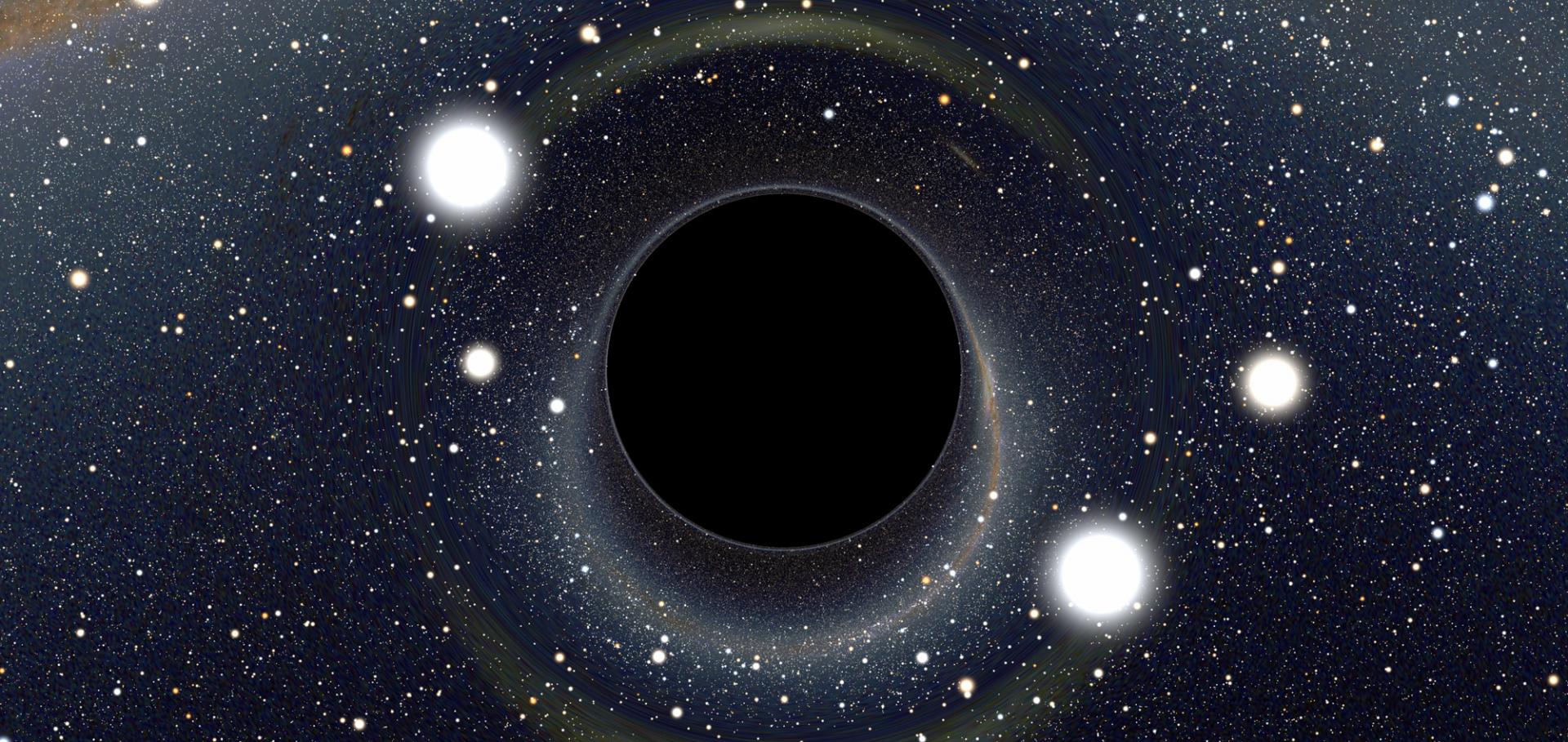
Black Hole

Lensing of space time around a black hole. At Oxford we study black holes observationally and theoretically on all size and time scales - it is some of our core work.

Credit: ALAIN RIAZUELO, IAP/UPMC/CNRS. CLICK HERE TO VIEW MORE IMAGES.

Dr James Matthews

Royal Society University Research Fellow

Research theme

  • Astronomy and astrophysics
  • Particle astrophysics & cosmology

Sub department

  • Astrophysics

Research groups

  • Galaxy formation and evolution
  • MeerKAT
  • Pulsars, transients and relativistic astrophysics
  • Gamma-ray astronomy
james.matthews@physics.ox.ac.uk
Telephone: 01865(2)73299
Denys Wilkinson Building, room 763
Website
  • About
  • Into the Cosmos
  • Publications

The Radio Counterpart to the Fast X-Ray Transient EP240414a

The Astrophysical Journal American Astronomical Society 981:1 (2025) 48

Authors:

Joe S Bright, Francesco Carotenuto, Rob Fender, Carmen Choza, Andrew Mummery, Peter G Jonker, Stephen J Smartt, David R DeBoer, Wael Farah, James Matthews, Alexander W Pollak, Lauren Rhodes, Andrew Siemion

Abstract:

Despite being operational for only a short time, the Einstein Probe mission, with its large field of view and rapid localization capabilities, has already significantly advanced the study of rapid variability in the soft X-ray sky. We report the discovery of luminous and variable radio emission from the Einstein Probe fast X-ray transient EP240414a, the second such source with a radio counterpart. The radio emission at 3 GHz peaks at ∼30 days postexplosion and with a spectral luminosity ∼2 × 1030 erg s−1 Hz−1, similar to what is seen from long gamma-ray bursts, and distinct from other extragalactic transients including supernovae and tidal disruption events, although we cannot completely rule out emission from engine driven stellar explosions, e.g., the fast blue optical transients. An equipartition analysis of our radio data reveals that an outflow with at least a moderate bulk Lorentz factor (Γ ≳ 1.6) with a minimum energy of ∼1048 erg is required to explain our observations. The apparent lack of a reported gamma-ray counterpart to EP240414a could suggest that an off-axis or choked jet could be responsible for the radio emission, although a low-luminosity gamma-ray burst may have gone undetected. Our observations are consistent with the hypothesis that a significant fraction of extragalactic fast X-ray transients are associated with the deaths of massive stars.
More details from the publisher
Details from ORA
More details

SIROCCO: a publicly available Monte Carlo ionization and radiative transfer code for astrophysical outflows

Monthly Notices of the Royal Astronomical Society Oxford University Press 536:1 (2024) 879-904

Authors:

James H Matthews, Knox S Long, Christian Knigge, Stuart A Sim, Edward J Parkinson, Nick Higginbottom, Samuel W Mangham, Nicolas Scepi, Austen Wallis, Henrietta A Hewitt, Amin Mosallanezhad

Abstract:

Outflows are critical components of many astrophysical systems, including accreting compact binaries and active galactic nuclei (AGN). These outflows can significantly affect a system’s evolution and alter its observational appearance by reprocessing the radiation produced by the central engine. sirocco (Simulating Ionization and Radiation in Outflows Created by Compact Objects – or ‘the code formerly known as python’) is a Sobolev-based Monte Carlo ionization and radiative transfer code. It is designed to simulate the spectra produced by any system with an azimuthally symmetric outflow, from spherical stellar winds to rotating, biconical accretion disc winds. Wind models can either be parametrized or imported, e.g. from hydrodynamical simulations. The radiation sources include an optically thick accretion disc and various central sources with flexible spectra and geometries. The code tracks the ‘photon packets’ produced by the sources in any given simulation as they traverse and interact with the wind. The code assumes radiative near-equilibrium, so the thermal and ionization state can be determined iteratively from these interactions. Once the physical properties in the wind have converged, sirocco can be used to generate synthetic spectra at a series of observer sightlines. Here, we describe the physical assumptions, operation, performance and limitations of the code. We validate it against tardis, cmfgen, and cloudy, finding good agreement, and present illustrative synthetic spectra from disc winds in cataclysmic variables, tidal disruption events, AGN, and X-ray binaries. sirocco is publicly available on GitHub, alongside its associated data, documentation and sample input files covering a wide range of astrophysical applications.

More details from the publisher
Details from ORA
More details

Simultaneous optical and X-ray detection of a Thermonuclear Burst in the 2024 outburst of EXO 0748–676

Monthly Notices of the Royal Astronomical Society: Letters Oxford University Press (OUP) (2024) slae103

Authors:

Amy H Knight, Lauren Rhodes, Douglas JK Buisson, James H Matthews, Noel Castro Segura, Adam Ingram, Matthew Middleton, Timothy P Roberts
More details from the publisher
More details

SIROCCO: A Publicly Available Monte Carlo Ionization and Radiative Transfer Code for Astrophysical Outflows

ArXiv 2410.19908 (2024)

Authors:

James H Matthews, Knox S Long, Christian Knigge, Stuart A Sim, Edward J Parkinson, Nick Higginbottom, Samuel W Mangham, Nicolas Scepi, Austen Wallis, Henrietta A Hewitt, Amin Mosallanezhad
Details from ArXiV

A disc wind origin for the optical spectra of dwarf novae in outburst

Monthly Notices of the Royal Astronomical Society Oxford University Press (OUP) 532:1 (2024) 1199-1211

Authors:

Yusuke Tampo, Christian Knigge, Knox S Long, James H Matthews, Noel Castro Segura
More details from the publisher
More details

Pagination

  • First page First
  • Previous page Prev
  • …
  • Page 6
  • Page 7
  • Page 8
  • Page 9
  • Current page 10
  • Page 11
  • Page 12
  • Page 13
  • Page 14
  • …
  • Next page Next
  • Last page Last

Footer Menu

  • Contact us
  • Giving to the Dept of Physics
  • Work with us
  • Media

User account menu

  • Log in

Follow us

FIND US

Clarendon Laboratory,

Parks Road,

Oxford,

OX1 3PU

CONTACT US

Tel: +44(0)1865272200

University of Oxfrod logo Department Of Physics text logo
IOP Juno Champion logo Athena Swan Silver Award logo

© University of Oxford - Department of Physics

Cookies | Privacy policy | Accessibility statement

Built by: Versantus

  • Home
  • Research
  • Study
  • Engage
  • Our people
  • News & Comment
  • Events
  • Our facilities & services
  • About us
  • Giving to Physics
  • Current students
  • Staff intranet