Home
Department Of Physics text logo
  • Research
    • Our research
    • Our research groups
    • Our research in action
    • Research funding support
    • Summer internships for undergraduates
  • Study
    • Undergraduates
    • Postgraduates
  • Engage
    • For young people
    • For teachers
    • For the public
    • For alumni
    • For business
  • Support
Menu
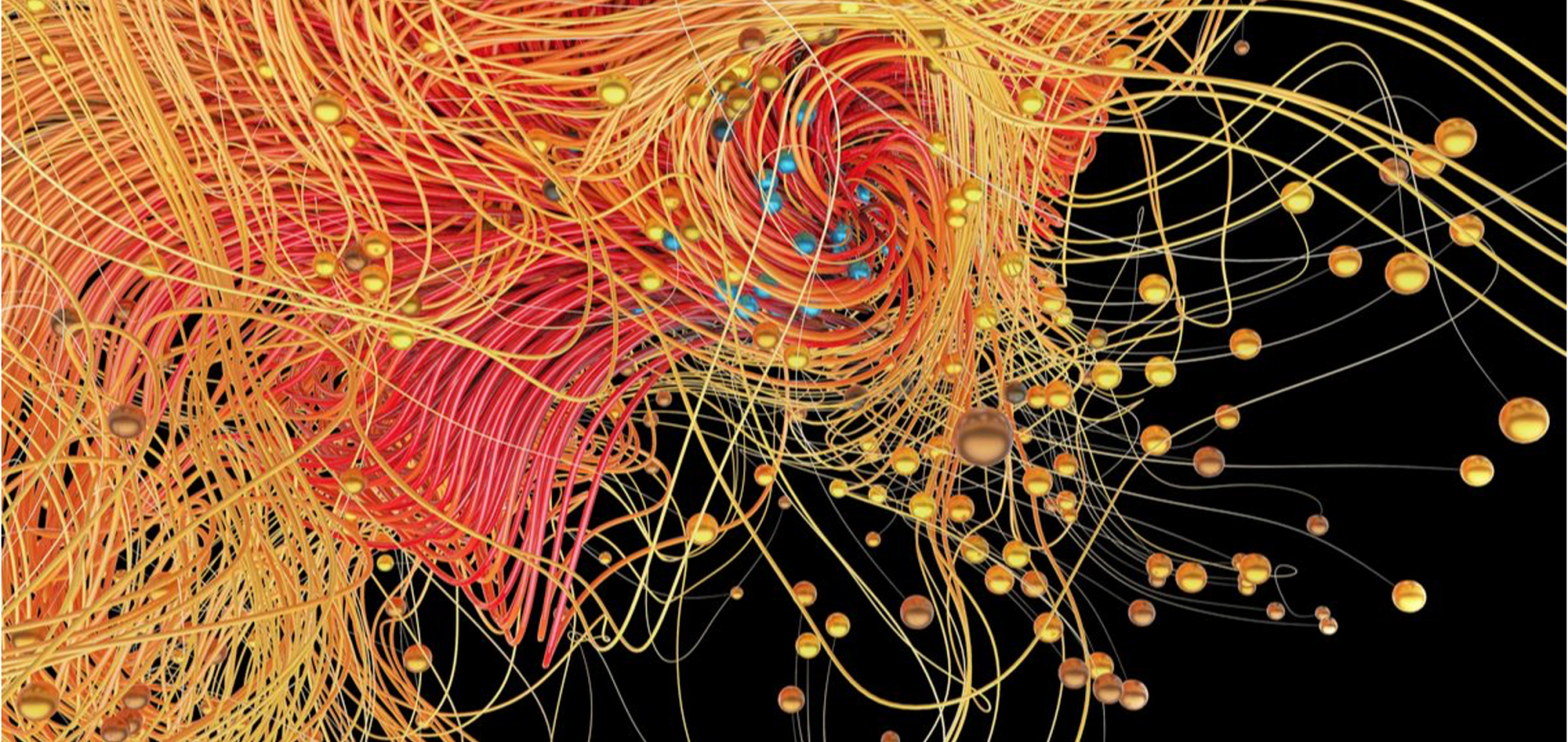
Cosmic strings in hematite

Professor Paolo G. Radaelli OSI

Dr Lee's Professor

Research theme

  • Quantum materials

Sub department

  • Condensed Matter Physics

Research groups

  • Oxide electronics
Paolo.Radaelli@physics.ox.ac.uk
Telephone: 01865 (2)70957
Clarendon Laboratory, room 264,115,101,111 (office)
  • About
  • Research
  • Publications

Prof Radaelli recognised with an MPLS "Excellent Supervisor" Award

Physics Award Winners
Prof Radaelli is one of the 5 Oxford Physicists recognised in the inaugural "Excellence in Research Supervision" award

Read the story at this link

Excellence in Research Supervision

Giant Improper Ferroelectricity in the Ferroaxial Magnet CaMn7O12

Physical Review Letters American Physical Society 108:6 067201

Authors:

RD Johnson, LC Chapon, DD Khalyavin, P Manuel, PG Radaelli, C Martin
More details from the publisher
More details
More details
Details from ArXiV

Observation of magnetic vortex pairs at room temperature in a planar α-Fe2O3/Co heterostructure

Nature Materials Nature Publishing Group

Authors:

FP Chmiel, NW Price, RD Johnson, AD Lamirand, J Schad, GVD Laan, DT Harris, J Irwin, MS Rzchowski, C-B Eom, PG Radaelli

Abstract:

Vortices are among the simplest topological structures, and occur whenever a flow field `whirls' around a one-dimensional core. They are ubiquitous to many branches of physics, from fluid dynamics to superconductivity and superfluidity, and are even predicted by some unified theories of particle interactions, where they might explain some of the largest-scale structures seen in today's Universe. In the crystalline state, vortex formation is rare, since it is generally hampered by long-range interactions: in ferroic materials (ferromagnetic and ferroelectric), vortices are only observed when the effects of the dipole-dipole interaction is modified by confinement at the nanoscale, or when the parameter associated with the vorticity does not couple directly with strain. Here, we present the discovery of a novel form of vortices in antiferromagnetic (AFM) hematite ($\alpha$-Fe$_2$O$_3$) epitaxial films, in which the primary whirling parameter is the staggered magnetisation. Remarkably, ferromagnetic (FM) topological objects with the same vorticity and winding number of the $\alpha$-Fe$_2$O$_3$ vortices are imprinted onto an ultra-thin Co ferromagnetic over-layer by interfacial exchange. Our data suggest that the ferromagnetic vortices may be merons (half-skyrmions, carrying an out-of-plane core magnetisation), and indicate that the vortex/meron pairs can be manipulated by the application of an in-plane magnetic field, H$_{\parallel}$, giving rise to large-scale vortex-antivortex annihilation.
More details from the publisher
Details from ORA
More details
More details
Details from ArXiV

Pagination

  • First page First
  • Previous page Prev
  • …
  • Page 77
  • Page 78
  • Page 79
  • Page 80
  • Page 81
  • Page 82
  • Page 83
  • Page 84
  • Current page 85

Footer Menu

  • Contact us
  • Giving to the Dept of Physics
  • Work with us
  • Media

User account menu

  • Log in

Follow us

FIND US

Clarendon Laboratory,

Parks Road,

Oxford,

OX1 3PU

CONTACT US

Tel: +44(0)1865272200

University of Oxfrod logo Department Of Physics text logo
IOP Juno Champion logo Athena Swan Silver Award logo

© University of Oxford - Department of Physics

Cookies | Privacy policy | Accessibility statement

Built by: Versantus

  • Home
  • Research
  • Study
  • Engage
  • Our people
  • News & Comment
  • Events
  • Our facilities & services
  • About us
  • Giving to Physics
  • Current students
  • Staff intranet