Home
Department Of Physics text logo
  • Research
    • Our research
    • Our research groups
    • Our research in action
    • Research funding support
    • Summer internships for undergraduates
  • Study
    • Undergraduates
    • Postgraduates
  • Engage
    • For young people
    • For teachers
    • For the public
    • For alumni
    • For business
  • Support
Menu
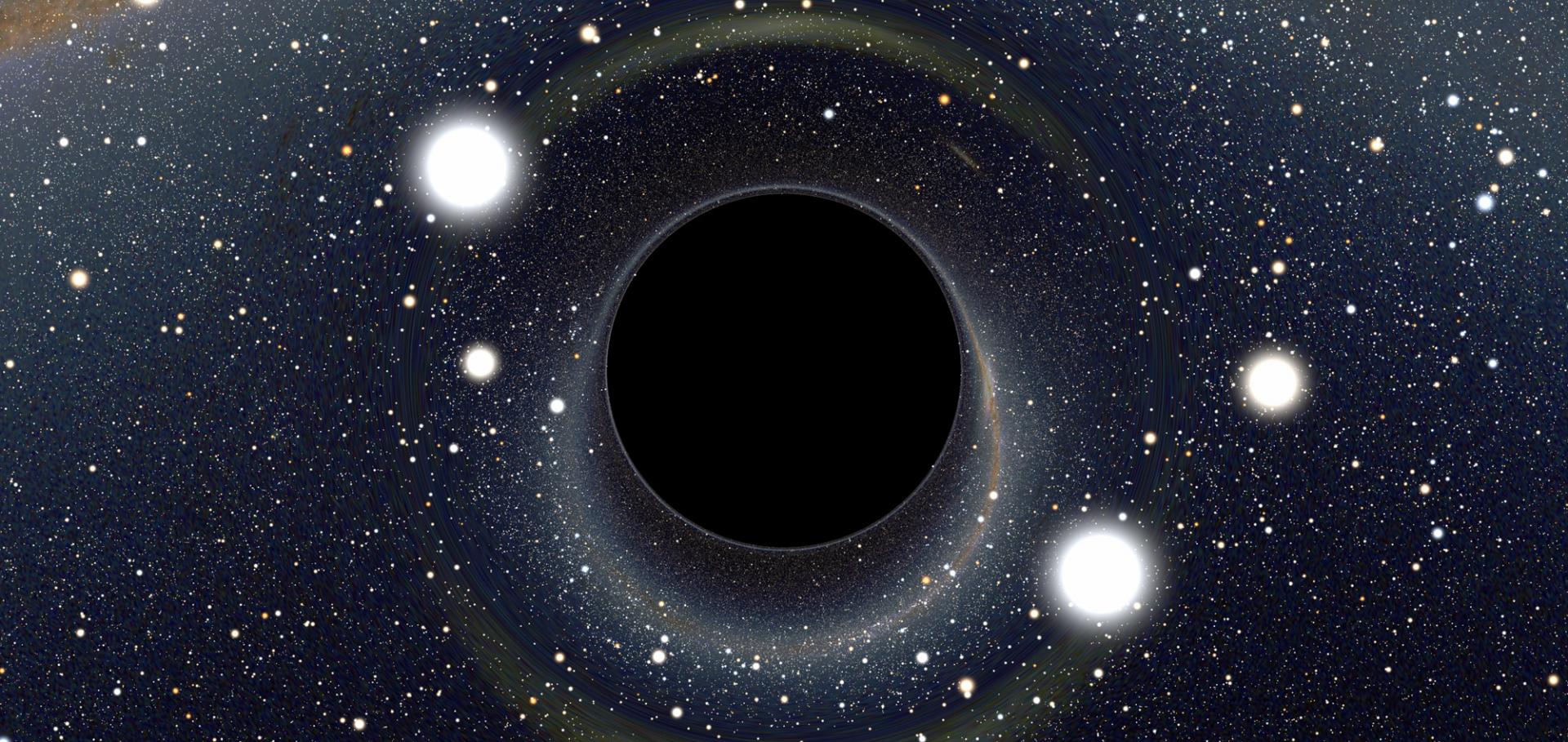
Black Hole

Lensing of space time around a black hole. At Oxford we study black holes observationally and theoretically on all size and time scales - it is some of our core work.

Credit: ALAIN RIAZUELO, IAP/UPMC/CNRS. CLICK HERE TO VIEW MORE IMAGES.

Joseph Silk

Emeritus Savilian Professor

Sub department

  • Astrophysics

Research groups

  • Beecroft Institute for Particle Astrophysics and Cosmology
joseph.silk@physics.ox.ac.uk
Telephone: 01865 (2)73300
Denys Wilkinson Building, room 532G
  • About
  • Publications

THE HUBBLE SPACE TELESCOPE WIDE FIELD CAMERA 3 EARLY RELEASE SCIENCE DATA: PANCHROMATIC FAINT OBJECT COUNTS FOR 0.2-2 μm WAVELENGTH

ASTROPHYSICAL JOURNAL SUPPLEMENT SERIES 193:2 (2011) ARTN 27

Authors:

Rogier A Windhorst, Seth H Cohen, Nimish P Hathi, Patrick J McCarthy, Russell E Jr Ryan, Haojing Yan, Ivan K Baldry, Simon P Driver, Jay A Frogel, David T Hill, Lee S Kelvin, Anton M Koekemoer, Matt Mechtley, Robert W O'Connell, Aaron SG Robotham, Michael J Rutkowski, Mark Seibert, Amber N Straughn, Richard J Tuffs, Bruce Balick, Howard E Bond, Howard Bushouse, Daniela Calzetti, Mark Crockett, Michael J Disney, Michael A Dopita, Donald NB Hall, Jon A Holtzman, Sugata Kaviraj, Randy A Kimble, John W MacKenty, Max Mutchler, Francesco Paresce, Abihit Saha, Joseph I Silk, John T Trauger, Alistair R Walker, Bradley C Whitmore, Erick T Young
More details from the publisher

The Sunyaev-Zel'dovich effect due to hyperstarburst galaxy winds

MONTHLY NOTICES OF THE ROYAL ASTRONOMICAL SOCIETY 412:2 (2011) 905-910

Authors:

Barnaby Rowe, Joseph Silk
More details from the publisher

The specific star formation rate of high redshift galaxies: the case for two modes of star formation

MONTHLY NOTICES OF THE ROYAL ASTRONOMICAL SOCIETY 410:1 (2011) L42-L46

Authors:

Sadegh Khochfar, Joseph Silk
More details from the publisher

USING Hα MORPHOLOGY AND SURFACE BRIGHTNESS FLUCTUATIONS TO AGE-DATE STAR CLUSTERS IN M83

ASTROPHYSICAL JOURNAL 729:2 (2011) ARTN 78

Authors:

Bradley C Whitmore, Rupali Chandar, Hwihyun Kim, Catherine Kaleida, Max Mutchler, Matt Stankiewicz, Daniela Calzetti, Abhijit Saha, Robert O'Connell, Bruce Balick, Howard E Bond, Marcella Carollo, Michael J Disney, Michael A Dopita, Jay A Frogel, Donald NB Hall, Jon A Holtzman, Randy A Kimble, Patrick J McCarthy, Francesco Paresce, Joseph I Silk, John T Trauger, Alistair R Walker, Rogier A Windhorst, Erick T Young
More details from the publisher
Details from ArXiV

Light WIMPs in the Sun: Constraints from helioseismology

Physical Review D Particles Fields Gravitation and Cosmology 82:10 (2010)

Authors:

DT Cumberbatch, JA Guzik, J Silk, LS Watson, SM West

Abstract:

We calculate solar models including dark matter (DM) weakly interacting massive particles (WIMPs) of mass 5-50 GeV and test these models against helioseismic constraints on sound speed, convection-zone depth, convection-zone helium abundance, and small separations of low-degree p-modes. Our main conclusion is that both direct detection experiments and particle accelerators may be complemented by using the Sun as a probe for WIMP DM particles in the 5-50 GeV mass range. The DM most sensitive to this probe has suppressed annihilations and a large spin-dependent elastic scattering cross section. For the WIMP cross section parameters explored here, the lightest WIMP masses <10 GeV are ruled out by constraints on core sound speed and low-degree frequency spacings. For WIMP masses 30-50 GeV, the changes to the solar structure are confined to the inner 4% of the solar radius and so do not significantly affect the solar p-modes. Future helioseismology observations, most notably involving g-modes, and future solar neutrino experiments may be able to constrain the allowable DM parameter space in a mass range that is of current interest for direct detection. © 2010 The American Physical Society.
More details from the publisher
More details

Pagination

  • First page First
  • Previous page Prev
  • …
  • Page 21
  • Page 22
  • Page 23
  • Page 24
  • Current page 25
  • Page 26
  • Page 27
  • Page 28
  • Page 29
  • …
  • Next page Next
  • Last page Last

Footer Menu

  • Contact us
  • Giving to the Dept of Physics
  • Work with us
  • Media

User account menu

  • Log in

Follow us

FIND US

Clarendon Laboratory,

Parks Road,

Oxford,

OX1 3PU

CONTACT US

Tel: +44(0)1865272200

University of Oxfrod logo Department Of Physics text logo
IOP Juno Champion logo Athena Swan Silver Award logo

© University of Oxford - Department of Physics

Cookies | Privacy policy | Accessibility statement

Built by: Versantus

  • Home
  • Research
  • Study
  • Engage
  • Our people
  • News & Comment
  • Events
  • Our facilities & services
  • About us
  • Giving to Physics
  • Current students
  • Staff intranet