Home
Department Of Physics text logo
  • Research
    • Our research
    • Our research groups
    • Our research in action
    • Research funding support
    • Summer internships for undergraduates
  • Study
    • Undergraduates
    • Postgraduates
  • Engage
    • For young people
    • For teachers
    • For the public
    • For alumni
    • For business
  • Support
Menu
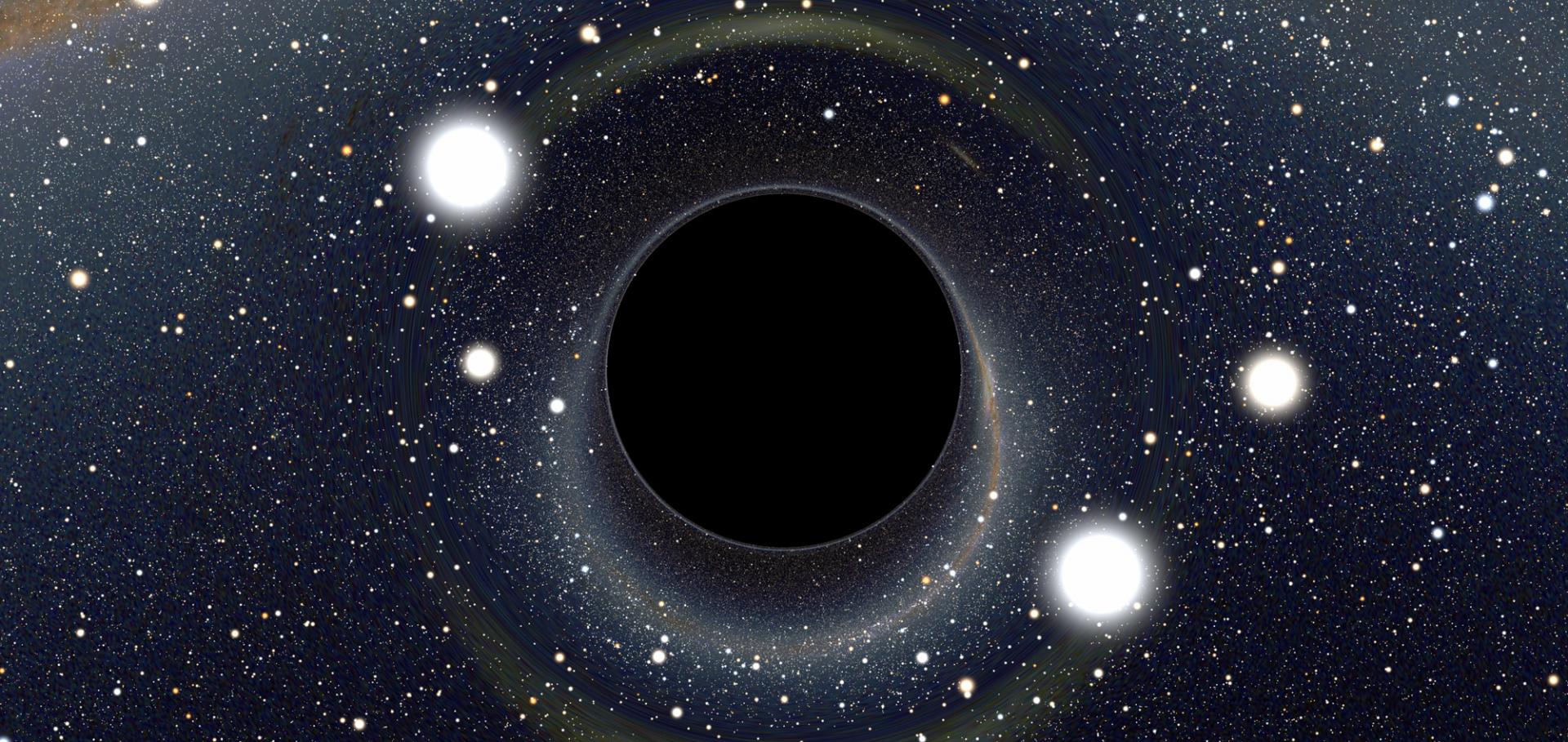
Black Hole

Lensing of space time around a black hole. At Oxford we study black holes observationally and theoretically on all size and time scales - it is some of our core work.

Credit: ALAIN RIAZUELO, IAP/UPMC/CNRS. CLICK HERE TO VIEW MORE IMAGES.

Joseph Silk

Emeritus Savilian Professor

Sub department

  • Astrophysics

Research groups

  • Beecroft Institute for Particle Astrophysics and Cosmology
joseph.silk@physics.ox.ac.uk
Telephone: 01865 (2)73300
Denys Wilkinson Building, room 532G
  • About
  • Publications

A 43-GHz VLA survey in the ELAIS N2 area

Monthly Notices of the Royal Astronomical Society Oxford University Press (OUP) 408:2 (2010) 657-668

Authors:

JV Wall, R Perley, RA Laing, S Stotyn, Angela C Taylor, J Silk
More details from the publisher
More details
Details from ArXiV

The chemical signatures of the first star clusters in the universe

Astrophysical Journal 721:1 (2010) 582-596

Authors:

J Bland-Hawthorn, T Karlsson, S Sharma, M Krumholz, J Silk

Abstract:

The chemical abundance patterns of the oldest stars in the Galaxy are expected to contain residual signatures of the first stars in the early universe. Numerous studies attempt to explain the intrinsic abundance scatter observed in some metal-poor populations in terms of chemical inhomogeneities dispersed throughout the early Galactic medium due to discrete enrichment events. Just how the complex data and models are to be interpreted with respect to "progenitor yields" remains an open question. Here we showthat stochastic chemical evolutionmodels to date have overlooked a crucial fact. Essentially, all stars today are born in highly homogeneous star clusters and it is likely that this was also true at early times. When this ingredient is included, the overall scatter in the abundance plane [Fe/H] versus [X/Fe] (C-space), where X is a nucleosynthetic element, can be much less than derived from earlier models. Moreover, for moderately flat clustermass functions (γ ≲ 2), and/or formass functions with a highmass cutoff (M max ≳ 105M⊙), stars exhibit a high degree of clumping in C-space that can be identified even in relatively small data samples. Since stellar abundances can be modified by mass transfer in close binaries, clustered signatures are essential for deriving the yields of the first supernovae.We present a statistical test to determine whether a given set of observations exhibit such behavior. Our initial work focuses on two dimensions in C-space, but we show that the clustering signal can be greatly enhanced by additional abundance axes. The proposed experiment will be challenging on existing 8-10 m telescopes, but relatively straightforward for a multi-object echelle spectrograph mounted on a 25-40 m telescope. © 2010. The American Astronomical Society. All rights reserved.
More details from the publisher
More details

The hierarchical build-up of the Tully-Fisher relation

ArXiv 1006.0229 (2010)

Authors:

Chiara Tonini, Claudia Maraston, Bodo Ziegler, Asmus Böhm, Daniel Thomas, Julien Devriendt, Joseph Silk

Abstract:

We use the semi-analytic model GalICS to predict the Tully-Fisher relation in the B, I and for the first time, in the K band, and its evolution with redshift, up to z~1. We refined the determination of the disk galaxies rotation velocity, with a dynamical recipe for the rotation curve, rather than a simple conversion from the total mass to maximum velocity. The new recipe takes into account the disk shape factor, and the angular momentum transfer occurring during secular evolution leading to the formation of bulges. This produces model rotation velocities that are lower by ~20-25% for the majority of the spirals. We implemented stellar population models with a complete treatment of the TP-AGB, which leads to a revision of the mass-to-light ratio in the near-IR. I/K band luminosities increase by ~0.3/0.5 mags at redshift z=0 and by ~0.5/1 mags at z=3. With these two new recipes in place, the comparison between the predicted Tully-Fisher relation with a series of datasets in the optical and near-IR, at redshifts between 0 and 1, is used as a diagnostics of the assembly and evolution of spiral galaxies in the model. At 0.4
Details from ArXiV
More details from the publisher
More details

Planck pre-launch status: the Planck-LFI programme

ArXiv 1001.2657 (2010)

Authors:

N Mandolesi, M Bersanelli, RC Butler, E Artal, C Baccigalupi, A Balbi, AJ Banday, RB Barreiro, M Bartelmann, K Bennett, P Bhandari, A Bonaldi, J Borrill, M Bremer, C Burigana, RC Bowman, P Cabella, C Cantalupo, B Cappellini, T Courvoisier, G Crone, F Cuttaia, L Danese, O D'Arcangelo, RD Davies, RJ Davis, L De Angelis, G de Gasperis, A De Rosa, G De Troia, G de Zotti, J Dick, C Dickinson, JM Diego, S Donzelli, U Dörl, X Dupac, TA Enßlin, HK Eriksen, MC Falvella, F Finelli, M Frailis, E Franceschi, T Gaier, S Galeotta, F Gasparo, G Giardino, F Gomez, J Gonzalez-Nuevo, KM Górski, A Gregorio, A Gruppuso, F Hansen, R Hell, D Herranz, JM Herreros, S Hildebrandt, W Hovest, R Hoyland, K Huffenberger, M Janssen, T Jaffe, E Keihänen, R Keskitalo, T Kisner, H Kurki-Suonio, A Lähteenmäki, CR Lawrence, SM Leach, JP Leahy, R Leonardi, S Levin, PB Lilje, M López-Caniego, SR Lowe, PM Lubin, D Maino, M Malaspina, M Maris, J Marti-Canales, E Martinez-Gonzalez, M Massardi, S Matarrese, F Matthai, P Meinhold, A Melchiorri, L Mendes, A Mennella, G Morgante, G Morigi, N Morisset, A Moss, A Nash, P Natoli, R Nesti, C Paine, B Partridge, F Pasian, T Passvogel, D Pearson, L Pérez-Cuevas, F Perrotta, G Polenta, LA Popa, T Poutanen, G Prezeau, M Prina, JP Rachen, R Rebolo, M Reinecke, S Ricciardi, T Riller, G Rocha, N Roddis, R Rohlfs, JA Rubiño-Martin, E Salerno, M Sandri, D Scott, M Seiffert, J Silk, A Simonetto, GF Smoot, C Sozzi, J Sternberg, F Stivoli, L Stringhetti, J Tauber, L Terenzi, M Tomasi, J Tuovinen, M Türler, L Valenziano, J Varis, P Vielva, F Villa, N Vittorio, L Wade, M White, S White, A Wilkinson, A Zacchei, A Zonca

Abstract:

This paper provides an overview of the Low Frequency Instrument (LFI) programme within the ESA Planck mission. The LFI instrument has been developed to produce high precision maps of the microwave sky at frequencies in the range 27-77 GHz, below the peak of the cosmic microwave background (CMB) radiation spectrum. The scientific goals are described, ranging from fundamental cosmology to Galactic and extragalactic astrophysics. The instrument design and development are outlined, together with the model philosophy and testing strategy. The instrument is presented in the context of the Planck mission. The LFI approach to ground and inflight calibration is described. We also describe the LFI ground segment. We present the results of a number of tests demonstrating the capability of the LFI data processing centre (DPC) to properly reduce and analyse LFI flight data, from telemetry information to calibrated and cleaned time ordered data, sky maps at each frequency (in temperature and polarization), component emission maps (CMB and diffuse foregrounds), catalogs for various classes of sources (the Early Release Compact Source Catalogue and the Final Compact Source Catalogue). The organization of the LFI consortium is briefly presented as well as the role of the core team in data analysis and scientific exploitation. All tests carried out on the LFI flight model demonstrate the excellent performance of the instrument and its various subunits. The data analysis pipeline has been tested and its main steps verified. In the first three months after launch, the commissioning, calibration, performance, and verification phases will be completed, after which Planck will begin its operational life, in which LFI will have an integral part.
Details from ArXiV
More details from the publisher
More details

Identifying the progenitor set of present-day early-type galaxies: a view from the standard model

ArXiv 1001.2212 (2010)

Authors:

Sugata Kaviraj, Julien Devriendt, Ignacio Ferreras, Sukyoung Yi, Joseph Silk

Abstract:

We present a comprehensive theoretical study, using a semi-analytical model within the standard LCDM framework, of the photometric properties of the progenitors of present-day early-type galaxies in the redshift range 00.7) spirals have 75-95% chance of being an early-type progenitor, while the corresponding probability for large blue spirals (M_B<-21.5, B-V<0.7) is 50-75%. The prescriptions developed here can be used to address, from the perspective of the standard model, the issue of `progenitor bias', whereby the exclusion of late-type progenitors in observational studies can lead to inaccurate conclusions regarding the evolution of the early-type population over cosmic time. (abridged)
Details from ArXiV
More details from the publisher
More details

Pagination

  • First page First
  • Previous page Prev
  • …
  • Page 22
  • Page 23
  • Page 24
  • Page 25
  • Current page 26
  • Page 27
  • Page 28
  • Page 29
  • Page 30
  • …
  • Next page Next
  • Last page Last

Footer Menu

  • Contact us
  • Giving to the Dept of Physics
  • Work with us
  • Media

User account menu

  • Log in

Follow us

FIND US

Clarendon Laboratory,

Parks Road,

Oxford,

OX1 3PU

CONTACT US

Tel: +44(0)1865272200

University of Oxfrod logo Department Of Physics text logo
IOP Juno Champion logo Athena Swan Silver Award logo

© University of Oxford - Department of Physics

Cookies | Privacy policy | Accessibility statement

Built by: Versantus

  • Home
  • Research
  • Study
  • Engage
  • Our people
  • News & Comment
  • Events
  • Our facilities & services
  • About us
  • Giving to Physics
  • Current students
  • Staff intranet