Abundant hydrocarbons in a buried galactic nucleus with signs of carbonaceous grain and polycyclic aromatic hydrocarbon processing
Nature Astronomy Springer Nature (2026)
Abstract:
Hydrocarbons play a key role in shaping the chemistry of the interstellar medium, but their enrichment and relation with carbonaceous grains and polycyclic aromatic hydrocarbons still lack clear observational constraints. Here we report on JWST NIRSpec + MIRI/MRS infrared observations (~3–28 μm) of the local ultra-luminous infrared galaxy (ULIRG) IRAS 07251−0248, which revealed the extragalactic detection of small gas-phase hydrocarbons, such as benzene (C6H6), triacetylene (C6H2), diacetylene (C4H2), acetylene (C2H2), methane (CH4) and methyl radical (CH3), as well as deep amorphous C–H absorptions in the solid phase. The unexpectedly high abundance of these molecules indicates an extremely rich hydrocarbon chemistry not explained by high-temperature gas-phase chemistry, ice desorption or oxygen depletion. Instead, the most plausible explanation is the erosion and fragmentation of carbonaceous grains and polycyclic aromatic hydrocarbons. This scenario is supported by the correlation between the abundance of one of their main fragmentation products, C2H2, and the cosmic-ray ionization rate for a sample of local ULIRGs. These hydrocarbons are outflowing at ~160 km s−1, which may represent a potential formation pathway for hydrogenated amorphous grains. Our results indicate that IRAS 07251−0248 might not be unique but represents an extreme example of the commonly rich hydrocarbon chemistry prevalent in deeply obscured galactic nuclei.Extending the frontier of spatially resolved supermassive black hole mass measurements to at 1 ≲ z ≲ 2: simulations with ELT/MICADO high-resolution mass models and HARMONI integral-field stellar kinematics
Monthly Notices of the Royal Astronomical Society Oxford University Press 546:4 (2026) stag238
Abstract:
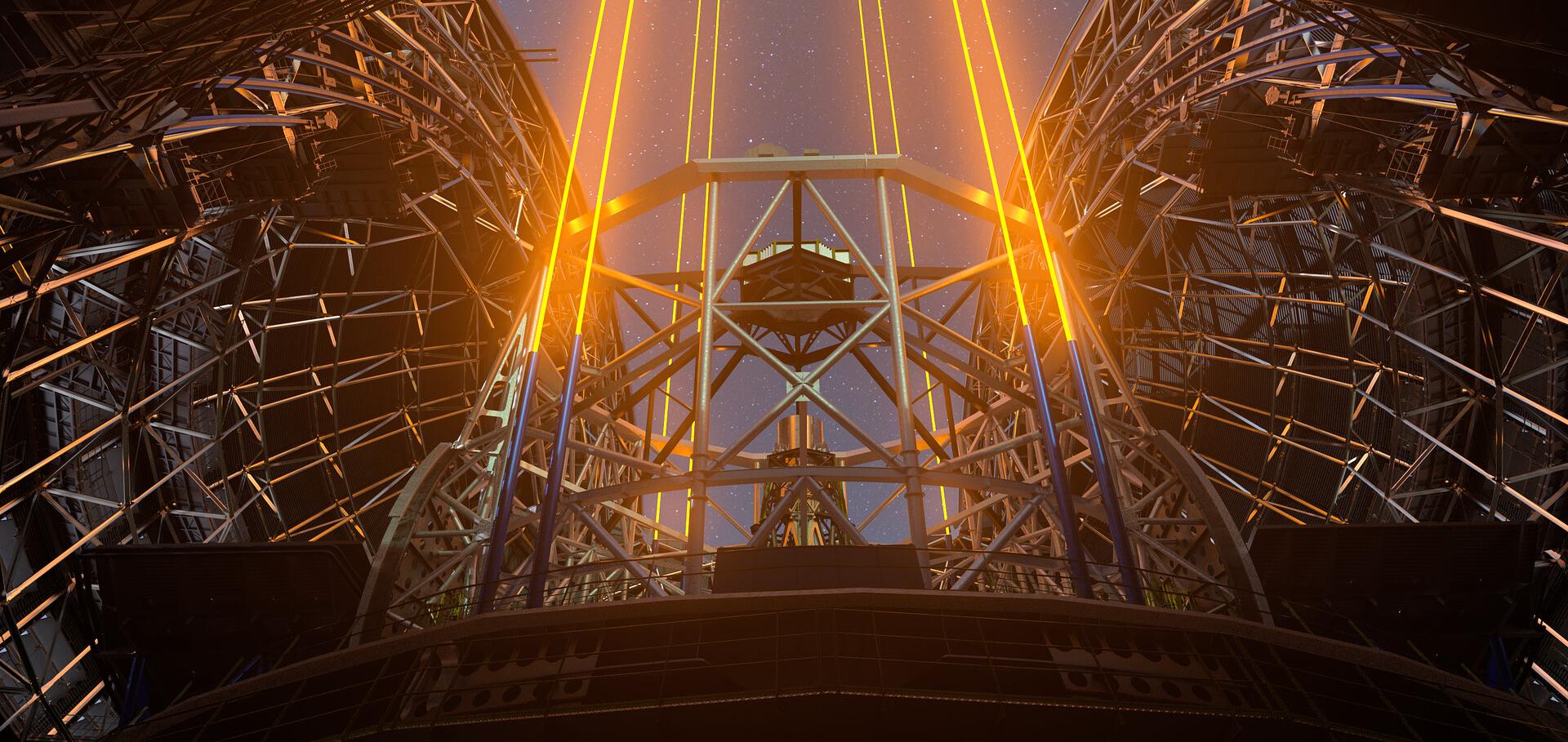
Current spatially resolved kinematic measurements of supermassive black hole (SMBH) masses are largely confined to the local Universe (distances Mpc). We investigate the potential of the Extremely Large Telescope’s (ELT) first-light instruments, MICADO and HARMONI, to extend these dynamical measurements to galaxies at redshift . We select a sample of five bright, massive, quiescent galaxies at these redshifts, adopting their Sérsic profiles, from HST photometry, as their intrinsic surface brightness distributions. Based on these intrinsic models, we generate mock MICADO images using SimCADO and mock HARMONI integral-field spectroscopic data cubes using hsim. The HARMONI simulations utilize input stellar kinematics derived from Jeans Anisotropic Models (JAM). We then process these mock observations: the simulated MICADO images are fitted with Multi-Gaussian Expansion (MGE) to derive stellar mass models, and stellar kinematics are extracted from mock HARMONI cubes with pPXF. Finally, these derived stellar mass models and kinematics are used to constrain JAM dynamical models within a Bayesian framework. Our analysis demonstrates that SMBH masses can be recovered with an accuracy of 10 per cent. We find that MICADO can provide detailed stellar mass models with 1 hour of on-source exposure. HARMONI requires longer minimum integrations for reliable stellar kinematic measurements of SMBHs. The required on-source time scales with apparent brightness, ranging from 5–7.5 hours for galaxies at (F814W, 20–20.5 mag) to 5 hours for galaxies at (F160W, 20.8 mag). These findings highlight the ELT’s capability to push the frontier of SMBH mass measurements to , enabling crucial tests of SMBH-galaxy co-evolution at the top end of the galaxies mass function.Abundant hydrocarbons in a buried galactic nucleus with signs of carbonaceous grain and polycyclic aromatic hydrocarbon processing
(2026)
TDCOSMO. XXIV. First spatially resolved kinematics of the lens galaxy obtained using JWST-NIRSpec to improve time-delay cosmography
Astronomy & Astrophysics EDP Sciences (2026)
Abstract:
Spatially resolved stellar kinematics has become a key ingredient in time-delay cosmography to break the mass-sheet degeneracy in the mass profile and in turn provide a precise constraint on the Hubble constant and other cosmological parameters. In this paper, we present the first measurements of 2D resolved stellar kinematics for the lens galaxy in the quadruply lensed quasar system łensname using integral field spectroscopy from JWST's Near-Infrared Spectrograph (NIRSpec), marking the first such measurement conducted with JWST. In extracting robust kinematic measurements from this first-of-its-kind dataset, we have made methodological improvements both in the data reduction and kinematic extraction. In our kinematic extraction procedure, we performed joint modeling of the lens galaxy, the quasar, and its host galaxy's contributions in the spectra to deblend the lens galaxy component and robustly constrain its stellar kinematics. Our improved methodological frameworks are released as software pipelines for future use: squirrel , for extracting stellar kinematics, and , for JWST-NIRSpec data reduction. We incorporated additional artifact cleaning beyond the standard JWST pipeline. We compared our measured stellar kinematics from the JWST NIRSpec with previously obtained ground-based measurements from the Keck Cosmic Web Imager integral field unit and find that the two datasets are statistically consistent at a ∼1.1σ confidence level. Our measured kinematics will be used in a future study to improve the precision of the Hubble constant measurement. RegalJumperWhen relics were made: vigorous stellar rotation and low dark matter content in the massive ultra-compact galaxy GS-9209 at z=4.66
Monthly Notices of the Royal Astronomical Society Oxford University Press (OUP) (2026) stag210