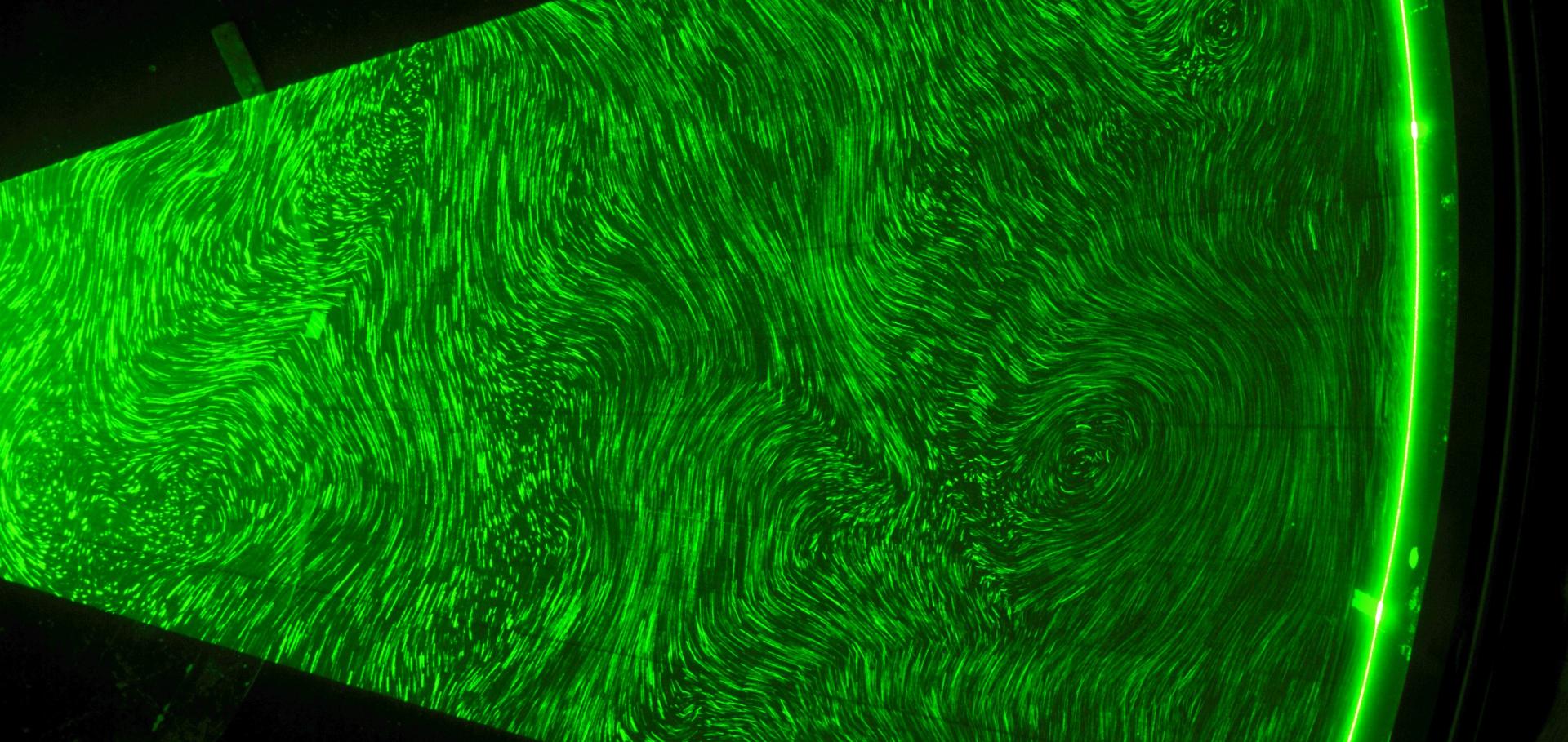
Flow transitions resembling bifurcations of the logistic map in simulations of the baroclinic rotating annulus (vol 237, pg 2251, 2008)

PHYSICA D-NONLINEAR PHENOMENA 240:23 (2011) 1903-1904

Authors:

RMB Young, PL Read

THE MARTIAN ATMOSPHERIC BOUNDARY LAYER

REVIEWS OF GEOPHYSICS 49 (2011) ARTN RG3005

Authors:

A Petrosyan, B Galperin, SE Larsen, SR Lewis, A Maeaettaenen, PL Read, N Renno, LPHT Rogberg, H Savijarvi, T Siili, A Spiga, A Toigo, L Vazquez

Thermal Structure and Dynamics of Saturn's Northern Springtime Disturbance

Science (2011) 1-5

Authors:

LN Fletcher, BE Hesman, PGJ Irwin, KH Baines, TW Momary, A Sanchez-Lavega, F Michael Flasar, PL Read, GS Orton, A Simon-Miller, R Hueso, GL Bjoraker, A Mamoutkine, T Del Rio-Gaztelurrutia, JM Gomez, B Buratti, RN Clark, PD Nicholson, C Sotin

Zonal winds at high latitudes on Venus: An improved application of cyclostrophic balance to Venus Express observations

Icarus (2011)

Authors:

JM Mendonça, PL Read, CF Wilson, SR Lewis

Disk dynamics and planet migration

EAS Publications Series 41 (2010) 209-218

Abstract:

We review models of protoplanetary disks. In the earlier stages of evolution, disks are subject to gravitational instabilities that redistribute mass and angular momentum on short timescales. Later on, when the mass of the disk is below ten percent or so of that of the central star, accretion occurs through the magnetorotational instability. The parts of the disks that are not ionized enough to couple to the magnetic field may not accrete or accrete inefficiently. We also review theories of planet migration. Tidal interaction between a disk and an embedded planet leads to angular momentum exchange between the planetary orbital motion and the disk rotation. This results in low mass planets migrating with respect to the gas in the disk, while massive planets open up a gap in the vicinity of their orbit and migrate in as the disk is accreted. © EAS, EDP Sciences, 2010.