

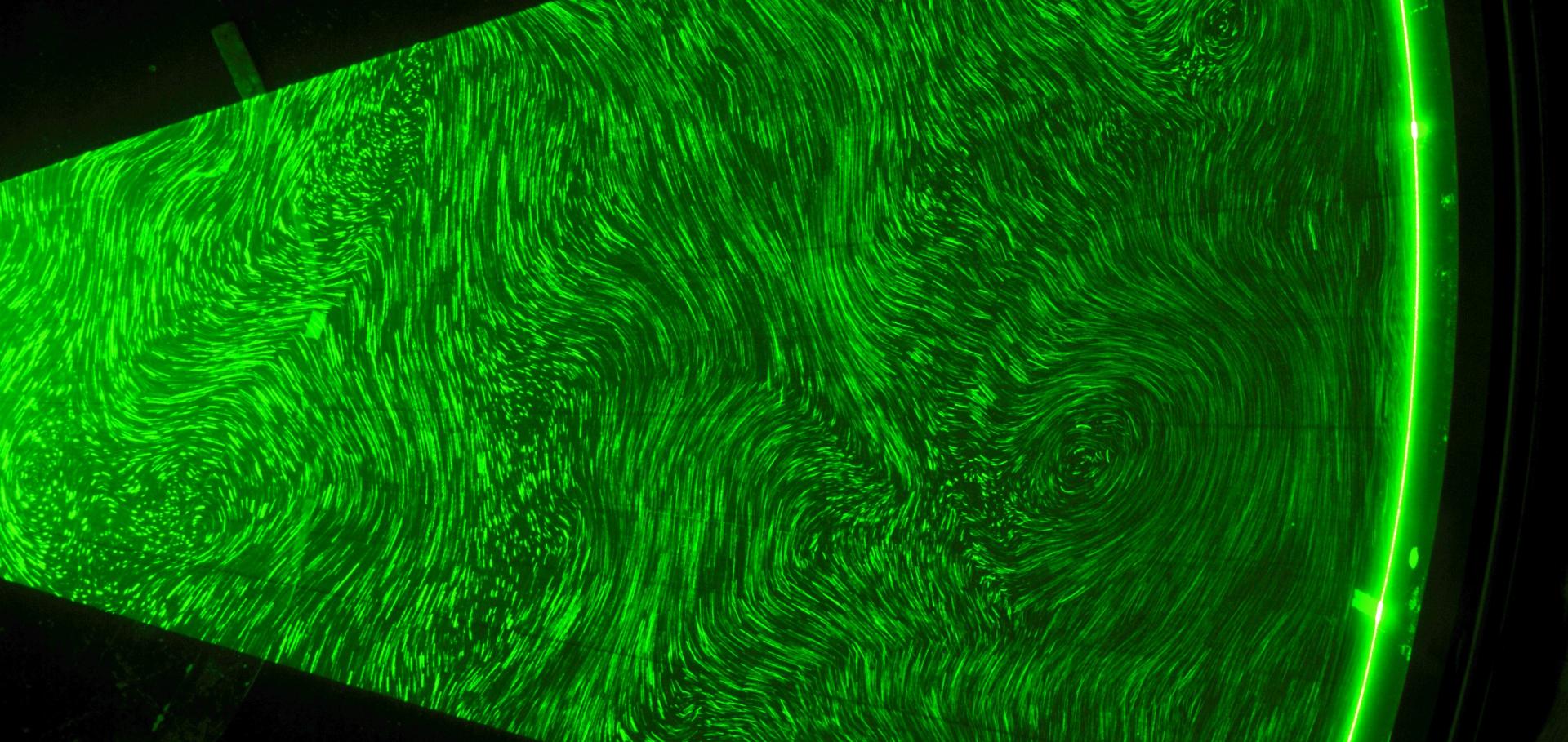
Storm-clouds brooding on towering heights
Nature Springer Nature 475:7354 (2011) 44-45
Thermal structure and dynamics of Saturn's northern springtime disturbance.
Science 332:6036 (2011) 1413-1417
Abstract:
Saturn's slow seasonal evolution was disrupted in 2010-2011 by the eruption of a bright storm in its northern spring hemisphere. Thermal infrared spectroscopy showed that within a month, the resulting planetary-scale disturbance had generated intense perturbations of atmospheric temperatures, winds, and composition between 20° and 50°N over an entire hemisphere (140,000 kilometers). The tropospheric storm cell produced effects that penetrated hundreds of kilometers into Saturn's stratosphere (to the 1-millibar region). Stratospheric subsidence at the edges of the disturbance produced "beacons" of infrared emission and longitudinal temperature contrasts of 16 kelvin. The disturbance substantially altered atmospheric circulation, transporting material vertically over great distances, modifying stratospheric zonal jets, exciting wave activity and turbulence, and generating a new cold anticyclonic oval in the center of the disturbance at 41°N.Plasma rotation and transport in MAST spherical tokamak
Nuclear Fusion 51:6 (2011)
Abstract:
The formation of internal transport barriers (ITBs) is investigated in MAST spherical tokamak plasmas. The relative importance of equilibrium flow shear and magnetic shear in their formation and evolution is investigated using data from high-resolution kinetic- and q-profile diagnostics. In L-mode plasmas, with co-current directed NBI heating, ITBs in the momentum and ion thermal channels form in the negative shear region just inside qmin. In the ITB region the anomalous ion thermal transport is suppressed, with ion thermal transport close to the neo-classical level, although the electron transport remains anomalous. Linear stability analysis with the gyro-kinetic code GS2 shows that all electrostatic micro-instabilities are stable in the negative magnetic shear region in the core, both with and without flow shear. Outside the ITB, in the region of positive magnetic shear and relatively weak flow shear, electrostatic micro-instabilities become unstable over a wide range of wave numbers. Flow shear reduces the linear growth rates of low-k modes but suppression of ITG modes is incomplete, which is consistent with the observed anomalous ion transport in this region; however, flow shear has little impact on growth rates of high-k, electron-scale modes. With counter-NBI ITBs of greater radial extent form outside qmin due to the broader profile of E × B flow shear produced by the greater prompt fast-ion loss torque. © 2011 IAEA, Vienna.Generation of inertia-gravity waves in the rotating thermal annulus by a localised boundary layer instability
Geophysical and Astrophysical Fluid Dynamics 105:2-3 (2011) 161-181