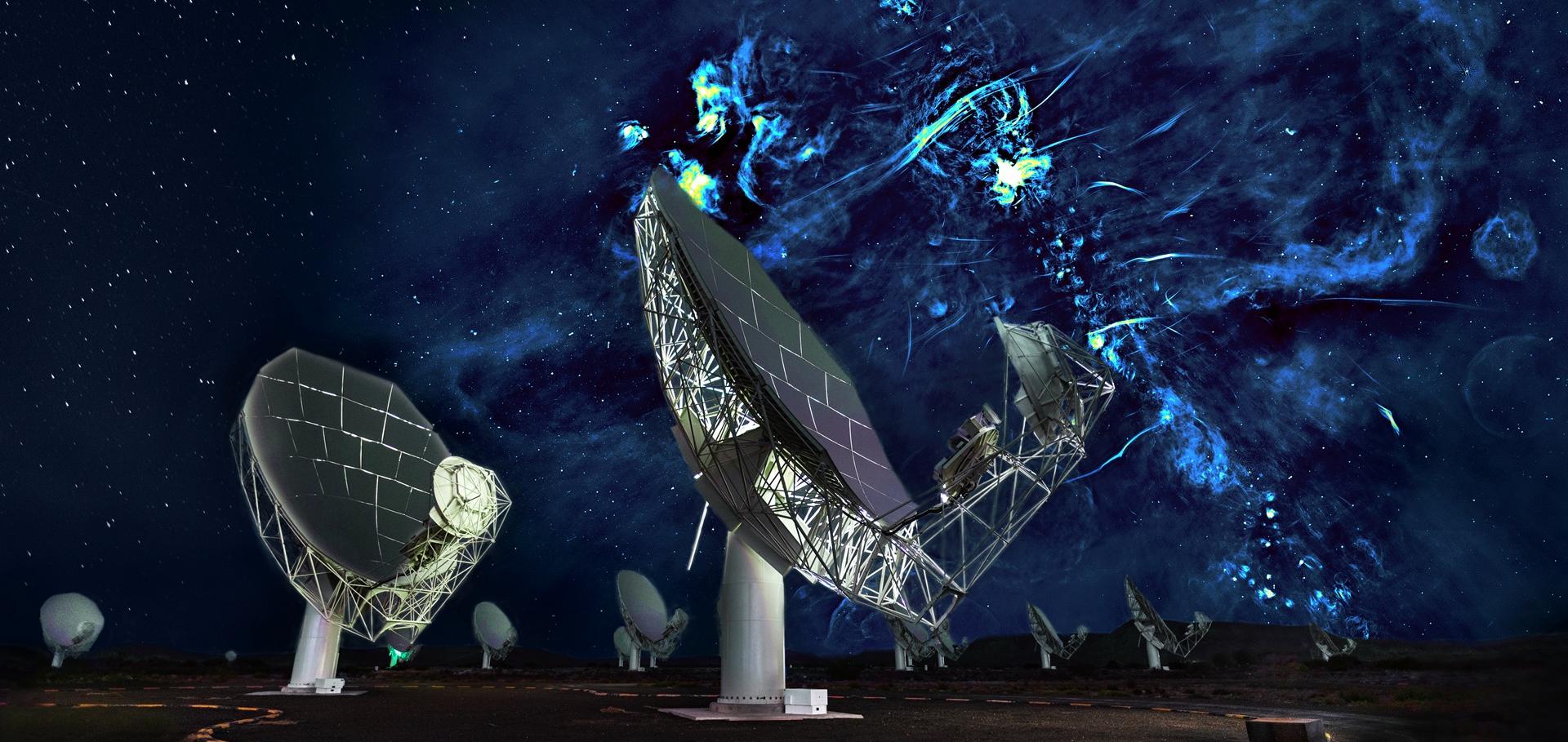
The Homogeneous MeerKAT and Swift/XRT X-ray Binary Radio:X-ray Plane
Monthly Notices of the Royal Astronomical Society Oxford University Press (OUP) (2026) stag1022
Abstract:
Abstract During the hard and quiescent spectral states in X-ray binaries, a non-linear correlation is observed between radio and X-ray luminosities, providing a valuable tool to probe the connection between accretion and jet production. This relation was originally thought to define a single ‘standard’ correlation that spans several orders of magnitude in X-ray luminosity, and was extended to active galactic nuclei by including a mass term. However, subsequent studies revealed a more complex picture, with some sources deviating from the standard correlation and instead populating distinct tracks. To date, all large studies of the radio:X-ray plane have combined data from multiple telescopes, introducing uncertainties due to differing instrument systematics and flux conversions between observing frequencies, thereby complicating comparisons and limiting constraints. ThunderKAT was a five-year programme on the MeerKAT radio telescope that monitored X-ray binaries in outburst, and ran alongside SwiftKAT which provided quasi-simultaneous Swift/XRT X-ray coverage. We present the full set of light curves from these programmes, comprising 948 radio and 1,029 X-ray data points. An important finding is the frequent detection of unresolved radio emission during the soft state, likely dominated by previously launched jet ejecta. Using these data, we construct the largest, observationally homogeneous X-ray binary radio:X-ray plane to date. We relate these results to the physical mechanisms proposed to drive inter-source diversity, and outline directions for future observational and theoretical work. This paper is accompanied by a public data release of the ThunderKAT and SwiftKAT measurements and a compiled radio:X-ray plane, available through an interactive website.ATLAS100 – I. A volume-limited sample of supernovae and related transients within 100 Mpc
Monthly Notices of the Royal Astronomical Society Oxford University Press 549:4 (2026) stag1028
Abstract:
We present ATLAS100 – a sample of 1729 supernovae and other explosive optical transients within ∼100 Mpc observed by the ATLAS survey over a span of 5.75 yr from 2017 September 21 to 2023 June 21. The volume-limited sample includes transients associated with galaxies with a spectroscopic redshift of , and spectroscopically classified transients within this redshift threshold where a host redshift was not available in existing catalogues. Our host galaxy list is constructed from aggregating all available galaxy redshift and distance catalogues. We carefully select all transients within a projected radius of 50 kpc of these hosts. The ATLAS100 transient sample has a host galaxy redshift completeness fraction of 83 per cent, consistent with expectations for the redshift completeness of local galaxy catalogues. Within this volume, the spectroscopic classifications are 87 per cent complete and we reclassify many ambiguous transients with joint light curve and spectroscopic considerations. Here, we release the catalogue together with compiled, binned, and cleaned ATLAS photometry for all transients. We fit the light curve data to derive peak luminosities and characteristic time-scales. We explore the sample characteristics, demographics, and discuss the completeness and purity of the sample. This is the first in a series of papers that will explore the rates and physical parameters of a complete and large sample of nearby supernovae and transients brighter than .HETDEX Public Data Release 1: Source Catalog 2 and Data Cubes from ∼90 deg2 of Integral-field Optical Spectroscopy
The Astrophysical Journal Supplement Series American Astronomical Society 284:2 (2026) 67
Abstract:
The Hobby–Eberly Telescope Dark Energy Experiment (HETDEX) is a wide-field, integral-field spectroscopic survey designed to map the large-scale distribution of Lyα-emitting galaxies (LAEs) at 1.88 < z < 3.52 and constrain dark energy at cosmic noon. Using the 10 m Hobby–Eberly Telescope and the Visible Integral-Field Replicable Unit (IFU) Spectrograph, HETDEX obtains >35,000 spectra per exposure over 3500–5500 Å at R ∼ 800 with ∼1.″8 image quality, enabling an untargeted census of emission-line galaxies across 540 deg2. We present HETDEX Public Data Release 1 (PDR1), comprising 431,713 IFU observations covering 86.67 deg2 of noncontiguous sky in the Spring (13h, +51°) and Fall (1 .h 5, 0°) fields, along with legacy regions (Cosmic Evolution Survey, Great Observations Origins Deep Survey North, North Ecliptic Pole, SA22). PDR1 includes the HETDEX Public Source Catalog 2 (HPSC2), an expanded and reprocessed version of E. Mentuch Cooper et al. (2023) incorporating four additional years of data, improved quality control, and new machine learning classifiers. HPSC2 contains 426,654 LAEs, 491,411 [O II] emitters, 19,457 low-z galaxies, 18,303 active galactic nuclei, and 150,608 stars, providing coordinates, redshifts or stellar velocities, and 1D spectra for each source. Because the data cubes use local sky subtraction optimized for faint emission-line detection, they are not suited for absolute surface-brightness measurements or very extended nearby galaxies. Appendix materials include the full detection catalog, the 1.6 million–candidate LAE sample, and raw detection databases. All products are publicly accessible through the HETDEX data portal (https://hetdex.org/data-results/), including access to a public JupyterLab. HPSC2 is also publicly available via Zenodo (doi:10.5281/zenodo.19581262).Probing the environments of FRI and FRII radio galaxies in LoTSS DR2 with galaxy clusters
Astronomy & Astrophysics EDP Sciences 710 (2026) A326-A326
Abstract:
Multiwavelength Outburst Activity from EP J174942.2-384834: A Very Faint X-Ray Transient Discovered by Einstein Probe
The Astrophysical Journal American Astronomical Society 1003:2 (2026) 224