Home
Department Of Physics text logo
  • Research
    • Our research
    • Our research groups
    • Our research in action
    • Research funding support
    • Summer internships for undergraduates
  • Study
    • Undergraduates
    • Postgraduates
  • Engage
    • For alumni
    • For business
    • For schools
    • For the public
  • Support
Menu
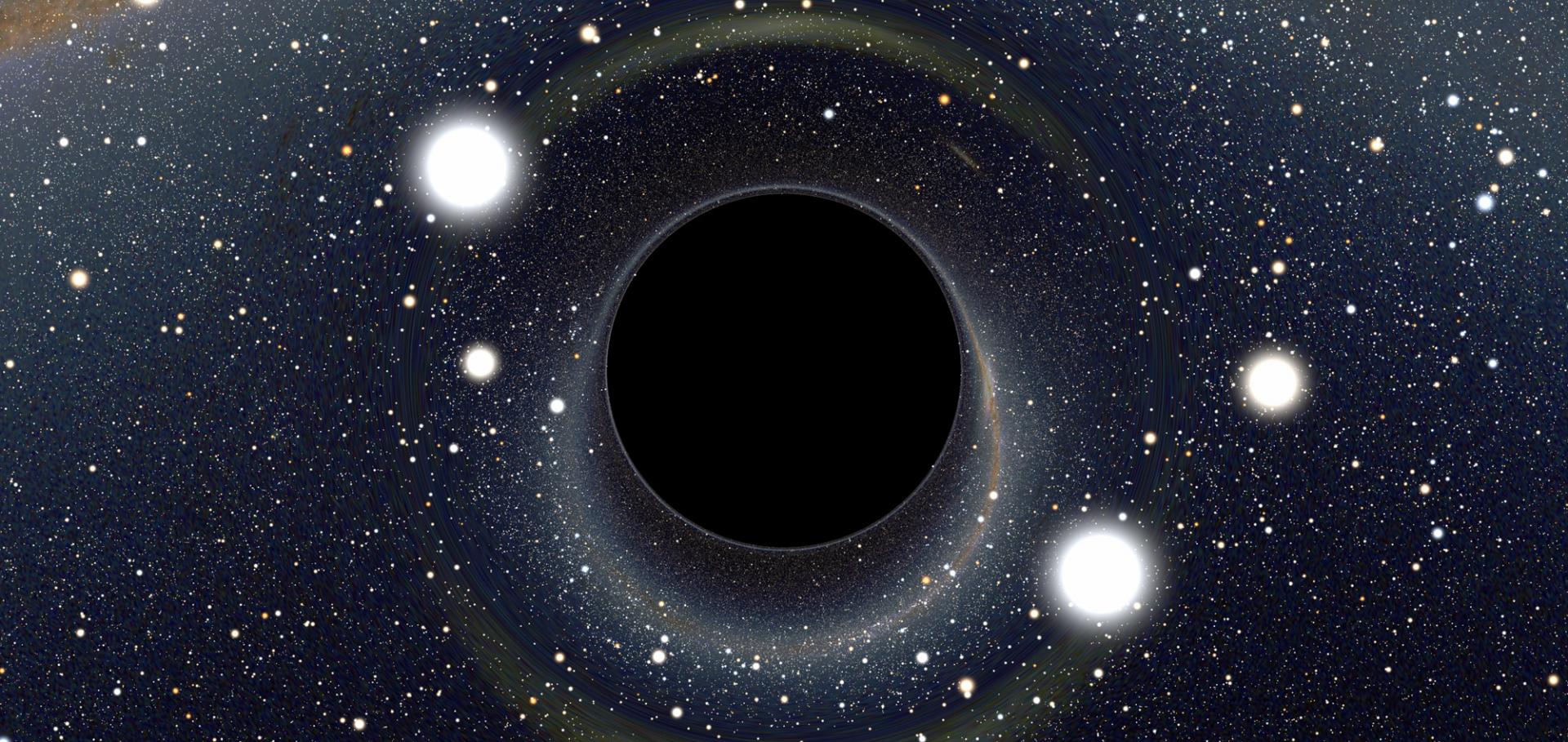
Black Hole

Lensing of space time around a black hole. At Oxford we study black holes observationally and theoretically on all size and time scales - it is some of our core work.

Credit: ALAIN RIAZUELO, IAP/UPMC/CNRS. CLICK HERE TO VIEW MORE IMAGES.

Prof. Dimitra Rigopoulou

Professor of Astrophysics

Research theme

  • Astronomy and astrophysics

Sub department

  • Astrophysics

Research groups

  • Galaxy formation and evolution
Dimitra.Rigopoulou@physics.ox.ac.uk
Telephone: 01865 (2)73296
Denys Wilkinson Building, room 711
  • About
  • Research
  • Publications

Evidence of Feedback Effects in Low-luminosity Active Galactic Nuclei Revealed by JWST Spectroscopy

(2026)

Authors:

Lulu Zhang, Chris Packham, Erin KS Hicks, Ric I Davies, Daniel E Delaney, Francoise Combes, Miguel Pereira-Santaella, Almudena Alonso-Herrero, Claudio Ricci, Omaira González-Martín, Laura Hermosa Muñoz, Ismael García-Bernete, Cristina Ramos Almeida, Dimitra Rigopoulou, Fergus R Donnan, Enrica Bellocchi, Nancy A Levenson, Martin J Ward, Santiago García-Burillo, Sebastian F Hoenig

Silicate emission in a type-2 quasar: JWST/MIRI constraints on torus geometry and radiative feedback

Astronomy & Astrophysics EDP Sciences (2025)

Authors:

C Ramos Almeida, A Asensio Ramos, C Westerdorp Plaza, I García-Bernete, E Lopez-Rodriguez, S Hönig, A Audibert, S García-Burillo, M Pereira-Santaella, F Donnan, A Alonso-Herrero, O González-Martín, N Levenson, D Rigopoulou, C Tadhunter, G Speranza

Abstract:

Type-2 quasars (QSO2s) are active galactic nuclei (AGN) seen through a significant amount of dust and gas that obscures the central supermassive black hole and the broad line region. Despite this, recent mid-infrared spectra of the central 0.5-1.1 kpc of five QSO2s at z∼0.1, obtained with the MRS module of JWST/MIRI, revealed 9.7, 18, and 23 . These are the CLUMPY and the CAT3D-WIND models. The CAT3D-WIND model is preferred by the observations based on the marginal likelihood and fit residuals, although the two torus models successfully reproduce the spectrum by means of intermediate covering factors (̊m C_T=0.45±^ silicate features in emission in two of them. This indicates that the high angular resolution of JWST/MIRI now allows us to peer into their nuclear region, exposing some of the directly illuminated dusty clouds that produce silicate emission. To test this, we fit the nuclear mid-infrared spectrum of the QSO2 with the strongest silicate features, J1010, with two different sets of torus models implemented in an updated version of the Bayesian tool BayesClumpy 0.26 _ 0.18 and ̊m C_T=0.66±^ 0.16 _ 0.17 for the CLUMPY and CAT3D-WIND models) and low inclinations (̊m i=50^̧irc±^ 8^̧irc _ 9^̧irc and ̊m i=13^̧irc±^ 7^̧irc _ 6^̧irc ). Indeed, four of the five QSO2s with JWST/MIRI observations, including J1010, are in the blowout or ``forbidden'' region of the Eddington ratio-column density diagram, indicating that they are actively clearing gas and dust from their nuclear regions, leading to reduced covering factors. This is in contrast with Seyfert 2 galaxies observed with JWST, which are in the ``permitted'' regions of the diagram and show 9.7 a scenario where the more luminous the AGN and the higher their Eddington ratio, the lower the torus covering factor, driven by radiation pressure on dusty gas. silicate features in absorption. This ̧olor black supports
More details from the publisher
More details

Silicate emission in a type-2 quasar: JWST/MIRI constraints on torus geometry and radiative feedback

(2025)

Authors:

C Ramos Almeida, A Asensio Ramos, C Westerdorp Plaza, I García-Bernete, E Lopez-Rodriguez, S Hönig, A Audibert, S García-Burillo, M Pereira-Santaella, F Donnan, A Alonso-Herrero, O González-Martín, N Levenson, D Rigopoulou, C Tadhunter, G Speranza

GATOS. VIII. On the Physical Origin of the Extended Mid-infrared Emission in Active Galactic Nuclei

The Astrophysical Journal American Astronomical Society 994:2 (2025) 206

Authors:

Enrique Lopez-Rodriguez, Cristina Ramos Almeida, Miguel Pereira-Santaella, Ismael García-Bernete, Robert Nikutta, Almudena Alonso-Herrero, Anelise Audibert, Enrica Bellocchi, Andrew Bunker, Steph Campbell, Françoise Combes, Richard Davies, Tanio Diaz-Santos, Lindsay Fuller, Poshak Gandhi, Santiago García-Burillo, Omaira González-Martín, Erin KS Hicks, Sebastian Hönig, Kohei Ichikawa, Masatoshi Imanishi, Takuma Izumi, Alvaro Labiano, Nancy A Levenson, Dimitra Rigopoulou

Abstract:

The polar mid-infrared (MIR) emission detected within tens to hundreds of parsecs in some active galactic nuclei (AGN) has been associated with dusty winds driven away by radiation pressure. The physical characterization of this extended polar emission remains uncertain. Here, we combine 10–21 μm JWST/Mid-InfRared Instrument (MIRI) imaging observations with 7–25 μm JWST/MIRI MRS integral field spectroscopic observations of six nearby, D¯=35.4±4.6 Mpc, AGN from the GATOS Survey to quantify the nature of the extended MIR emission at ∼75 pc resolution at 21 μm. These AGN have similar bolometric luminosities, log10(L¯bol[ergs−1])=44.0±0.3 , span a wide range of optical outflow rates, Ṁ= 0.003–0.21 M⊙ yr−1, column densities, log10(NHX−ray[cm−2])= 22.2–24.3, and Eddington ratios, λEdd = 0.005–0.06. We cross-correlate the line-only and continuum-only images and find a poor correlation, which indicates that the extended MIR continuum emission is spatially uncorrelated with the warm outflows associated with narrow emission lines within 10–15 μm. Line emission is resolved along the jet axis, while dust emission is perpendicular to it. The 75–450 pc continuum emission has a fairly constant dust temperature, Td=132−7+7 K, and mass, Md=728−27+29 M⊙. Using the conditions of energy balance between radiation-pressure and gravity (λEdd versus NH), we find that our AGN sample is in the gravitationally bounded regime consistent with no detection of dusty winds. At 10 μm, the level of extended line emission contribution is correlated with the outflow kinetic energy and mass outflow rates. We find no correlation with the AGN properties. These results indicate that the radio jet may be triggering the gas outflow and line emission, while the extended dust emission is distributed in molecular clouds and/or shocked regions.
More details from the publisher
Details from ORA
More details

Impact of active galactic nuclei and nuclear star formation on the ISM turbulence of galaxies: Insights from JWST/MIRI spectroscopy

Astronomy & Astrophysics EDP Sciences (2025)

Authors:

Rogemar A Riffel, Luis Colina, José Henrique Costa-Souza, Vincenzo Mainieri, Miguel Pereira Santaella, Oli L Dors, Ismael García-Bernete, Almudena Alonso-Herrero, Anelise Audibert, Enrica Bellocchi, Andrew J Bunker, Steph Campbell, Françoise Combes, Richard I Davies, Tanio Díaz-Santos, Fergus R Donnan, Federico Esposito, Santiago García-Burillo, Begoña García-Lorenzo, Omaira González Martín, Houda Haidar, Erin KS Hicks, Sebastian F Hoenig, Masatoshi Imanishi, Alvaro Labiano, Enrique Lopez-Rodriguez, Christopher Packham, Cristina Ramos Almeida, Dimitra Rigopoulou, David Rosario, Gabriel Luan Souza-Oliveira, Montserrat Villar Martín, Oscar Veenema, Lulu Zhang

Abstract:

Active galactic nuclei (AGNs), star formation (SF), and galaxy interactions can drive turbulence in the gas of the interstellar medium (ISM), which, in turn, plays a role in SF taking place within galaxies. The impact on molecular gas is of particular importance, as it serves as the primary fuel for SF. Our goal is to investigate the origin of turbulence and the emission of molecular gas, as well as low-and-intermediate-ionisation gas, in the inner few kpc of both AGN hosts and star-forming galaxies (SFGs). We used archival JWST MIRI/MRS observations of a sample consisting of 54 galaxies at z<0.1. We present flux measurements for the H_2 S(5)łambda6.9091μm ii łambda6.9853μm ii łambda5.3403μm, and iii łambda8.9914μm emission lines along with velocity dispersion estimated by the W_̊m 80 parameter. For galaxies with coronal line emission, we included measurements of the v łambda5.6098μm line. We compared the line ratios to photoionisation and shock models to explore the origin of the gas emission. AGNs exhibit broader emission lines than SFGs, with the largest velocity dispersions observed in radio-strong (RS) AGNs. The H_2 gas is less turbulent compared to ionised gas, while coronal gas presents higher velocity dispersions. The W_ 80 values for the ionised gas show a decrease when going from the nucleus out to radii of approximately 0.5--1 kpc, followed by an outward increase up to 2--3 kpc. In contrast, the H_2 line widths generally display increasing profiles with distance from the center. Correlations between the W_̊m 80 parameter and line ratios such as H_2:S(5)/ ii and ii ii indicate that the most turbulent gas is associated with shocks, enhancing H_2 and ii emissions. Based on the observed line ratios and velocity dispersions, the ii emission is consistent with predictions of fast shock models, while the H_2 emission is likely associated with molecules formed in the post-shock region. We speculate that these shocked gas regions are produced by AGN outflows and jet-cloud interactions in AGN-dominated sources; whereas in SFGs, they might be created through stellar winds and mergers. This shock-induced gas heating may be an important mechanism of AGN (or stellar) feedback, preventing the gas from cooling and forming new stars.
More details from the publisher
More details

Pagination

  • First page First
  • Previous page Prev
  • Page 1
  • Page 2
  • Page 3
  • Page 4
  • Current page 5
  • Page 6
  • Page 7
  • Page 8
  • Page 9
  • …
  • Next page Next
  • Last page Last

Footer Menu

  • Contact us
  • Giving to the Dept of Physics
  • Work with us
  • Media

User account menu

  • Log in

Follow us

FIND US

Clarendon Laboratory,

Parks Road,

Oxford,

OX1 3PU

CONTACT US

Tel: +44(0)1865272200

University of Oxfrod logo Department Of Physics text logo
IOP Juno Champion logo Athena Swan Silver Award logo

© University of Oxford - Department of Physics

Cookies | Privacy policy | Accessibility statement

Built by: Versantus

  • Home
  • Research
  • Study
  • Engage
  • Our people
  • News & Comment
  • Events
  • Our facilities & services
  • About us
  • Giving to Physics
  • Current students
  • Staff intranet